On a recent visit to the USS Arizona Memorial at Pearl Harbor — where 900 U.S. sailors are entombed as a result of the surprise Japanese military attack that heralded the U.S. entry into World War II — I was reminded about the difficulty of “surrender” in wars.
With wars raging between Israel and Hamas based on the intent of Hamas to eradicate Israel, and the Russian plan to subjugate all of Ukraine, perhaps there are hard lessons from Japan’s unconditional surrender in World War II.
The surrender was no easy task for either the Japanese government or the United States and its allies. Memories have faded about the horrific loss of civilian life in Japan that preceded the dropping of atomic bombs on Hiroshima and Nagasaki. Or the attempted Japanese military coup before surrender was accepted. What would be the terms of surrender, who could make the decision to surrender, how would a surrender be enforced, and could it be? These are all issues for the wars of today.
Two months after Germany capitulated, the allies met in Potsdam, Germany, in July 1945 to discuss peace settlements, while the war with Japan continued to rage. President Harry Truman for the United States, Prime Minister Winston Churchill for Great Britain, and President Chiang Kai-shek for the Republic of China issued the Potsdam Declaration which called for the “unconditional surrender” of Japan. Issuing a declaration and making it happen was not to be easy, and not before further tremendous loss of life of Japanese civilians. We readily remember the atomic bombings. More than 70,000 civilian casualties resulted from the Aug. 6 bombing of Hiroshima and more than 100,000 from the bombing of Nagasaki days later. Memories have faded about the fire bombings that preceded the atomic bombings and the fear of starvation in Japan. More than 100,000 civilians died in the U.S. fire bombing of Tokyo in March 1945. With the U.S. submarine blockades, there was a tremendous shortage of food and fuel. Japan’s leaders had to decide whether they would continue to fight or sue for peace on favorable terms. Some of the leadership believed that the U.S. population was fatigued with the war effort and would agree to favorable settlement terms. The Potsdam Declaration belied that but also laid out what could be an attractive postwar Japan.
The Potsdam Declaration made clear that absent unconditional surrender, the war would continue with the “complete destruction of the Japanese armed forces and just as inevitably the utter destruction of the Japanese homeland … [and] the time has come for Japan to decide whether she will continue to be controlled by self-willed militaristic advisors whose unintelligent calculations have brought the Empire of Japan to the threshold of annihilation, or whether she will follow a path of reason.” It stated that Japan would be occupied until the allies’ objectives were satisfied. However, it also provided that the Japanese military, once disarmed, would be “permitted to return to their homes with the opportunity to lead peaceful and productive lives.” To diminish the militaristic culture, it also proclaimed that “Freedom of speech, of religion, and freedom of thought, as well as respect for fundamental human rights shall be established.”
When it came time to surrender, Emperor Hirohito had to resolve a stalemate in the leadership to accept an unconditional surrender, and, with the emperor’s announcement the Japanese people and soldiers acquiesced as well. The occupation of Japan commenced under Gen. Douglas MacArthur, remarkably with a Japanese constitution written by the occupation authorities, adopted by Japan’s parliament and so fully accepted by the Japanese people that to this day it has not been amended.
The conditions in Israel and Ukraine clearly do not seem ripe for any “surrender.” Former Israeli Prime Minister Ehud Barak has called for early elections for a change in leadership, as the only path to end the war with Hamas. The apparent stalemate in Ukraine seemingly has no predictable end, despite Pope Francis’ call for Ukraine to raise a white flag, which was quickly rejected. The lessons from the unconditional surrender of Japan are hard indeed.
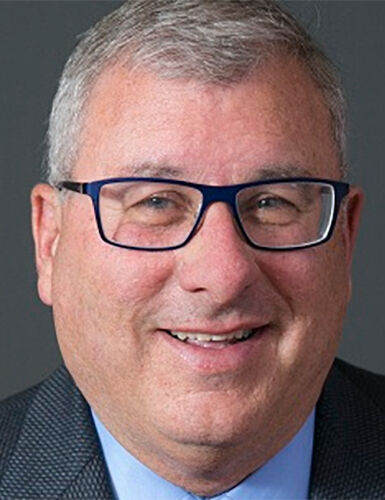
Jim Hartnett, is a Navy veteran (U.S. Naval Security Group), attorney and strategic consultant. He was awarded a certificate in Public Policy from the Harvard Kennedy School.
Thank you for this very thoughtful history lesson. A good friend and mentor who has worked in peacemaking for decades has taught that in order to come to an agreement, or as you discuss, a surrender, one has to envision a future that is tolerable if one agrees to the other side's terms and both sides have to envision a future in which the other side exists, is granted dignity, and has the ability to sustain life. I pray that in today's world conflicts leaders can craft agreements that are tolerable, dignified and humane. Hard work!
We keep saying that Japan surrendered "unconditionally." If that is true why was the Emperor kept on his throne? If he was removed we would still be fighting.
willallen - keeping the Emperor on this throne was a condition of the surrender. He had to relinquish his god-like status and had to accept our governance. He was considered a war criminal but Hirohito was so important to the Japanese culture that he was allowed to stay on as a figurehead. Truman was reluctant to agree to this solution as he was advised that this would prevent further bloodshed on both sides. Compromise is sometimes the best answer.
Mr. Hartnett, thanks for the historic background. However, I'd say that unconditional surrender is the goal and if Hamas and Ukraine aren't willing, then they’ve made the choice to continue the death and destruction of themselves and their followers. One would hope we don’t reach the number of casualties as in Japan but I would not be surprised if we attain those numbers.
Keep the discussion civilized. Absolutely NO
personal attacks or insults directed toward writers, nor others who
make comments. Keep it clean. Please avoid obscene, vulgar, lewd,
racist or sexually-oriented language. Don't threaten. Threats of harming another
person will not be tolerated. Be truthful. Don't knowingly lie about anyone
or anything. Be proactive. Use the 'Report' link on
each comment to let us know of abusive posts. PLEASE TURN OFF YOUR CAPS LOCK. Anyone violating these rules will be issued a
warning. After the warning, comment privileges can be
revoked.
Please purchase a Premium Subscription to continue reading.
To continue, please log in, or sign up for a new account.
We offer one free story view per month. If you register for an account, you will get two additional story views. After those three total views, we ask that you support us with a subscription.
A subscription to our digital content is so much more than just access to our valuable content. It means you’re helping to support a local community institution that has, from its very start, supported the betterment of our society. Thank you very much!



(4) comments
Thank you for this very thoughtful history lesson. A good friend and mentor who has worked in peacemaking for decades has taught that in order to come to an agreement, or as you discuss, a surrender, one has to envision a future that is tolerable if one agrees to the other side's terms and both sides have to envision a future in which the other side exists, is granted dignity, and has the ability to sustain life. I pray that in today's world conflicts leaders can craft agreements that are tolerable, dignified and humane. Hard work!
We keep saying that Japan surrendered "unconditionally." If that is true why was the Emperor kept on his throne? If he was removed we would still be fighting.
willallen - keeping the Emperor on this throne was a condition of the surrender. He had to relinquish his god-like status and had to accept our governance. He was considered a war criminal but Hirohito was so important to the Japanese culture that he was allowed to stay on as a figurehead. Truman was reluctant to agree to this solution as he was advised that this would prevent further bloodshed on both sides. Compromise is sometimes the best answer.
Mr. Hartnett, thanks for the historic background. However, I'd say that unconditional surrender is the goal and if Hamas and Ukraine aren't willing, then they’ve made the choice to continue the death and destruction of themselves and their followers. One would hope we don’t reach the number of casualties as in Japan but I would not be surprised if we attain those numbers.
Welcome to the discussion.
Log In
Keep the discussion civilized. Absolutely NO personal attacks or insults directed toward writers, nor others who make comments.
Keep it clean. Please avoid obscene, vulgar, lewd, racist or sexually-oriented language.
Don't threaten. Threats of harming another person will not be tolerated.
Be truthful. Don't knowingly lie about anyone or anything.
Be proactive. Use the 'Report' link on each comment to let us know of abusive posts.
PLEASE TURN OFF YOUR CAPS LOCK.
Anyone violating these rules will be issued a warning. After the warning, comment privileges can be revoked.