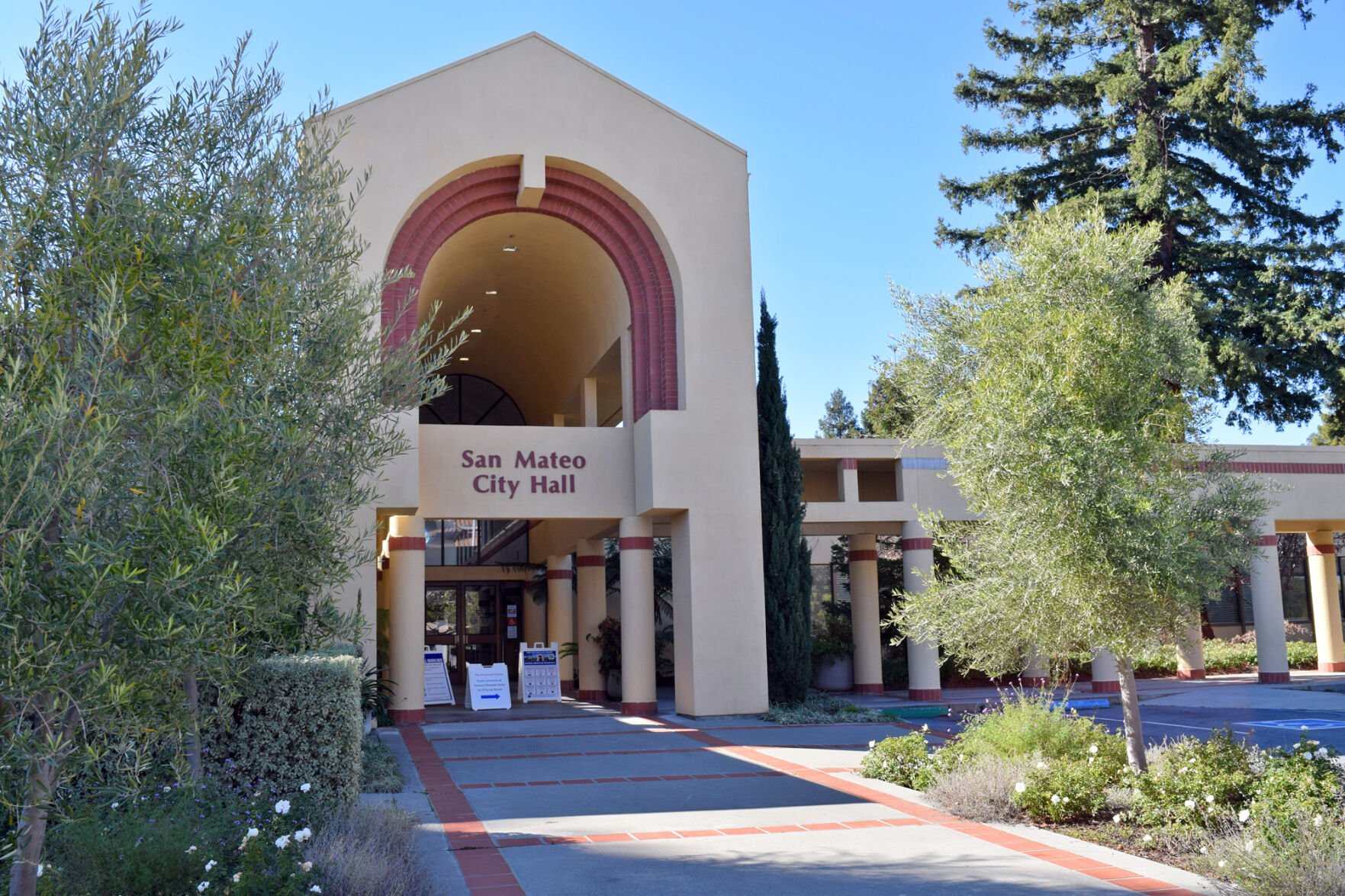
San Mateo is moving forward with establishing a new commission and threshold to consider new historic districts, tackling one of the city’s most contentious issues over the past couple years.
Last year, the city started the complicated process of revamping its historic districting policy and program in response to an ongoing battle between those who want more protections for what they consider historic structures and those who say the efforts infringe on homeowners’ property rights, as they could be subject to new rules without their consent.
The divide has wreaked havoc among residents in the city over the last couple years, particularly in the Baywood neighborhood, where members of the San Mateo Heritage Alliance group have pushed to expand a historic designation to more than 400 houses in the neighborhood — despite opposition from many of the homeowners — via the state process, even though many of the homeowners did not want the change. The designation would trigger additional review and approvals if owners want to substantially alter the exterior of their homes or make changes that don’t align with the design of the surrounding houses.
The City Council decided during its meeting Jan. 26, that for the city to designate a historic district, at least 20% of impacted homeowners would have to support the move before the application can move forward. Once the application is complete and impacted residents are notified, more than 60% of owners would have to consent to the designation.
“I wouldn’t want a group of one or two neighbors to come forward and say, ‘we should make our whole neighborhood historic,’” Councilmember Rob Newsom said during the council meeting Jan. 26. “We want to make sure that the applicant coming forward has enough community interest to even move the ball forward.”
The council agreed that historic reviews should also come from a brand-new commission, rather than the Planning Commission or Community Relations Commission, and that the criteria for designating historic districts should be based solely on the state’s Office of Historic Preservation.
These fake "historic" designations are just a tool used by corrupt city officials to prevent people from updating their homes. It's perverse and makes our city stagnant. Get these people out of office!
Historic preservation depends only on local rules. Each city makes their own. What you experienced in other cities will differ from the situation in San Mateo. The historic designations are based on long-established criteria and processes. They do not prevent home modernizations but in fact allow use of the more lenient Historic Building Code. Historic designation does not mean no changes are allowed. This is the first time in 30 years the City of San Mateo has taken a step toward updating their ordinance. Please go to the City's many website pages (https://cityofsanmateo.org/4781/Historic-Resources-and-Districts) to learn about historic resources in San Mateo. You can also visit the San Mateo Heritage Alliance website at https://www.smheritage.org/.
Keep the discussion civilized. Absolutely NO
personal attacks or insults directed toward writers, nor others who
make comments. Keep it clean. Please avoid obscene, vulgar, lewd,
racist or sexually-oriented language. Don't threaten. Threats of harming another
person will not be tolerated. Be truthful. Don't knowingly lie about anyone
or anything. Be proactive. Use the 'Report' link on
each comment to let us know of abusive posts. PLEASE TURN OFF YOUR CAPS LOCK. Anyone violating these rules will be issued a
warning. After the warning, comment privileges can be
revoked.
Please purchase a Premium Subscription to continue reading.
To continue, please log in, or sign up for a new account.
We offer one free story view per month. If you register for an account, you will get two additional story views. After those three total views, we ask that you support us with a subscription.
A subscription to our digital content is so much more than just access to our valuable content. It means you’re helping to support a local community institution that has, from its very start, supported the betterment of our society. Thank you very much!







(2) comments
These fake "historic" designations are just a tool used by corrupt city officials to prevent people from updating their homes. It's perverse and makes our city stagnant. Get these people out of office!
Historic preservation depends only on local rules. Each city makes their own. What you experienced in other cities will differ from the situation in San Mateo. The historic designations are based on long-established criteria and processes. They do not prevent home modernizations but in fact allow use of the more lenient Historic Building Code. Historic designation does not mean no changes are allowed. This is the first time in 30 years the City of San Mateo has taken a step toward updating their ordinance. Please go to the City's many website pages (https://cityofsanmateo.org/4781/Historic-Resources-and-Districts) to learn about historic resources in San Mateo. You can also visit the San Mateo Heritage Alliance website at https://www.smheritage.org/.
Welcome to the discussion.
Log In
Keep the discussion civilized. Absolutely NO personal attacks or insults directed toward writers, nor others who make comments.
Keep it clean. Please avoid obscene, vulgar, lewd, racist or sexually-oriented language.
Don't threaten. Threats of harming another person will not be tolerated.
Be truthful. Don't knowingly lie about anyone or anything.
Be proactive. Use the 'Report' link on each comment to let us know of abusive posts.
PLEASE TURN OFF YOUR CAPS LOCK.
Anyone violating these rules will be issued a warning. After the warning, comment privileges can be revoked.