San Mateo County is at a pivotal crossroads. As local leaders explore ways to address our region’s staggering child care crisis, several funding mechanisms are under consideration. Most notably, the county is currently commissioning a poll (conducted by McGuire Research) to gauge resident support for a half-cent sales tax that could generate $114 million annually to lower costs for families and expand the child care workforce.
This proposal has sparked a healthy and necessary debate. Some community members have voiced concerns about “tax fatigue” or the belief that child care is a strictly private responsibility. At Sustainable San Mateo County, we believe it is essential to listen to these viewpoints while also examining the data. Whether through a sales tax, impact fees or public-private partnerships, the cost of failing to support our families is a price we are already paying.
SSMC’s 2023 Indicators Report on the well-being of children, youth and families revealed a stark reality: In San Mateo County, a family of four requires an income of roughly $160,000 just to meet basic needs — the “Self-Sufficiency Standard.” Yet one-third of our households do not earn enough to make ends meet. With 65% of parents reporting that affordable child care is hard to find, this is no longer just a “family problem.” It is a workforce and economic stability problem.
Child care is the “work behind the work.” In a San Mateo County parent survey conducted in the fall of 2022, 73% of survey respondents said they had turned down work due to lack of child care. When parents cannot find care, they are forced out of the labor market, leading to a loss of productivity that ripples through every sector. SSMC formally recommends providing additional county funding for child care subsidies because the long-term benefits are undeniable. Strategic investment in the first five years — when 90% of brain development occurs — results in higher academic achievement, higher future wages and a lower likelihood of requiring costly social interventions later in life.
Fortunately, our local leaders are exploring a diverse toolkit of solutions. Beyond a potential sales tax, other innovative models are being discussed:
• Impact fees: Following the lead of cities like San Carlos, which implemented child care impact fees on new commercial developments to ensure growth supports social infrastructure.
Recommended for you
• Triple-partnership models: Splitting costs between employers, parents and the government to ensure a stable workforce.
• Targeted revenue: Exploring increases to the vehicle rental tax or other fees to minimize the direct burden on residents’ daily spending.
This is a critical moment for your voice to be heard. The current poll by McGuire Research is being conducted via telephone to help inform supervisors about a potential November ballot measure. Because this is a controlled scientific poll, there is no public link to “take” the survey online. However, if you are contacted, we strongly encourage you to “answer the call” and share your perspective.
A sustainable San Mateo County is one where every child has the opportunity to thrive and every parent has the stability to work. By exploring these options together, we can ensure our county remains a place where families don’t just survive, but truly belong.
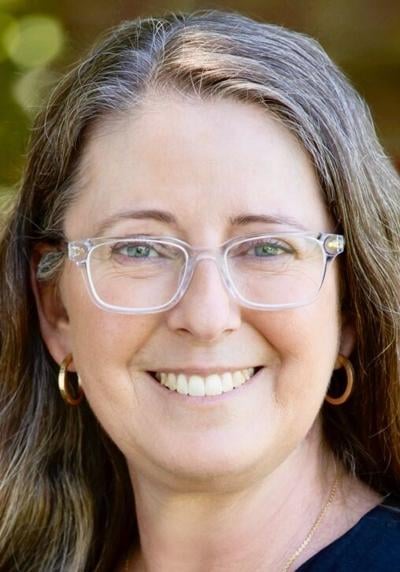
Sarah Hubbard is the executive director of Sustainable San Mateo County. SSMC’s Indicators Reports are available at bit.ly/SSMC-IRArchive. Founded in 1992, Sustainable San Mateo County is a 501(c)(3) nonprofit dedicated to a vision of a sustainable future for everyone in the county. Sarah can be reached at shubbard@sustainablesanmateo.org.
Thanks for your guest perspective, Ms. Hubbard, but I fail to see why folks who don’t use child care should pay for child care. There’s no law forcing people to have children. I’d recommend everyone vote NO on any tax measure supporting this discriminatory use of funds. If anything, propose a tax measure to force only people with children to pay for it. Even then, some folks may not use the proposed child care.
How about reallocating a county office building(s) for child care services in your triple-partnership model? But the government side should force employers and parents to reimburse taxpayers for the government portion via daily usage fees. If plans aren’t detailed, I’d again recommend everyone vote NO so taxpayer money is used for services to benefit everyone, not just for those with kids.
I appreciated reading the growing conversation about child care in San Mateo County.
Child care isn’t only a family service, it’s economic infrastructure. Much like roads, water systems, or public safety, not everyone uses it every day, but communities depend on it functioning well. When parents can’t find reliable care, they miss work, businesses lose employees, and the whole community feels it.
As we discuss possible funding solutions, it’s important to remember the challenge isn’t just affordability, it’s stability. Many providers are struggling to stay open due to rising costs, aging facilities, and regulatory requirements. If existing programs close, families lose trusted relationships and communities lose capacity overnight.
Alongside helping families pay for care, we also need to sustain and improve the programs already serving our neighborhoods — supporting children and those who care for them so they can continue operating safely and consistently.
Strong communities support families not only by creating opportunities — but by protecting the ones that already exist.
Sorry, SMChristine, but you’re creating a false equivalency between true infrastructure that everyone uses versus child care which only a very small cohort of the population uses, and even then, these folks only “rent” for a few years until their children age out. If folks want child care then they should be willing to pay for it. For those who don’t want to use it or will never use it, they shouldn’t be forced to subsidize those who will. And if there are people who won’t use child care but want to support it, they’re free to donate as little or as lot as they want to individuals who need child care or to child care funds (I’m sure there will be some willing to manage those funds, for a fee, of course).
Keep the discussion civilized. Absolutely NO
personal attacks or insults directed toward writers, nor others who
make comments. Keep it clean. Please avoid obscene, vulgar, lewd,
racist or sexually-oriented language. Don't threaten. Threats of harming another
person will not be tolerated. Be truthful. Don't knowingly lie about anyone
or anything. Be proactive. Use the 'Report' link on
each comment to let us know of abusive posts. PLEASE TURN OFF YOUR CAPS LOCK. Anyone violating these rules will be issued a
warning. After the warning, comment privileges can be
revoked.
Please purchase a Premium Subscription to continue reading.
To continue, please log in, or sign up for a new account.
We offer one free story view per month. If you register for an account, you will get two additional story views. After those three total views, we ask that you support us with a subscription.
A subscription to our digital content is so much more than just access to our valuable content. It means you’re helping to support a local community institution that has, from its very start, supported the betterment of our society. Thank you very much!









(3) comments
Thanks for your guest perspective, Ms. Hubbard, but I fail to see why folks who don’t use child care should pay for child care. There’s no law forcing people to have children. I’d recommend everyone vote NO on any tax measure supporting this discriminatory use of funds. If anything, propose a tax measure to force only people with children to pay for it. Even then, some folks may not use the proposed child care.
How about reallocating a county office building(s) for child care services in your triple-partnership model? But the government side should force employers and parents to reimburse taxpayers for the government portion via daily usage fees. If plans aren’t detailed, I’d again recommend everyone vote NO so taxpayer money is used for services to benefit everyone, not just for those with kids.
I appreciated reading the growing conversation about child care in San Mateo County.
Child care isn’t only a family service, it’s economic infrastructure. Much like roads, water systems, or public safety, not everyone uses it every day, but communities depend on it functioning well. When parents can’t find reliable care, they miss work, businesses lose employees, and the whole community feels it.
As we discuss possible funding solutions, it’s important to remember the challenge isn’t just affordability, it’s stability. Many providers are struggling to stay open due to rising costs, aging facilities, and regulatory requirements. If existing programs close, families lose trusted relationships and communities lose capacity overnight.
Alongside helping families pay for care, we also need to sustain and improve the programs already serving our neighborhoods — supporting children and those who care for them so they can continue operating safely and consistently.
Strong communities support families not only by creating opportunities — but by protecting the ones that already exist.
Sorry, SMChristine, but you’re creating a false equivalency between true infrastructure that everyone uses versus child care which only a very small cohort of the population uses, and even then, these folks only “rent” for a few years until their children age out. If folks want child care then they should be willing to pay for it. For those who don’t want to use it or will never use it, they shouldn’t be forced to subsidize those who will. And if there are people who won’t use child care but want to support it, they’re free to donate as little or as lot as they want to individuals who need child care or to child care funds (I’m sure there will be some willing to manage those funds, for a fee, of course).
Welcome to the discussion.
Log In
Keep the discussion civilized. Absolutely NO personal attacks or insults directed toward writers, nor others who make comments.
Keep it clean. Please avoid obscene, vulgar, lewd, racist or sexually-oriented language.
Don't threaten. Threats of harming another person will not be tolerated.
Be truthful. Don't knowingly lie about anyone or anything.
Be proactive. Use the 'Report' link on each comment to let us know of abusive posts.
PLEASE TURN OFF YOUR CAPS LOCK.
Anyone violating these rules will be issued a warning. After the warning, comment privileges can be revoked.