In San Mateo County, we often talk about the “price of paradise.” We see it in our bustling downtowns, rising cost of everyday items, and, most acutely, in our monthly housing costs.
But for many of our long-term neighbors — the retired teachers and nurses, the fixed-income seniors and the service workers who anchor our community — this price feels more like a ransom. The culprit isn’t just rising insurance or maintenance; it is the fundamental “mismatch” of the property tax.
Property taxes are calculated based on your home’s assessed value, not on what you have in your bank account. In a region where rapid appreciation even for the modest homes due to rising demand is a norm, a home’s value can skyrocket while the owner’s income remains stagnant. When your tax bill grows faster than your paycheck, you face a “tax overload.” Without intervention, this mismatch creates serious affordability issues that contribute to displacement and erode the neighborhood stability we all value.
It is about time we discuss a proven solution used across a number of states: the Property Tax Circuit Breaker. The concept is as simple as the safety device in your electrical panel. When the “load” on a household’s budget becomes too heavy, the circuit breaker trips and provides relief by refunding or crediting back the portion of property tax that exceeds a set percentage of income. Unlike across-the-board rate cuts that mostly benefit higher-value owners, a circuit breaker is a targeted credit that links tax liability directly to the ability to pay.
To see the impact, we can look at models already functioning in states like Massachusetts and Maryland. Imagine a senior homeowner in San Mateo, is living on a fixed income of $60,000 in a modest two-bedroom and one-bath home of $1 million assessed value. If their property tax bill at the current effective rate of 1.4% is $14,000, their tax burden is a staggering 23.3% of their total income. Under a 10% circuit breaker threshold, any amount over $6,000 would be credited back. This neighbor would receive an $8,000 credit, bringing his effective tax burden back to a manageable level.
Recommended for you
This protection extends to renters as well. Let’s say a family of four with an income of $100,000 per year is paying $60,000 in annual rent for a three-bedroom, one-bath home of assessed value $1.1 million. Total tax paid by landlord on this home at current effective property tax rate of 1.4% would be $15,400. Renters are also paying “imputed” property tax through their landlord. If 25.6% of that rent ($15,400) is treated as tax, it exceeds a 10% income threshold by $5,400. A circuit breaker refund of $5,400 allows that renter to stay in their neighborhood rather than being priced out by costs they cannot control.
Critics often worry that tax relief drains local coffers, hurting our schools and parks. However, many circuit breaker programs are structured as state income tax credits, therefore not touching local tax revenue. If Maine, Michigan, Minnesota, Vermont and the District of Columbia can do this, why California, the richest donor state in the nation, can’t?
Ultimately, this is an issue of equity and community health. Older homeowners are more likely to live on fixed incomes, have owned their homes for long and be deeply attached to their neighborhoods. Evaluations of these programs show they reduce foreclosure risk and lower tax delinquency. By tying property tax to income rather than to volatile real estate cycles, we give households across all income levels a predictable path to remain in their homes. We want a San Mateo where the people who built our community aren’t forced to leave it simply because their home became “too valuable” to live in.
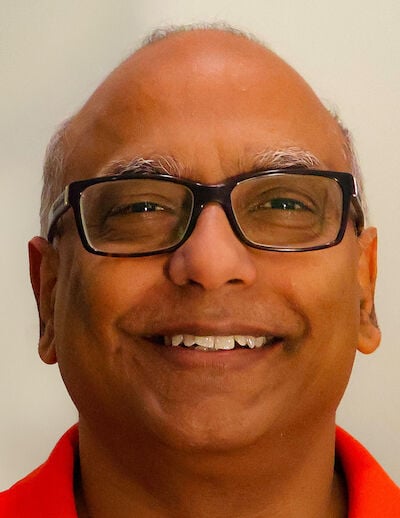
Mantosh Kumar, a husband, a father, a Democrat, and a longtime resident of San Mateo, is a candidate for the U.S. House of Representatives, District 15.
Very interesting proposition, Mr. Kumar. I appreciate the general examples but the devil is in the details. For instance, what will be done to prevent homeowners, seniors included, from adjusting income to game the system? For those still working, might they sign an employment contract for their salary to be paid in a lump sum for, say, three years? These folks will take the hit and pay full property tax for the first year but then reap benefits for the next two years when they pay no property tax. Or might these folks defer income for as long as they’re able and then take a lump sum payment and pay “full” property taxes then? For retirees, might they adjust their supplemental income outside Social Security? Deferring income by borrowing money and reaping the benefits of reduced property taxes.
Although I’m in favor of anything that will lower property taxes, the number of added parcel taxes and fees, some of which I imagine for seniors, cost more than their assessed property tax should also be addressed. I wish you luck and if lowering property taxes is one of your campaign goals, I might vote for you. Of course, I’d also like to see action plans on lowering parcel taxes and assessments. A note of caution – if you pursue the above goals, your fellow Dems might strip the “D” from your name and vote you off the island. If that’s the case, I’d definitely vote for you.
Am I missing something? No Kumar, your property tax is based on the initial purchase price of the home and is not allowed to increase by more than 2% per year. Are you a California homeowner and you are running for office? You don't get it, and I certainly do not want even more government interference in my taxation. What you are suggesting is a typical Democrat scheme to fleece us. In California we do not have a revenue deficit but a spending eruption. As long as we cannot keep spending under control mostly Democrats will keep on finding new ways to circumvent Prop 13 provisions. Exactly why I, and thousands of others, who bought our homes years ago can still afford to live here. I will make sure not to vote for you.
Most states have some sort of a property tax exemption for seniors, This is a huge issue for seniors, who dread being forced to move when they can no longer pay the taxes.. Best to eliminate property taxes and instead have a VAT (tax like several foreign countries are doing successfully). Add a percentage on to sales tax, then everyone pays (at time of purchase, excluding food, medicine, etc.), not just homeowners and renters. Much fairer. You have a choice. If you don't want to be taxed, you don't buy the item.
Lou - VAT is indeed an option. However, based on the progression of that tax rate and what the tax is applied to you may want to reconsider endorsing it. In my native Netherlands, VAT started out at 5% and was restricted to certain purchases. That rate is now over 22% and applies to just about everything that one purchases, including groceries, theaters, vacation resorts, medication, news print, automobiles, etc. Unless there is a restriction on those tax increases and applications by our glutenous politicians, similar to Prop 13, we would be fools to adapt such a tax structure.
Keep the discussion civilized. Absolutely NO
personal attacks or insults directed toward writers, nor others who
make comments. Keep it clean. Please avoid obscene, vulgar, lewd,
racist or sexually-oriented language. Don't threaten. Threats of harming another
person will not be tolerated. Be truthful. Don't knowingly lie about anyone
or anything. Be proactive. Use the 'Report' link on
each comment to let us know of abusive posts. PLEASE TURN OFF YOUR CAPS LOCK. Anyone violating these rules will be issued a
warning. After the warning, comment privileges can be
revoked.
Please purchase a Premium Subscription to continue reading.
To continue, please log in, or sign up for a new account.
We offer one free story view per month. If you register for an account, you will get two additional story views. After those three total views, we ask that you support us with a subscription.
A subscription to our digital content is so much more than just access to our valuable content. It means you’re helping to support a local community institution that has, from its very start, supported the betterment of our society. Thank you very much!



(4) comments
Very interesting proposition, Mr. Kumar. I appreciate the general examples but the devil is in the details. For instance, what will be done to prevent homeowners, seniors included, from adjusting income to game the system? For those still working, might they sign an employment contract for their salary to be paid in a lump sum for, say, three years? These folks will take the hit and pay full property tax for the first year but then reap benefits for the next two years when they pay no property tax. Or might these folks defer income for as long as they’re able and then take a lump sum payment and pay “full” property taxes then? For retirees, might they adjust their supplemental income outside Social Security? Deferring income by borrowing money and reaping the benefits of reduced property taxes.
Although I’m in favor of anything that will lower property taxes, the number of added parcel taxes and fees, some of which I imagine for seniors, cost more than their assessed property tax should also be addressed. I wish you luck and if lowering property taxes is one of your campaign goals, I might vote for you. Of course, I’d also like to see action plans on lowering parcel taxes and assessments. A note of caution – if you pursue the above goals, your fellow Dems might strip the “D” from your name and vote you off the island. If that’s the case, I’d definitely vote for you.
Am I missing something? No Kumar, your property tax is based on the initial purchase price of the home and is not allowed to increase by more than 2% per year. Are you a California homeowner and you are running for office? You don't get it, and I certainly do not want even more government interference in my taxation. What you are suggesting is a typical Democrat scheme to fleece us. In California we do not have a revenue deficit but a spending eruption. As long as we cannot keep spending under control mostly Democrats will keep on finding new ways to circumvent Prop 13 provisions. Exactly why I, and thousands of others, who bought our homes years ago can still afford to live here. I will make sure not to vote for you.
Most states have some sort of a property tax exemption for seniors, This is a huge issue for seniors, who dread being forced to move when they can no longer pay the taxes.. Best to eliminate property taxes and instead have a VAT (tax like several foreign countries are doing successfully). Add a percentage on to sales tax, then everyone pays (at time of purchase, excluding food, medicine, etc.), not just homeowners and renters. Much fairer. You have a choice. If you don't want to be taxed, you don't buy the item.
Lou - VAT is indeed an option. However, based on the progression of that tax rate and what the tax is applied to you may want to reconsider endorsing it. In my native Netherlands, VAT started out at 5% and was restricted to certain purchases. That rate is now over 22% and applies to just about everything that one purchases, including groceries, theaters, vacation resorts, medication, news print, automobiles, etc. Unless there is a restriction on those tax increases and applications by our glutenous politicians, similar to Prop 13, we would be fools to adapt such a tax structure.
Welcome to the discussion.
Log In
Keep the discussion civilized. Absolutely NO personal attacks or insults directed toward writers, nor others who make comments.
Keep it clean. Please avoid obscene, vulgar, lewd, racist or sexually-oriented language.
Don't threaten. Threats of harming another person will not be tolerated.
Be truthful. Don't knowingly lie about anyone or anything.
Be proactive. Use the 'Report' link on each comment to let us know of abusive posts.
PLEASE TURN OFF YOUR CAPS LOCK.
Anyone violating these rules will be issued a warning. After the warning, comment privileges can be revoked.