
San Mateo County is losing the ability to engage in civil public dialogue. At recent meetings, including the Board of Supervisors informational session on the proposed behavioral health treatment center, shouting and disruption replaced listening and reasoned discussion.
That should concern everyone.
County staff were present to provide factual information at a recent informational session at the Event Center regarding the proposed behavioral health treatment center, supported in part by the state through Proposition 1. Unfortunately, the meeting was disrupted by a group opposing the location, which prevented many of us from fully hearing the presentations at each station and understanding the project.
What was lost in that disruption was not just decorum, but information. People were there to understand what services the center would provide, how it would operate, how state funding would be used and why location matters for treatment access. When that process is overwhelmed by noise, the public is left with less understanding, not more.
We have seen this breakdown before at San Mateo City Council meetings, where individuals have entered the chambers shouting. At the recent informational session, individuals brought in a portable microphone on their own and spoke over others, disrupting the exchange of information. Children and teenagers were present, watching how we conduct ourselves.
Emotional outbursts are not new, but how we respond to them matters. The ability to regulate our own behavior is something we must model, especially in public settings. The division we see locally reflects broader patterns across our state and nation, where discourse is increasingly shaped by volume rather than substance.
Civility is essential at this time. The information surrounding the proposed treatment center is equally important, as it involves public funds approved by California voters for mental health and treatment services. When discussions are disrupted, the community loses the opportunity to understand how those funds are being applied and why timing and location matter. California’s behavioral health funding framework is intended to expand treatment in ways that improve access and accountability. That is why location and community integration matter, and why the public should hear the facts before reaching conclusions. The state’s process for allocating these resources is not always visible, and important context is lost without clear, uninterrupted dialogue.
Recommended for you
Some were not interested in hearing those facts, instead focused on conclusions they already reached. Public decision-making cannot be driven by impulse or demands for immediate satisfaction. When the good of the entire community is at stake, cooler heads must prevail. The county cannot do business by yielding to the loudest voices or the strongest attempts to impose personal will. It must proceed through facts, discipline and reasoned judgment.
No one has mentioned that the Women’s Recovery Association’s treatment residence has been located in San Mateo’s Glazenwood area, in District 1, since 1970. More than 20 years as the Neighborhood Watch District 1 board member, I received no complaints from the community. I also received no complaints while Project 90 was a block away in the Hayward Park neighborhood. Both were near Central Park and across from Saint Matthew’s School.
That history matters. It shows that treatment services in San Mateo are not a new experiment and not something inherently incompatible with established neighborhoods. The local record deserves more attention than fear-based assumptions or speculation about what might happen.
Most people have not done the research on why the county is trying to follow the requirements set by the state of California to use these funds for a treatment center. In San Mateo County, an integrated behavioral health center could help relieve emergency rooms and hospitals already strained by people who need stabilization, treatment or short-term support rather than a hospital bed. It could also provide an alternative setting for individuals who are intoxicated and need to sober up safely. A DUI, while serious, does not automatically mean someone is an alcoholic. Neither does a neighbor, family member, colleague or anyone seeking treatment fit the stereotype of someone engaged in crime or sexual assault. That is precisely why facts, not fear, must guide public discussion.
Public decisions are strongest when they are informed by evidence and shaped through respectful dialogue. Civility is not weakness, and careful listening, clear facts and thoughtful public engagement are essential to sound decision-making. Communities make better decisions when people can hear the facts, weigh competing concerns, and respond with discipline rather than reaction.
In San Mateo County, we must be able to trust each other and listen so that we can make informed decisions. To do that we must protect not only the right to speak, but the conditions for civil, informed decision-making.
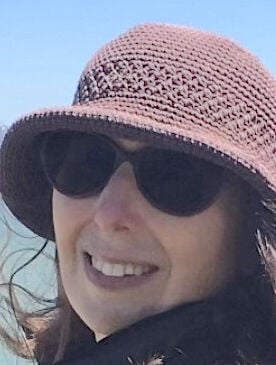
Suzanne Flecker, Ph.D., is a former Neighborhood Watch board member for San Mateo’s District 1.






(6) comments
Thank you for this thoughtful piece. There is so much fear and suspicion in our society; it cripples fact-based decision making. Kudos to leaders like Noelia Corzo who speak out for those who need help. Let's focus on facts, not property values and fear.
Agree 100%!
Suzanne - the issue is that many constituents do not feel represented and are ignored even during council meetings. Their frustration is palpable and that needs to be addressed. Many of our leaders forget why they were elected the day after they are sworn in. Our civility toward the British was abused by them which led to our Revolutionary war. Most of our political leaders are groomed by the Dem machine and they would be the last ones to upset their cozy applecart.
So Dirk, it sounds like you’re saying that the democrats are just a big basket full of deplorables. Do you really believe that, in this day and age, any people are of monolithic political beliefs? It’s actually just really hard to get any people to follow any politics. But I’m sure you know that. Or do you, it seems recently, that some people have managed to get the public’s following on political matters. Would you agree?
How interesting that Rick Bonilla (who btw is Suzanne Flecker's husband) feels he needs to chime in on this back and forth. When Rick was mayor, he seemed to do all he could to severely limit public input. But I guess silence is a form of "civility".
900 Laurel had a completely different makeup than 15 Ninth ave.
Project 90 was competent until Mr. O'Toole died, but the guys tended to wander downtown, rather into Hayward Park's neighborhood. The women of Women's House at 900 Laurel were almost reclusive due to what they had been through.
https://www.smdailyjournal.com/news/local/project-90-forced-to-downsize-redevelopment-causing-nonprofit-substance-abuse-treatment-provider-to-close-o/article_e1d3a67d-9e61-5305-9664-d36fe18bd987.html
"St Matts" is singular https://www.stmatthewcath.org/ [cool]
Welcome to the discussion.
Log In
Keep the discussion civilized. Absolutely NO personal attacks or insults directed toward writers, nor others who make comments.
Keep it clean. Please avoid obscene, vulgar, lewd, racist or sexually-oriented language.
Don't threaten. Threats of harming another person will not be tolerated.
Be truthful. Don't knowingly lie about anyone or anything.
Be proactive. Use the 'Report' link on each comment to let us know of abusive posts.
PLEASE TURN OFF YOUR CAPS LOCK.
Anyone violating these rules will be issued a warning. After the warning, comment privileges can be revoked.