California Gov. Gavin Newsom’s executive order addressing the mental health crisis among young men and boys speaks to something many of us see every day, even if we don’t always say it out loud.
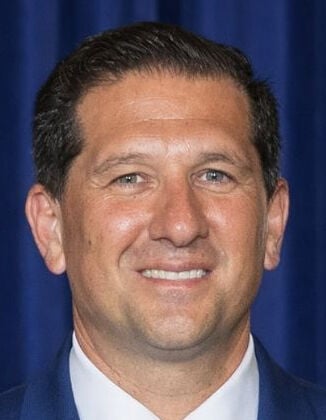
David Canepa
Too many young men are struggling with isolation, anxiety and a loss of purpose and those struggles often remain hidden behind silence.
The data explains why this matters. In California, men ages 15 to 44 die by suicide at three to four times the rate of women, making suicide one of the leading causes of death for young men. Annually, about 3,300 men kill themselves a year in California compared to approximately 1,000 women. Firearms account for a significant share of those deaths. At the same time, men are far less likely to seek mental health care, often because stigma and outdated expectations tell them they should handle problems on their own.
In San Mateo County, we recognized this reality early. In January 2024, we became the first county in the nation to formally declare loneliness a public health crisis, because we could see how disconnection was showing up in emergency rooms, classrooms, workplaces and homes.
Before loneliness became part of a broader national conversation during the COVID pandemic, our county chose to name it and invest in solutions. A Behavioral Health and Recovery Services survey conducted nearly five years ago found that nearly 50% of San Mateo County residents were lonely. Gov. Newsom’s executive order, issued in July 2025, now brings that same urgency and clarity to the state level.
Loneliness is a major driver of this crisis. Nearly one in four men under 30 reports having no close friends, a fivefold increase since 1990. Isolation increases the risk of depression, substance use and early death. Loneliness is not simply an emotional experience, it is a serious public health risk with long-term consequences. The U.S. surgeon general has warned that chronic loneliness can be as harmful to health as smoking a pack of cigarettes a day.
There is also a strong economic connection. Labor force participation among men without a college degree is at historic lows, leaving many disconnected not only from community, but from opportunity and purpose. Over the past decade, college enrollment and completion rates for men have declined, leaving too many young men without a clear path forward.
Newsom’s executive order recognizes that mental health, education and workforce participation are deeply interconnected. It directs state agencies to coordinate suicide prevention, behavioral health access, service opportunities and pathways to work, reflecting the reality that these challenges cannot be solved in isolation.
Recommended for you
In San Mateo County, we have been moving in this direction for years. Through my office’s “Loneliness to Light” initiative, we bring people together to talk openly about isolation, grief and connection. These gatherings reduce stigma and create space for honest conversations, particularly for men and young people who might otherwise suffer in silence. The message is simple but powerful that you are not alone.
The county has also invested in peer support, recognizing that some of the most effective help comes from people with lived experience. Peer specialists play a critical role in our behavioral health system, helping individuals navigate crisis, recovery and reentry into school or work.
We proudly partner with organizations such as Peninsula Family Service and NAMI San Mateo County, which provide vital mental health services for men, youth and families. These organizations are often the first place someone turns when they are struggling, offering counseling, support groups, education and community.
The executive order’s focus on pathways to work and service is just as important as its emphasis on mental health care. Apprenticeships, service opportunities and skills-based career pathways give young men structure, dignity and direction.
Supporting men’s mental health is not only compassionate, but also preventative. Stronger connections lead to healthier families, safer communities and better outcomes for everyone.
In San Mateo County, we will continue to lead, invest and partner. But I also challenge each of us to do something simple and powerful, reach out and ask how someone is really doing. Create space for connection because when we strengthen purpose, belonging and mental health, we don’t just save lives, we build a stronger, more compassionate future for everyone.
If you or someone you know may be considering suicide, contact the National Suicide Prevention Lifeline at 988 (En Español: 1-888-628-9454; Deaf and Hard of Hearing: 1-800-799-4889) or the Crisis Text Line by texting HOME to 741741.
David J. Canepa serves on the San Mateo County Board of Supervisors and is a fourth-generation San Mateo County resident.
Thanks for your guest perspective, Mr. Canepa, but you aren’t addressing the root cause of this loneliness epidemic, especially in California. Is it because of how California is governed, resulting in a high cost of living? A low level of academic achievement? California’s so-called leaders prioritizing DEI and criminal invaders over California citizens? Being unable to get ahead because due to California’s high wages, companies are resorting to AI and robots to do the work? Until root causes are addressed, providing mental health services is only a band-aid. Perhaps you can convince Newsom to do more than recognize a problem.
Hey Terence, I appreciate your perspective on this, especially being a young man myself. But I feel like you are throwing a lot at the wall... some of what you mentioned has been a problem before in California without the increase in mental health problems and loneliness among young men (high cost of living, educational issues, illegal immigration). I'm not saying those are not important factors here, but I don't think they're the "root causes" of the problem at all. I'd say the advent of AI is a much stronger claim, though it seems like Jonathan H's argument is pretty solid that phone use (including social media, short-form content, etc.) has really done a number on the mental health of men AND women. The isolating nature of the Covid-19 pandemic didn't help either. I agree with you, by the way, that in some ways improving mental health services is just a band-aid, but band-aids happen to be incredibly helpful in doing their job. I think in addition to improved mental health services, policymakers should look into restructuring education in a way that helps boys (and doesn't disadvantage girls), making the economy cleaner by eliminating rent-seeking behavior, and (yes) continuing to subsidize after school programs and programs like Big Brother Big Sister that offer young men companionship and mentorship.
Thanks for your response, nicholasdobbs, and your insights. I am throwing a lot at the wall, as Mr. Canepa has done so in his guest perspective. For instance, Mr. Canepa relates that in California, men ages 15 to 44 die of suicide more than women. The same statistic across the nation, not just in California. But what is the ratio in San Mateo County? Is it comparable? Higher? Lower? Are there more suicides in urban or suburban areas? Are these two organizations, and the cause, the best to invest in? Or is it better to invest the money in a cause which can help more people?
To me, this guest perspective sounds more like an ad for Mr. Canepa to toot his horn for a future run for another taxpayer funded position. What’s he running for now? BTW, I don’t believe I’ve seen you contributing to discussions in the past, so welcome. I’m looking forward to more of your insight and opinions.
The solutions are BIKE LANES. If Canepa and his fellow Supervisors would finally get to that "Shared Vision 2025" thing with the "Livable Neighborhoods" and walkable/bikeable cities, he wouldn't have to complain a problem he helped to create.
You know who has some of the best walkable/bikeable cities in the world?
quote: "Americans and their British counterparts scored higher on loneliness scales compared with people in 13 European nations. By contrast, middle-aged adults in Denmark, Sweden and the Netherlands."
eGerd – TBot here. Your comparison isn’t valid. Based on population alone, the USA and Britain are not Denmark, Sweden, or the Netherlands. If you shrank the USA and Britain considerably, you might have an argument and folks in the USA and Britain may not feel as lonely. But we’ll never know because the USA and Britain are not Denmark, Sweden, or the Netherlands.
That's a big one. But the crisis began before Mr. T came into office. I think the phone theory has a lot of weight—definitely a combination of phones, bad role models, Covid-19, and more that I can't think of at the moment.
Great article David. I agree that Newsom has done a good job bringing light to this subject. I would say that there are a lot of factors contributing to it, including the rise in social media, p*rn usage, and a "meaning" crisis that is maybe a bit too deep to get into here. I would add one critique to your claim, however—while declining college enrollment and graduation rates among men are concerning, I don't know if that decline can be entirely explained by the "mental health crisis" men are facing. Or even economic factors. Perhaps some men are realizing that they can educate themselves, work in the trades, or pursue other routes to economic (and social) success. I'm not saying this explains the drop in its entirety, but it's something to consider. College isn't for everyone and that is okay!
Keep the discussion civilized. Absolutely NO
personal attacks or insults directed toward writers, nor others who
make comments. Keep it clean. Please avoid obscene, vulgar, lewd,
racist or sexually-oriented language. Don't threaten. Threats of harming another
person will not be tolerated. Be truthful. Don't knowingly lie about anyone
or anything. Be proactive. Use the 'Report' link on
each comment to let us know of abusive posts. PLEASE TURN OFF YOUR CAPS LOCK. Anyone violating these rules will be issued a
warning. After the warning, comment privileges can be
revoked.
Please purchase a Premium Subscription to continue reading.
To continue, please log in, or sign up for a new account.
We offer one free story view per month. If you register for an account, you will get two additional story views. After those three total views, we ask that you support us with a subscription.
A subscription to our digital content is so much more than just access to our valuable content. It means you’re helping to support a local community institution that has, from its very start, supported the betterment of our society. Thank you very much!



(8) comments
Thanks for your guest perspective, Mr. Canepa, but you aren’t addressing the root cause of this loneliness epidemic, especially in California. Is it because of how California is governed, resulting in a high cost of living? A low level of academic achievement? California’s so-called leaders prioritizing DEI and criminal invaders over California citizens? Being unable to get ahead because due to California’s high wages, companies are resorting to AI and robots to do the work? Until root causes are addressed, providing mental health services is only a band-aid. Perhaps you can convince Newsom to do more than recognize a problem.
Hey Terence, I appreciate your perspective on this, especially being a young man myself. But I feel like you are throwing a lot at the wall... some of what you mentioned has been a problem before in California without the increase in mental health problems and loneliness among young men (high cost of living, educational issues, illegal immigration). I'm not saying those are not important factors here, but I don't think they're the "root causes" of the problem at all. I'd say the advent of AI is a much stronger claim, though it seems like Jonathan H's argument is pretty solid that phone use (including social media, short-form content, etc.) has really done a number on the mental health of men AND women. The isolating nature of the Covid-19 pandemic didn't help either. I agree with you, by the way, that in some ways improving mental health services is just a band-aid, but band-aids happen to be incredibly helpful in doing their job. I think in addition to improved mental health services, policymakers should look into restructuring education in a way that helps boys (and doesn't disadvantage girls), making the economy cleaner by eliminating rent-seeking behavior, and (yes) continuing to subsidize after school programs and programs like Big Brother Big Sister that offer young men companionship and mentorship.
Thanks for your response, nicholasdobbs, and your insights. I am throwing a lot at the wall, as Mr. Canepa has done so in his guest perspective. For instance, Mr. Canepa relates that in California, men ages 15 to 44 die of suicide more than women. The same statistic across the nation, not just in California. But what is the ratio in San Mateo County? Is it comparable? Higher? Lower? Are there more suicides in urban or suburban areas? Are these two organizations, and the cause, the best to invest in? Or is it better to invest the money in a cause which can help more people?
To me, this guest perspective sounds more like an ad for Mr. Canepa to toot his horn for a future run for another taxpayer funded position. What’s he running for now? BTW, I don’t believe I’ve seen you contributing to discussions in the past, so welcome. I’m looking forward to more of your insight and opinions.
The solutions are BIKE LANES. If Canepa and his fellow Supervisors would finally get to that "Shared Vision 2025" thing with the "Livable Neighborhoods" and walkable/bikeable cities, he wouldn't have to complain a problem he helped to create.
You know who has some of the best walkable/bikeable cities in the world?
quote: "Americans and their British counterparts scored higher on loneliness scales compared with people in 13 European nations. By contrast, middle-aged adults in Denmark, Sweden and the Netherlands."
https://www.scientificamerican.com/article/americans-are-lonelier-than-europeans-in-middle-age
... if San Mateo Democrats were just a little more capable of following the science.
eGerd – TBot here. Your comparison isn’t valid. Based on population alone, the USA and Britain are not Denmark, Sweden, or the Netherlands. If you shrank the USA and Britain considerably, you might have an argument and folks in the USA and Britain may not feel as lonely. But we’ll never know because the USA and Britain are not Denmark, Sweden, or the Netherlands.
bad role models.
That's a big one. But the crisis began before Mr. T came into office. I think the phone theory has a lot of weight—definitely a combination of phones, bad role models, Covid-19, and more that I can't think of at the moment.
Great article David. I agree that Newsom has done a good job bringing light to this subject. I would say that there are a lot of factors contributing to it, including the rise in social media, p*rn usage, and a "meaning" crisis that is maybe a bit too deep to get into here. I would add one critique to your claim, however—while declining college enrollment and graduation rates among men are concerning, I don't know if that decline can be entirely explained by the "mental health crisis" men are facing. Or even economic factors. Perhaps some men are realizing that they can educate themselves, work in the trades, or pursue other routes to economic (and social) success. I'm not saying this explains the drop in its entirety, but it's something to consider. College isn't for everyone and that is okay!
Welcome to the discussion.
Log In
Keep the discussion civilized. Absolutely NO personal attacks or insults directed toward writers, nor others who make comments.
Keep it clean. Please avoid obscene, vulgar, lewd, racist or sexually-oriented language.
Don't threaten. Threats of harming another person will not be tolerated.
Be truthful. Don't knowingly lie about anyone or anything.
Be proactive. Use the 'Report' link on each comment to let us know of abusive posts.
PLEASE TURN OFF YOUR CAPS LOCK.
Anyone violating these rules will be issued a warning. After the warning, comment privileges can be revoked.