Feedback students receive on writing usually comes through comments on structure, thesis statements and citations. While this is helpful for meeting curriculum requirements and improving on future assignments, the academic outcomes often feel temporary, with strategies memorized for one unit and forgotten as soon as it ends.
But journalistic writing, I’ve realized, works differently.
About a year ago, I published an article about a local barricade many people living in the area consider a fire hazard. I approached this article using the procedures taught in my 10th grade journalism class for conducting interviews, drafting and revising, aware of how important the issue was to the residents I spoke with, yet I still interpreted the work within the boundaries of a school assignment.
I had largely forgotten about the story until recently, when my adviser handed me an envelope addressed to me from a “concerned citizen” that had arrived in his staff mailbox. Inside was a letter from an anonymous community member who had read the article and encouraged me to write a follow-up story and share the reporting more widely, ultimately hoping that the city would respond and take action.
Although I can’t say I see a future for myself in fire hazard advocacy, the moment made me rethink my role as a student journalist. It was the first time I saw how my work could reach beyond the classroom and resonate with someone enough to prompt a response that was not just as quick as a digital reply to the story, but as thoughtful as a written letter. I felt a sense of honor I hadn’t experienced before knowing that a member of my community had been affected by my writing, beyond anything I’d felt from compliments from teachers or comments from award judges.
Recommended for you
Looking back, I realized that my initial motivation for publishing the story was not aligned with my newer revelation, but had instead been shaped by what years of schooling taught me to value. Success, as I had come to understand it, was measured through grades and academic recognition, rather than through the impact a piece of writing might have within my own community. What makes this kind of feedback so valuable isn’t just that it praises my writing abilities, but that it connects my work to the people it was meant to serve. In school, writing is usually read within the structure of an assignment and teachers evaluate it alongside many others. But journalism asks something different: you write for your community, for people you may never meet but who are invested enough to read, reflect and respond to your work.
While professional news outlets remain essential to local reporting, experiences like this have shown me that student journalists can also play a meaningful role, especially as coverage of neighborhood issues becomes increasingly scarce. Many places in the country now face local news deserts and rely on volunteer or student writers to cover community issues, even when those writers don’t yet recognize the significance of their role.
So, when someone takes the time to write back to a student journalist like myself, it confirms that our work didn’t simply exist on a page or as a metric on the analytics tab of a website, but is actually a part of a larger conversation, one that reaches beyond the classroom and into the lives of the people it was meant to inform.
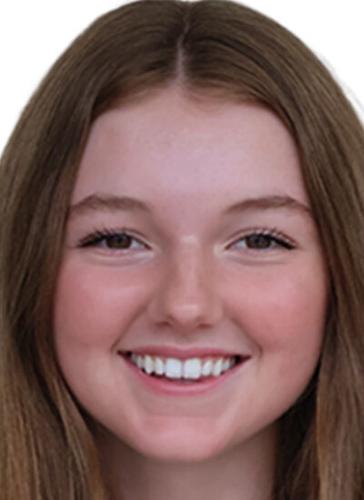
Maddie Shoop-Gardner is a junior at Carlmont High School in Belmont. Student News appears in the weekend edition. You can email Student News at news@smdailyjournal.com.
Thank you for your writing and sharing this story! Tens of thousands of people read this newspaper, sitting at a coffee shop, at home, at work, online, and the impact a few words can have should never be discounted. Perhaps a young person will see your column and decide to start writing. That would be wonderful. Someone came by my shop the other day and while ringing up her purchases she shared that she "enjoyed" my columns but "LOVED" the columns from students. That really made my day. Thanks again for your work, reminding us all that words on paper, online, matter.
Keep the discussion civilized. Absolutely NO
personal attacks or insults directed toward writers, nor others who
make comments. Keep it clean. Please avoid obscene, vulgar, lewd,
racist or sexually-oriented language. Don't threaten. Threats of harming another
person will not be tolerated. Be truthful. Don't knowingly lie about anyone
or anything. Be proactive. Use the 'Report' link on
each comment to let us know of abusive posts. PLEASE TURN OFF YOUR CAPS LOCK. Anyone violating these rules will be issued a
warning. After the warning, comment privileges can be
revoked.
Please purchase a Premium Subscription to continue reading.
To continue, please log in, or sign up for a new account.
We offer one free story view per month. If you register for an account, you will get two additional story views. After those three total views, we ask that you support us with a subscription.
A subscription to our digital content is so much more than just access to our valuable content. It means you’re helping to support a local community institution that has, from its very start, supported the betterment of our society. Thank you very much!




(1) comment
Thank you for your writing and sharing this story! Tens of thousands of people read this newspaper, sitting at a coffee shop, at home, at work, online, and the impact a few words can have should never be discounted. Perhaps a young person will see your column and decide to start writing. That would be wonderful. Someone came by my shop the other day and while ringing up her purchases she shared that she "enjoyed" my columns but "LOVED" the columns from students. That really made my day. Thanks again for your work, reminding us all that words on paper, online, matter.
Welcome to the discussion.
Log In
Keep the discussion civilized. Absolutely NO personal attacks or insults directed toward writers, nor others who make comments.
Keep it clean. Please avoid obscene, vulgar, lewd, racist or sexually-oriented language.
Don't threaten. Threats of harming another person will not be tolerated.
Be truthful. Don't knowingly lie about anyone or anything.
Be proactive. Use the 'Report' link on each comment to let us know of abusive posts.
PLEASE TURN OFF YOUR CAPS LOCK.
Anyone violating these rules will be issued a warning. After the warning, comment privileges can be revoked.