

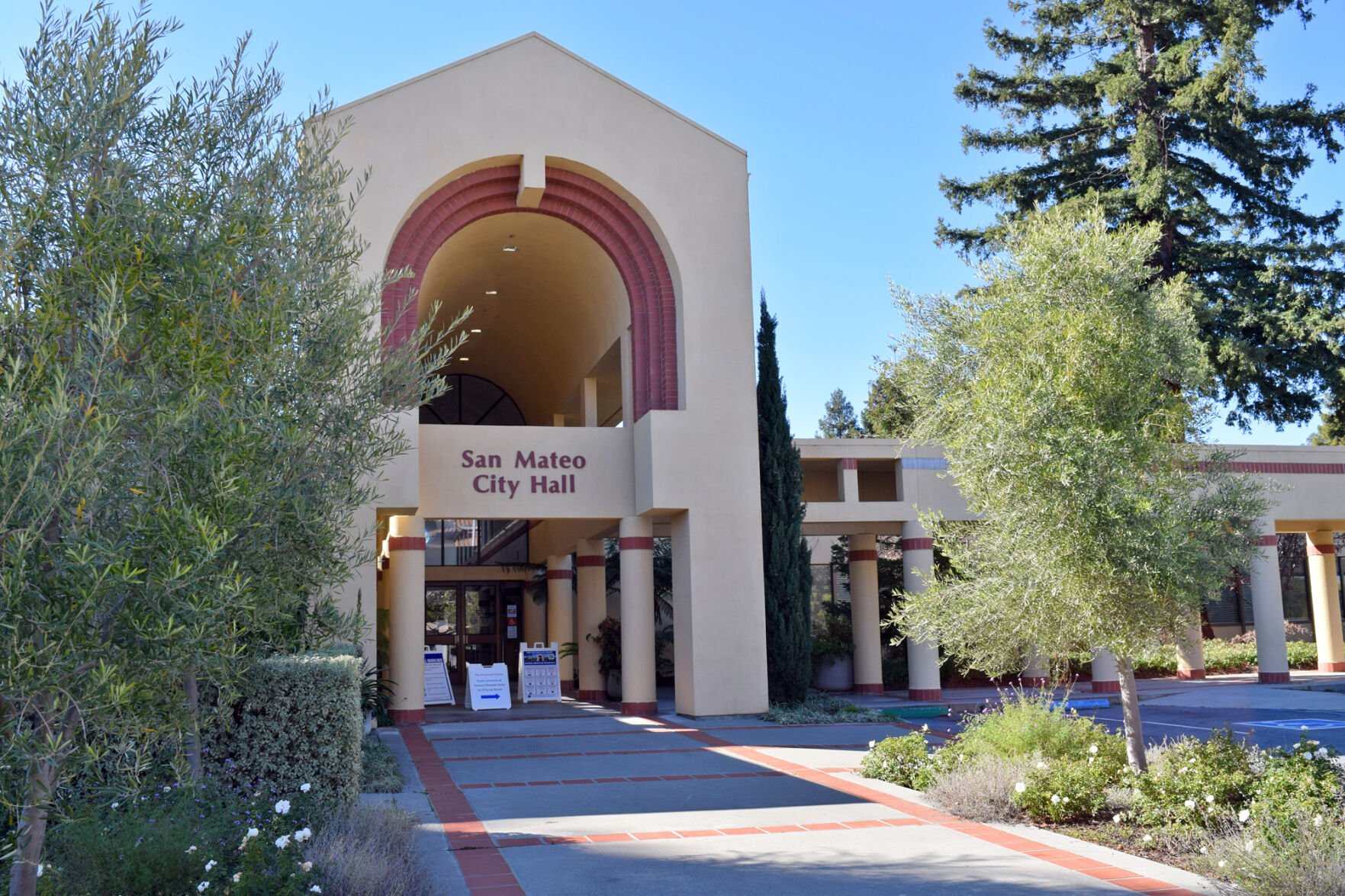
San Mateo is the latest Peninsula city to challenge the federal government over new requirements that key social services funds can’t go toward undocumented immigrants, elective abortions or promoting gender ideology.
Cities across the nation have been challenging similar grant conditions imposed by a number of federal agencies, ranging from the Department of Transportation to the Environmental Protection Agency. In September, Redwood City joined other local governments in the lawsuit, originally filed by the city of Fresno, that San Mateo is now looking to join. One of the assertions states that the newly imposed conditions on Community Development Block Grant, key funds used for social safety net programs, are unlawful.
The county also joined a lawsuit, King County v. Turner, in July challenging similar requirements.
The city of San Mateo has relied on the Community Development Block Grant, administered by the Housing and Urban Development Department, since the 1970s. It received about $766,000 last year, with the funds supporting a number of services for low-income individuals, such as food assistance, housing support and legal aid.
City Attorney Prasanna Rasiah said the conditions, which were revealed in its latest annual contract, raise several legal concerns. While the grant money has always had conditions attached to it, they must be imposed by Congress, not via presidential executive order, he said.
“It’s a basic separation of powers issue,” Rasiah said. “Congress has the purview to impose grant conditions, as opposed to the executive branch unilaterally imposing them.”
According to the most recent complaint, the Housing and Community Development Act “does not authorize HUD to condition CDBG funding on prohibiting all forms of DEI, facilitating enforcement of federal immigration laws, verification of immigration status, or prohibiting the “promot[ion]” of “gender ideology” or “elective abortion.” It adds that “none of the 2024 Appropriations Act’s directives to HUD or any other legislation authorize HUD to impose CDBG grant conditions” related to those areas.
According to a mandated annual report on its CDBG funding, San Mateo’s funds went to about 13 different programs in fiscal year 2023-24 — such as a food pantry, supportive housing via the nonprofit LifeMoves, services for youth with sexual trauma and meals for low-income children. None of the organizations that were listed on the report provide abortions, nor do they provide medical care for the LGBTQ community, according to their websites. Rachel Horst, housing and neighborhood services manager for the city of San Mateo, said she is also not aware of any of the organizations providing such services.
Still, the conditions are troubling given their vagueness, Rasiah said. For instance, it’s unclear what “promoting gender ideology” actually means in practice. The condition around immigration — that funds cannot be used to facilitate “the subsidization or promotion of illegal immigration” — is not just overly broad but would likely require local agencies to take on the federally-designated responsibility of immigration enforcement.
“It runs afoul of case law, which is that local governments are not instruments of enforcing immigration law,” Rasiah said. “That’s the purview of the federal government.”
While heightened immigration enforcement is generally unpopular in left-leaning areas like the Peninsula, the new conditions are in step with President Donald Trump’s longtime goals, which have received widespread support among Republican voters. Daniel Torunian, vice chair of the San Mateo County Republicans, said that the 2024 election affirmed voters are overwhelmingly opposed to federal taxpayer money going toward services for undocumented immigrants.
Recommended for you
“That’s a dollar that’s not going to an American. I don’t think our taxpayer dollars should be used to fund undocumented families,” Torunian said. “If it’s federal funds then it’s at the discretion of the federal government. If they’re local funds, and it’s in a much more progressive and Democrat-leaning area, I may not like it but will accept it as part of our democratic system.”
Due to the city’s decision to pursue legal action, it hasn’t received its anticipated CDBG allocation this fiscal year so far, which ends in June. It has about $230,000 left over in its fund from prior years, but that’s not nearly enough to cover the services and programs that were planned in its total annual budget of just over $1 million.
“It’s not as if we don’t have any funds left at all, but we only have a small percentage of that [total budget],” Horst said. “CDBG has for many years been the source for these safety net services and vital improvements to the community, so taking it away will absolutely result in some of the projects not happening at all or some of them being reduced in size.”
While other Peninsula cities receive CDBG funds, San Mateo and Redwood City are some of most directly affected, as they are considered entitlement cities, meaning they receive CDBG funding directly from HUD and on a consistent, annual basis.
Nick Mathiowdis, Redwood City spokesperson, said in an email that the city decided to join the lawsuit because “federal agencies have imposed vague and unauthorized conditions on local governments seeking federal grant funding.”
Toward the end of last year, a U.S. District Court granted a preliminary injunction that prohibits HUD from enforcing such conditions for the time being, though the federal government appealed that decision, and the Ninth Circuit Court of Appeals will hear arguments starting in February.
CORA, a countywide nonprofit that provides housing services for survivors of domestic abuse, relies on CDBG and other HUD funds. CEO Karen Ferguson said that in some cases, both the client and their abusive partner are undocumented, but in many instances, the victim’s abuser is here legally and uses the clients’ undocumented status to exert control.
“Immigration paperwork is often part of an abuser’s power and control over someone else,” Ferguson said. “It’s heartbreaking to think that we could not work with people who, by the nature of their immigration status, are being held in abusive situations.”
She added that the organization prioritizes resources based almost exclusively on clients’ and their children’s risk levels, not by whether they are undocumented.
“If people feel they’re at risk of deportation, then they’re going to be terribly afraid to come forward about abuse,” she said. “That doesn’t make any community healthier.”








(1) comment
What a waste of taxpayer money, and disrespect for the law. We have so many legal residents struggling to get by with paying high property taxes, living costs etc. and our city wastes time and our money on such things. I hope somehow, we can find and vote in new city officials with better judgment in the future.
Welcome to the discussion.
Log In
Keep the discussion civilized. Absolutely NO personal attacks or insults directed toward writers, nor others who make comments.
Keep it clean. Please avoid obscene, vulgar, lewd, racist or sexually-oriented language.
Don't threaten. Threats of harming another person will not be tolerated.
Be truthful. Don't knowingly lie about anyone or anything.
Be proactive. Use the 'Report' link on each comment to let us know of abusive posts.
PLEASE TURN OFF YOUR CAPS LOCK.
Anyone violating these rules will be issued a warning. After the warning, comment privileges can be revoked.