
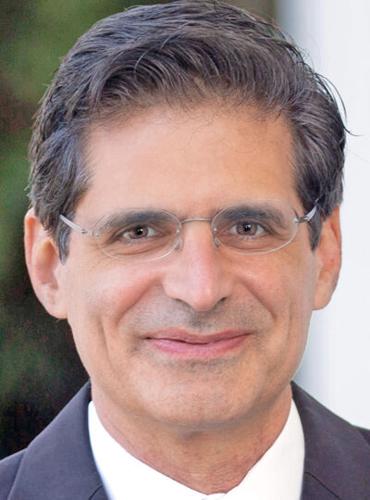
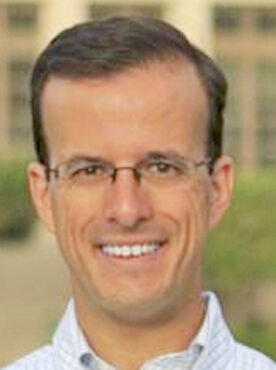


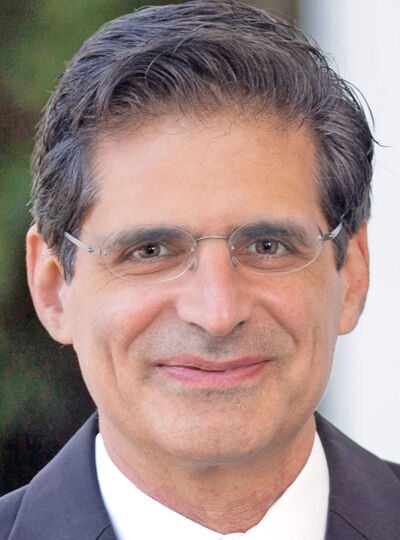

San Mateo County legislators kept the focus on consumer protections, technology, artificial intelligence and energy this year.
State Sen. Josh Becker, D-Menlo Park, and Assemblymember Marc Berman, D-Palo Alto, both authored legislation that targeted utility companies, as concerns around rising utility bills continue to grow across the state — there’s been a 90% increase for Southern California Edison customers in the past 10 years and a 110% increase for Pacific Gas and Electric customers.
One Becker-authored piece of legislation, Senate Bill 254, will revamp parts of California’s utility structure — creating public financing opportunities for large-scale projects and returning climate credits back to customers.
The bill will prevent PG&E from making a profit on $6 billion in spending, particularly on wildfire mitigation and undergrounding utility lines, Becker said, and include increased scrutiny for rate hikes. It will also establish a continuation account on the Wildfire Fund until 2045 that requires equal contributions from ratepayers and utilities.
“We don’t expect massive decreases overnight, but we’re starting that process,” Becker said.
Seven pieces of Becker-authored legislation were signed into law in 2025. Five more that he was a primary co-author or joint author on also passed, including another major energy reform — legislation that will back California’s involvement in an expanded regional power market.
Berman, who had eight pieces of his legislation signed into law this year, targeted utility companies in a different arena — prohibiting them from spending ratepayer money on lobbying and advertising.
This legislation tightens restrictions on utility company spending disclosures and increases penalties for companies that have been found spending customer payments to further political or public relations agendas.
“We can and must continue to deliver results for our constituents,” he said in a press release Dec. 18. “From lowering Californians’ utility bills to continuing to improve public safety to protecting the rights of our workers, I am excited to see these new laws take effect in 2026.”
Assemblymember Diane Papan, D-San Mateo, had four pieces of legislation signed into law in 2025 thus far. Affordability and cost-effectiveness was and is a primary focus of her legislative tenure.
“I think going forward, every topic we address has to be looked at through an affordability lens,” she said. “What does it mean and how does it trickle down to the consumer or the ratepayer? ... I am imploring my colleagues that be the lens on every piece of legislation that’s coming before us.”
She cited her work alongside other local representatives securing two-thirds of an important revenue source tied to vehicle license fee revenue, equaling about $76.5 million, from the state’s 2025 budget for San Mateo County. VLF money is typically used for county and city basic services.
Recommended for you
“I’m very much a nuts-and-bolts legislator, and so for me, it’s very much about what you can do in a very concrete fashion for your constituency,” Papan said.
Her legislation this year also centered around consumer protection, including a bill to ban toxic musk ingredients from hygiene and cosmetic products, which is in line with European regulation.
Berman and Becker also authored successful legislation that centered around consumer protections — including a bill to ensure upfront prices on rental cars from Berman and legislation from Becker that requires companies to disclose to whom they are selling sensitive personal data and what they are collecting.
“This bill, this year, increased what they have to disclose,” Becker said. “Do they collect information about immigration status? Do they collect information about union membership? Do they collect biometric information?”
As the topic of artificial intelligence is more prevalent than ever in California, Papan said she’ll be continuing to work on legislation that would require data center owners to disclose expected water use when applying for a business license. This bill passed the legislature, but was vetoed by Gov. Gavin Newsom.
“The data center one is the one going forward I will certainly be working on,” she said. “It’s going to impact all of us if data centers are so thirsty.”
Data center facilities can use hundreds of gallons to millions of gallons of water a day, a massive range that depends on their function. Artificial intelligence-powering data centers, in particular, have recently generated controversy for the amount of water they require to run.
Becker said his focus will continue to be split between quality-of-life issues in his district and larger areas, like energy and technology, where California can set first-in-the nation standards for other states to follow.
“Areas where California can really lead the nation, and I put clean energy at the top of that list, because it’s an area where we have the opportunity, and I think, responsibility,” he said.
Elections safety and security have been an ongoing focus area of Berman’s, with two bills refining the voting process signed into law this year. With the 2026 midterms quickly approaching, that will continue to be an important focus, he said in the press release.
“I am proud of our continued success to strengthen California’s election system, ensuring it remains accessible, secure and now faster,” he said. “With the 2026 midterm elections ahead, our ability to provide fast and accurate results to Californians further safeguards our elections from those who continue to spread conspiracies and undermine our democracy.”


(2) comments
Apparently, these so-called Dem leaders have solved the problems of homelessness, housing, crime, affordability, biological men cheating biological women in athletic competitions, putting the welfare of criminals and terrorists over the American people, government waste, etc.? NOT! Instead, these folks are more interested in continuing to nanny-state others instead of doing things that will make the lives of Californians better. Folks, a reminder that you get the government you deserve and apparently, this is the best of the bunch. Or the folks who receive more union campaign contributions than others.
Instead of questionable benefit piece-meal legislative efforts, why don’t they establish a California DOGE panel? And where are the tax breaks from tips and overtime in California that President Trump has given for federal taxes? Passing these tax breaks would make a difference for many workers.
Berman is interested in election integrity? CA does not require ID to vote. Insane and an obvious attempt to cheat. Why do drivers and airline travelers require ID? GA had to admit they illegally certified 315,000 ballots.
Welcome to the discussion.
Log In
Keep the discussion civilized. Absolutely NO personal attacks or insults directed toward writers, nor others who make comments.
Keep it clean. Please avoid obscene, vulgar, lewd, racist or sexually-oriented language.
Don't threaten. Threats of harming another person will not be tolerated.
Be truthful. Don't knowingly lie about anyone or anything.
Be proactive. Use the 'Report' link on each comment to let us know of abusive posts.
PLEASE TURN OFF YOUR CAPS LOCK.
Anyone violating these rules will be issued a warning. After the warning, comment privileges can be revoked.