While some are pending HCD’s final review, San Mateo County has the highest percentage of noncompliant housing elements out of all nine Bay Area counties.
A new bill progressing through the state Legislature could stiffen punishments for development-resistant cities across California, with penalties reaching $10,000 to $50,000 a month for those found violating certain housing regulations.
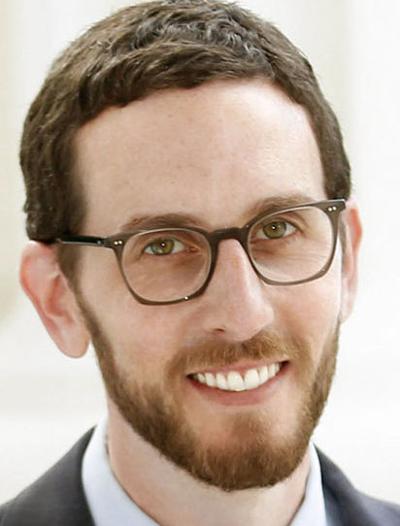
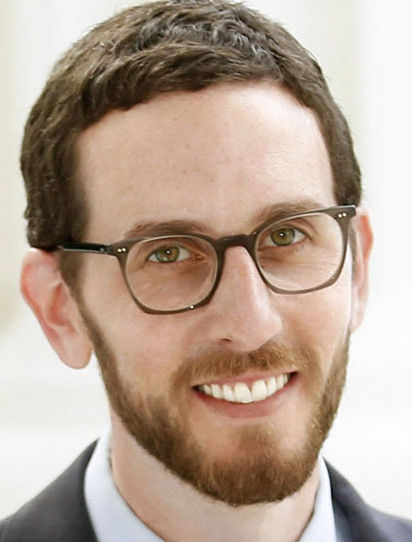
Scott Wiener
Sponsored by state Sen. Scott Wiener, D-San Francisco, the potential legislation, which recently passed one of its first hurdles in the state Senate, is a punitive stick the state could add to its repertoire for cities that drag their feet on adopting adequate housing elements or approving necessary development. Housing elements are state-mandated blueprints outlining how the city will achieve their assigned housing goals, or Regional Housing Needs Allocation, and they must get official certification from the California Department of Housing and Community Development.
According to the current state of the bill, cities would be on the hook for tens of thousands of dollars per month if their local land use decisions and actions were found to be “arbitrary, capricious, entirely lacking in evidentiary support, contrary to established public policy, unlawful, or procedurally unfair.”
But to Jason Rhine, director of Legislative Affairs at the California League of Cities, such terms, such as “procedurally unfair,” are too ambiguous and subjective, which could lead to a multitude of unintended consequences for cities that simply make a mistake or are waiting on more feedback and review from HCD.
“With that ambiguity, we don’t know what laws they’re applying it to,” Rhine said. “Under the law now, particularly the Housing Accountability Act, they could be subject to some really big fines and penalties as well, but the city would have to defy a judge’s order. This [bill] is a big departure from that. It’s saying if you violate these laws, you are subject to a $50,000 a month fine, you don’t get a chance to fix it, and the money gets deposited in some other account.”
The bill also makes a point to state housing element delays and noncompliance could also be subject to the penalty. That may be particularly consequential in San Mateo County, which has the highest rate of noncompliant housing elements out of all nine Bay Area counties, with 11 out of 21 jurisdictions still not certified by the state. Experts don’t all agree on the underlying causes, with some attributing the delay to HCD’s circuitous approval process and others pointing the finger at development-resistant cities. Numerous electeds throughout the county, as well as Assemblymember Diane Papan, D-San Mateo, have been openly critical about HCD’s delays and lack of consistent review and expertise. With this bill, cities may have to shoulder the blame and subsequent punishment for the state’s sloppiness, Rhine added.
Recommended for you
The state already has the ability to take municipalities to court if they are violating housing law — such as denying a certain type of development project — but, according to a recent press release from Wiener, cities can still force the state to “sue, lose, and then simply remedy the violation at that point and avoid penalties.”
The Housing Accountability Act also allows third parties to sue cities that unlawfully downzone or reject a development, and SB 1037 would expand both the penalty amounts and qualifying violations.
Michael Lane, state policy director for SPUR, a housing nonprofit, said there are improvements that can be made to the housing element process on the state level, such as providing RHNA numbers to cities earlier in the process, but localities still have an obligation to follow state law and play their part in alleviating the housing affordability crisis.
“This is an important piece of legislation,” Lane said. “There will always be some tension between cities and the state … but where the city councils and planning commissions are coming under a lot of pressure to not approve [developments], this gives power to local officials to say, ‘Look, we have to do this.’”
With the potentially new law, cities would have to pay up for each violation starting from the date it began, causing jurisdictions to think twice about simply waiting for a judge’s ruling.
Attorney General Rob Bonta hasn’t taken many cities to court over housing violations, except for some localities in Southern California, such as Huntington Beach. But the office has issued statements and warnings to several cities Bonta claimed are trying to skirt regulations, such as a memorandum sent to Woodside in 2022 declaring it is still subject to housing laws, despite its proclamation the town was a mountain lion sanctuary. Lane said SB 1037 is meant to address those municipalities with the most egregious track records, not those acting in good faith.
The bill was passed by the Senate Judiciary Committee on April 23 and will be heard next in the Senate Appropriations Committee.
In light of yesterday's article about projects that are on hold due to financing difficulties this legislation exposing cities to large fines if they don't kowtow to the bureaucrats at HCD - who have no public accountability - seems paranoid at best and ill serves the voters who thought they were sending actual legislators to Sacramento.
Keep the discussion civilized. Absolutely NO
personal attacks or insults directed toward writers, nor others who
make comments. Keep it clean. Please avoid obscene, vulgar, lewd,
racist or sexually-oriented language. Don't threaten. Threats of harming another
person will not be tolerated. Be truthful. Don't knowingly lie about anyone
or anything. Be proactive. Use the 'Report' link on
each comment to let us know of abusive posts. PLEASE TURN OFF YOUR CAPS LOCK. Anyone violating these rules will be issued a
warning. After the warning, comment privileges can be
revoked.
Please purchase a Premium Subscription to continue reading.
To continue, please log in, or sign up for a new account.
We offer one free story view per month. If you register for an account, you will get two additional story views. After those three total views, we ask that you support us with a subscription.
A subscription to our digital content is so much more than just access to our valuable content. It means you’re helping to support a local community institution that has, from its very start, supported the betterment of our society. Thank you very much!








(1) comment
In light of yesterday's article about projects that are on hold due to financing difficulties this legislation exposing cities to large fines if they don't kowtow to the bureaucrats at HCD - who have no public accountability - seems paranoid at best and ill serves the voters who thought they were sending actual legislators to Sacramento.
Welcome to the discussion.
Log In
Keep the discussion civilized. Absolutely NO personal attacks or insults directed toward writers, nor others who make comments.
Keep it clean. Please avoid obscene, vulgar, lewd, racist or sexually-oriented language.
Don't threaten. Threats of harming another person will not be tolerated.
Be truthful. Don't knowingly lie about anyone or anything.
Be proactive. Use the 'Report' link on each comment to let us know of abusive posts.
PLEASE TURN OFF YOUR CAPS LOCK.
Anyone violating these rules will be issued a warning. After the warning, comment privileges can be revoked.