At the close of the year, local government entities across San Mateo County collectively have a $9.1 billion endowment; slightly bigger than Dartmouth College’s and slightly smaller than Cornell’s. Unlike those endowments which are treated as long-term assets and invested accordingly, we treat ours as if it were a giant checking account.
Every month, I, like every other CFO in San Mateo County, receive an email from the County Treasurer’s Office projecting the annual interest rate on the cash it manages for local agencies. This year, the treasurer expects to earn about 3.75% — a comparatively strong result.
The problem is not that 3.75% is bad. The problem is that it is far too low for the massive amount of public money involved.
The average university endowment earned 6.8% over the past decade — the exact same amount CalPERS budgets for, and has hit over the past decade.
Why does this matter? If the county earned 6.8% instead of 3.8%, local governments would have $280 million more annually to spend. That’s close to nearly tripling Measure K annually. It’s more than double the County Office of Education’s entire budget.
To be clear, getting more return would require taking on more risk. Importantly, it would also require changes in state law created in response to the 1994 Orange County bankruptcy. However, with some common sense guardrails based on that dramatic misstep, we could move a meaningful portion of reserves into safer long-term investments that better match the scale and time horizon of public needs — without putting payroll or essential services at risk.
Here is what that could look like.
First, establish a high, legally protected liquidity floor to ensure local governments always have enough cash to pay bills. Historical cash-flow data show that even at its lowest recent point —September 2023 — the county investment pool still held about $7.3 billion. This suggests a high, conservative floor of liquid assets — say, at least $5 billion — could be locked into short-term, highly liquid instruments, while allowing the remainder to be invested longer term.
Second, current state policy is largely in response to the 1994 Orange County bankruptcy that was due to a county treasurer, Robert Citron, making a series of bad investments. As Mr. Citron later claimed, he was an inexperienced investor. We should not expect the county treasurer to be an endowment manager. Public assets should neither be used speculatively to trade in derivatives nor should public assets be heavily leveraged to chase big gains, as Mr. Citron once did.
Recommended for you
However, there is a large middle ground between speculative bets in junk bonds and today’s ultraconservative approach. For example:
· Allow investment in broad, low-cost index funds tied to diversified stock and bond markets.
· Permit counties to invest with professionally managed state pension funds, where risk controls and expertise are already in place.
· Take a page out of the UC System and create carefully structured, affordable loan programs that deploy a slice of the pool into mission-driven investments, such as lending 1.5% more than the current system’s safe returns — about 5% currently. These mission-driven loans would offer higher returns than current cash holdings while directly addressing the region’s housing challenges.
Third, these assets are controlled by local government agencies and they should be able to opt into (or out of) riskier investments. Not every agency has the same financial position or appetite for risk. Any shift toward higher return strategies should be opt‑in, with clear choices. A school district that wants the most conservative approach should be able to stay fully in money-market‑style investments. A city with strong reserves and long‑term capital needs should be able to allocate a portion into the higher‑return strategy.
Fourth, treat higher returns as one-time revenue, not a permanent raise. Investment returns will fluctuate over time. Therefore, these returns should be limited to more one-time investments, not given to public employees as salary or program commitments painful to cut in a downturn.
Even with conservative guardrails, the payoffs could be large. Imagine a state policy that required the county treasurer to keep $5 billion liquid and a fifth of local governments opted to remain in the low risk pool. That works out to an extra $1 billion more over a decade in investments across the county. That is money that could fund more affordable housing, stronger public schools, climate resilience projects, mental health services, and safer streets — without raising taxes a single cent.
The money is already sitting in our accounts. The question is whether we will keep treating it as idle cash or finally put it to work for the people of San Mateo County.
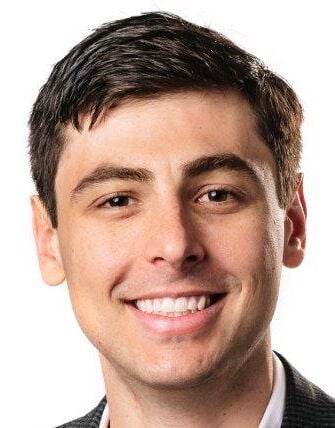
William Eger is the assistant superintendent of Finance and Operations in Ravenswood City School District and a lecturer on school finance at Stanford GSE/GSB. He has written for The Atlantic, EdWeek and other publications.
Folks, here’s the biggest takeaway… San Mateo County has a $9.1 billion with a “b” endowment. Which means you can take heart in voting NO on each and every tax proposal attempting to take more money out of your hard-earned wallets. Because again, San Mateo County has a $9.1 billion endowment. It is obvious San Mateo County isn’t hurting for money. Not only that, they want to take bigger gambles with our money, painting rosy pictures of high returns. High returns which may never materialize and in fact, may lead to bigger losses due to chasing returns. But it doesn’t matter, because even if there are losses, taxpayer will be on the hook for more taxes to pay ever-increasing union salaries, pensions, and benefits.
Perhaps we should ask what the average university endowment earned over the past two or three decades and not a potentially cherry-picked gain from our past decade. How did the global financial crisis of over 15 years ago or the dot-com bubble burst in early 2000s affect this 6.8% return? And how did San Mateo County fare with their “conservative” investments” How much of our money is expected to be invested in actively managed funds where fund managers will take a piece of the pie? And are fund managers the ones sending emails to CFOs and other financial representatives proposing this chase of returns? How about allowing investments only into broad index funds where there’s no need to pay for money managers? There are plenty of studies showing index funds do much better jobs of providing returns than actively managed funds. Because these funds don’t need to cover the hurdle of active management fees.
Folks, remember the bottom line – this is your money. Do you want the county to chase returns when the stock market is doing well? Sure, we may receive higher returns but what happens when the stock market doesn’t do well or enters a downturn, such as during the global financial crisis or the dot-com bubble? We’ll receive higher losses. And are we in an AI-bubble now? Again, what do longer term results show?
Very important quote here from the almost CFO of one of our "poorest" school districts:
"A school district that wants the most conservative approach should be able to stay fully in money-market‑style investments. A city with strong reserves and long‑term capital needs should be able to allocate a portion into the higher‑return strategy."
If Ravenswood School District was really so "poor", where would the money for risky investments even be coming from?
San Mateo County is one of the three richest counties in America and somehow voters believe that we have "poorest" school districts, the "poorest" 30 transit agencies, and "poor" cities that can't afford to pay for public safety projects or simple bike lanes?
When your leaders tell you stuff, you should listen.
Keep the discussion civilized. Absolutely NO
personal attacks or insults directed toward writers, nor others who
make comments. Keep it clean. Please avoid obscene, vulgar, lewd,
racist or sexually-oriented language. Don't threaten. Threats of harming another
person will not be tolerated. Be truthful. Don't knowingly lie about anyone
or anything. Be proactive. Use the 'Report' link on
each comment to let us know of abusive posts. PLEASE TURN OFF YOUR CAPS LOCK. Anyone violating these rules will be issued a
warning. After the warning, comment privileges can be
revoked.
Please purchase a Premium Subscription to continue reading.
To continue, please log in, or sign up for a new account.
We offer one free story view per month. If you register for an account, you will get two additional story views. After those three total views, we ask that you support us with a subscription.
A subscription to our digital content is so much more than just access to our valuable content. It means you’re helping to support a local community institution that has, from its very start, supported the betterment of our society. Thank you very much!













(2) comments
Folks, here’s the biggest takeaway… San Mateo County has a $9.1 billion with a “b” endowment. Which means you can take heart in voting NO on each and every tax proposal attempting to take more money out of your hard-earned wallets. Because again, San Mateo County has a $9.1 billion endowment. It is obvious San Mateo County isn’t hurting for money. Not only that, they want to take bigger gambles with our money, painting rosy pictures of high returns. High returns which may never materialize and in fact, may lead to bigger losses due to chasing returns. But it doesn’t matter, because even if there are losses, taxpayer will be on the hook for more taxes to pay ever-increasing union salaries, pensions, and benefits.
Perhaps we should ask what the average university endowment earned over the past two or three decades and not a potentially cherry-picked gain from our past decade. How did the global financial crisis of over 15 years ago or the dot-com bubble burst in early 2000s affect this 6.8% return? And how did San Mateo County fare with their “conservative” investments” How much of our money is expected to be invested in actively managed funds where fund managers will take a piece of the pie? And are fund managers the ones sending emails to CFOs and other financial representatives proposing this chase of returns? How about allowing investments only into broad index funds where there’s no need to pay for money managers? There are plenty of studies showing index funds do much better jobs of providing returns than actively managed funds. Because these funds don’t need to cover the hurdle of active management fees.
Folks, remember the bottom line – this is your money. Do you want the county to chase returns when the stock market is doing well? Sure, we may receive higher returns but what happens when the stock market doesn’t do well or enters a downturn, such as during the global financial crisis or the dot-com bubble? We’ll receive higher losses. And are we in an AI-bubble now? Again, what do longer term results show?
Very important quote here from the almost CFO of one of our "poorest" school districts:
"A school district that wants the most conservative approach should be able to stay fully in money-market‑style investments. A city with strong reserves and long‑term capital needs should be able to allocate a portion into the higher‑return strategy."
If Ravenswood School District was really so "poor", where would the money for risky investments even be coming from?
San Mateo County is one of the three richest counties in America and somehow voters believe that we have "poorest" school districts, the "poorest" 30 transit agencies, and "poor" cities that can't afford to pay for public safety projects or simple bike lanes?
When your leaders tell you stuff, you should listen.
Welcome to the discussion.
Log In
Keep the discussion civilized. Absolutely NO personal attacks or insults directed toward writers, nor others who make comments.
Keep it clean. Please avoid obscene, vulgar, lewd, racist or sexually-oriented language.
Don't threaten. Threats of harming another person will not be tolerated.
Be truthful. Don't knowingly lie about anyone or anything.
Be proactive. Use the 'Report' link on each comment to let us know of abusive posts.
PLEASE TURN OFF YOUR CAPS LOCK.
Anyone violating these rules will be issued a warning. After the warning, comment privileges can be revoked.