


Recently, U.S. and local housing and government leaders traveled overseas through the Global Policy Leadership Academy’s Social Housing Field Study to Austria to witness Vienna’s housing model at work.
Through lectures, panels and walking tours, we studied Vienna’s renowned strategies to address housing and homelessness, which include an innovative financial framework and sustainable mixed-income housing at scale.
The key reason Vienna is a model is that social housing is viewed as civic architecture, where public land, long-term financing, tenant protections and on-site supports combine to make housing both affordable and stable. More than 40% of Vienna’s residents live in some form of subsidized housing, which boasts one of the lowest rental rates among major Western European cities.
In contrast, the local housing challenges are immediate and growing. Recent Bay Area Point in Time counts — one-day snapshots guiding homelessness response — registered regional upticks in both overall and unsheltered populations, underscoring the urgency of more enduring, affordable options.
While Vienna’s approach isn’t a one-size-fits-all blueprint, it offers adaptable choices: long-term public ownership of land that stabilizes affordability, steady subsidy streams that bypass volatile short-term grants and the boom-and-bust cycle of development, mixed-income buildings that foster equity, and built-in social supports that reduce returns to homelessness — elements baked into decades of Vienna’s housing policy.
In the Bay Area, LifeMoves has seen at a smaller scale what consistent support does for people transitioning out of homelessness. The organization serves thousands annually across outreach, interim supportive housing, specialized services and prevention. These programs move families, couples and individuals into stable housing at rates comparable to the counties’ Continuum of Care benchmarks. Veteran-specific programs further show targeted supports paired with housing dramatically shifting outcomes. Those results matter when evaluating whether Vienna’s model could strengthen our own system.
Still, context matters. Vienna’s success rests on generations of public investment, legal frameworks and a different land market. The Bay Area faces acute land scarcity, high construction costs and a governance environment where alignment is often slowed by red tape.
That means we must be selective, prioritizing Vienna practices that are realistic here: permanent public land ownership, stronger tenant protections and committed subsidy pipelines. These efforts require acknowledging limits on an immediate scale.
Both the county and LifeMoves’ distinctive strength lies in combining modular, accelerated construction with integrated, whole-person services, an approach the Navigation Center in Redwood City has successfully demonstrated.
Recommended for you
With that considered, we should examine three of the most practical steps for our region:
1). Inventory and commit public lands for long-term affordable housing development, much like the San Mateo County-owned 555-unit redevelopment in Daly City, Midway Village.
2). Pair rapid interim housing with formal pathways to permanent units that include supports like case management, behavioral health and employment specialists.
3). Pursue multiyear subsidy deals with state and philanthropic partners to stabilize operational funding for housing.
These steps reflect Vienna’s model but are calibrated for California’s regulatory and fiscal reality. If local counties and nonprofit partners commit to these shifts, we can reduce exits back to homelessness and create housing that endures beyond one administration or budget cycle.
Vienna teaches us that sustainable and humane housing policy is civic infrastructure and avoids episodic programming. We borrow the underlying logic without assuming our political, fiscal and land constraints are identical.
The lesson: We don’t need to copy Vienna wholesale to learn from it. We need courage to reframe housing as a long-term public good, discipline to finance it accordingly and compassion to ensure those we serve are partners in design. We owe nothing less to all our neighbors.
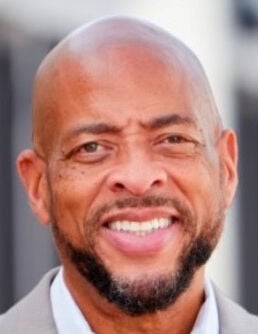
Lisa Gauthier is the District 4 member of the San Mateo County Board of Supervisors and former mayor of East Palo Alto. Aubrey Merriman serves as the CEO of LifeMoves, the leading provider of interim housing and support services on the Peninsula.


(5) comments
Thanks for your guest perspective, Ms. Gauthier and Mr. Merriman, but the Bay Area is not Vienna. We’ve known the problem for a while – affordable housing, or any housing, cannot be built affordably. Sure, it would be nice if folks in California or the Bay Area could develop affordable housing affordably. But the bottom line is where the money to subsidize these units would come from. Tax rates in California are nowhere close to Austria. Doesn’t Austria have a high progressive income tax rate, bordering on 50% or more? If California raises their state income tax rates much higher, you’d have a greater exodus of folks. And then perhaps no new housing would need to be built because higher tax paying folks have left.
Instead of traveling to Vienna for apples to oranges comparisons, couldn’t you two have attended lectures, panels, and working tours locally to figure out how to lower the cost of building? If we can't lower the costs of building housing, don’t count on housing being built without greater and greater subsidies. Developers and their shareholders won’t build housing without a profit. BTW, imagine if Newsom didn’t blow $23 billion for healthcare for non-citizens, $24 billion on homeless programs which resulted in more homeless, $billions in the past and in the future on the train-to-nowhere, and $30 billion on EDD fraud. We would have much more money to develop/subsidize housing.
Austria's tax system includes progressive personal income taxes won 55% plus a VAT of 20%. Most people prefer to choose how to spend their money, not the government, If Californians kick out their corrupt and accountable one party government there'd be more money for housing. Austria's tax system includes a progressive personal income taxes with rates to 55% plus a VAT of 0%. The average worker in Austria pays 47% in taxes. Most people prefer to choose how to spend the money, not the government, if Californians kick out their corrupt and accountable one party government there'd be more money for housing. The biggest miss for Democrats is they didn't run the HSR from downtown San Francisco out to the valley where lots off inexpensive housing could be built.
Opps - here's str I meant to send:
Austria's tax system includes progressive personal income taxes of 55% plus a VAT of 20%. Most people prefer to choose how to spend their money than giving it to the government. If Californians kicked out their corrupt and unaccountable one party politicians there'd be more money for housing. The biggest failure of Democrats was not running the HSR from downtown San Francisco to the valley where housing is affordable.
Let's have a look if a typical San Mateo Democrat like Lisa Gauthier is really the one to talk on such a subject or is she just "virtue signaling" - the go-to move of San Mateo Democrats.
Two cities in her Supervisor area just refused to provide affordable housing very recently:
Redwood City headline: "Elco Yards loses affordable housing units"
https://www.rwcpulse.com/land-use/2025/11/26/elco-yards-loses-affordable-housing-units-property-manager-scrutiny-grows/
East Palo Alto: "Council allows housing project to reduce affordable units"
https://www.almanacnews.com/housing/2025/09/03/council-allows-east-palo-alto-housing-project-to-reduce-affordable-housing/
and also
North Fair Oaks: "County cancels North Fair Oaks bicycle/pedestrian crossing of Caltrain tracks"
https://www.greencaltrain.com/2024/04/san-mateo-county-cancels-north-fair-oaks-bicycle-pedestrian-crossing-of-caltrain-tracks/
Would Vienna be doing this? Where is her outrage?
If certain cities, neighborhoods, and their schools are "underserved" we have to understand some of the same politicians writing these kinds of articles are exactly the ones "underserving".
I wonder whether this shindig at tax payer expense resulted in any conclusions that could not have been generated from their own offices. The Austrian culture and its traditions are vastly different from ours. Public housing in most European countries has been provided at a subsidized cost and is in many cases means tested. They employ a non-profit, quasi-government, housing corporation concept which was not mentioned in this report. Most units are comfortable but are bare bones which is not up to our living expectations. Renters or occupants in public housing are resigned to certain standards and are the beneficiaries of rent control. That, in turn, makes it financially challenging to upgrade their units or construct new dwellings. We can learn from the Austrians but it will take more than a week's visit by marginally qualified politicians to turn our pathetic housing situation around.
Welcome to the discussion.
Log In
Keep the discussion civilized. Absolutely NO personal attacks or insults directed toward writers, nor others who make comments.
Keep it clean. Please avoid obscene, vulgar, lewd, racist or sexually-oriented language.
Don't threaten. Threats of harming another person will not be tolerated.
Be truthful. Don't knowingly lie about anyone or anything.
Be proactive. Use the 'Report' link on each comment to let us know of abusive posts.
PLEASE TURN OFF YOUR CAPS LOCK.
Anyone violating these rules will be issued a warning. After the warning, comment privileges can be revoked.