As the end-of-year deadline to extend Affordable Care Act subsidies quickly approaches, lawmakers are struggling to come up with a solution that would stop health care premiums from doubling, on average, for the roughly 22 million Americans enrolled in the program.
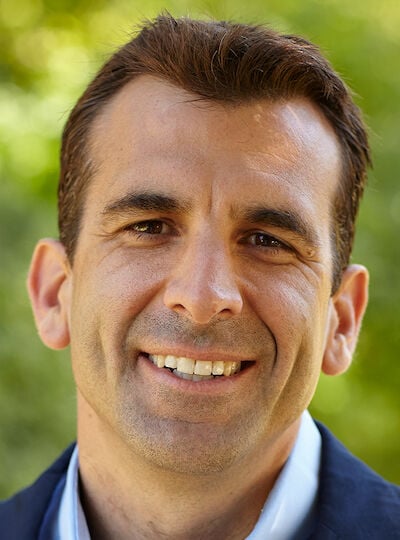
U.S. Rep. Sam Liccardo, D-San Jose, has an idea — the Fix It Act, which would extend the tax credits for two years and pay for it by cracking down on insurance companies overbilling customers, subsequently saving money with the Medicare Advantage Program.
The bill, backed by six Democrats and six Republicans and co-authored by U.S. Rep. Kevin Kiley, R-Rocklin, has company, including another House proposal to extend a scaled-back version of the subsidies and a planned Senate vote on a three-year extension of the credits with no changes.
Ultimately, Liccardo said, the priority is preserving the program in whatever way is politically viable and creating the least amount of harm to American’s health care bills.
“What we’re most interested in doing is trying to communicate in different ways to the White House the imperative for us to get this bill — or something like, it doesn’t have to be this one, something like it — to move forward,” he said.
Across the country, around 24 million Americans rely on the ACA marketplace for their health care, the vast majority of whom benefit from pandemic-era credit expansions, an analysis from KFF, a nonpartisan health policy organization, found.
In San Mateo County, around 22,100 residents are benefiting from enhanced ACA premium tax credits. If these credits expire at the end of this year, these individuals will experience a projected 112% increase in monthly premiums, paying, on average, $201 more than before, per Covered California.
Recommended for you
Republicans in both the House and Senate have struggled to come up with a cohesive, Trump-backed plan of their own as the deadline approaches. With unclear direction from the president on the one hand but the threat of constituent health care bills rising sharply, Liccardo said a significant number of his Republican colleagues have expressed support for his plan in private but are fearful of a public endorsement.
“I think a lot of folks feel frozen by the White House. What they’re telling me is “like the idea, I’d love to get on board, I’m not crazy about facing a primary MAGA challenger,’” he said. “I’m hearing that relatively consistently, and they want to make sure before they jump, that they’re not going to be punished for it.”
A major benefit of the Fix It Act — and one Liccardo thinks could appeal to fiscally conservative Republicans — is that the plan offers a way to pay for the extensions. But because it finances those extensions by changing compensation calculations for insurance companies, the companies themselves may be loath to see representatives support it, he said.
Liccardo isn’t blind to the mounting challenges that any tangible solution to this problem faces, he said.
“Most people betting on Congress to get nothing done will win the bet. So we are certainly fighting against the political inertia, and I’m not delusional about the challenge,” he said.
Still, he maintains hope that the vast majority of Americans who don’t want to see subsidies expire may be able to sway Republicans into acting before the deadline.
“This will have an impact throughout the country on the cost of health care, and every one of my colleagues and the president ran for office on a promise to do something about the lack of affordability in this country,” he said. “It gives me some hope that perhaps folks considering how their voters at home will feel about having done nothing, in a moment when doing something is imperative.”
Unfortunately, as many had already predicted, the so-called Affordable Care Act was never going to be affordable without generous and ongoing subsidies. These generous subsidies potentially resulted in health care companies jacking up their prices. And as stated, credits from the pandemic were only meant to be temporary. On the surface, this plan sounds good but in reality doesn’t do much other than kick the can down the road, while continuing to gouge taxpayers. Cracking down on insurance companies is a start but what about kicking non-citizens out of the program. In California, we know Medi-Cal has allowed non-citizens to enroll. Perhaps we can begin by ousting folks who shouldn’t be enrolled and redo the math. Who knows, it may turn out that monthly premiums will not rise because insurance companies won’t be on the hook. Meanwhile, how about Trump’s proposal to give money to the enduser? Let the market decide.
Keep the discussion civilized. Absolutely NO
personal attacks or insults directed toward writers, nor others who
make comments. Keep it clean. Please avoid obscene, vulgar, lewd,
racist or sexually-oriented language. Don't threaten. Threats of harming another
person will not be tolerated. Be truthful. Don't knowingly lie about anyone
or anything. Be proactive. Use the 'Report' link on
each comment to let us know of abusive posts. PLEASE TURN OFF YOUR CAPS LOCK. Anyone violating these rules will be issued a
warning. After the warning, comment privileges can be
revoked.
Please purchase a Premium Subscription to continue reading.
To continue, please log in, or sign up for a new account.
We offer one free story view per month. If you register for an account, you will get two additional story views. After those three total views, we ask that you support us with a subscription.
A subscription to our digital content is so much more than just access to our valuable content. It means you’re helping to support a local community institution that has, from its very start, supported the betterment of our society. Thank you very much!



(2) comments
Unfortunately, as many had already predicted, the so-called Affordable Care Act was never going to be affordable without generous and ongoing subsidies. These generous subsidies potentially resulted in health care companies jacking up their prices. And as stated, credits from the pandemic were only meant to be temporary. On the surface, this plan sounds good but in reality doesn’t do much other than kick the can down the road, while continuing to gouge taxpayers. Cracking down on insurance companies is a start but what about kicking non-citizens out of the program. In California, we know Medi-Cal has allowed non-citizens to enroll. Perhaps we can begin by ousting folks who shouldn’t be enrolled and redo the math. Who knows, it may turn out that monthly premiums will not rise because insurance companies won’t be on the hook. Meanwhile, how about Trump’s proposal to give money to the enduser? Let the market decide.
If the ACA is failing then it is the fault of the GOP.
The ACA was wrongly nicknamed "Obama Care" and Obama did care - just not enough to put his own "socialist" stamp on it.
The better name for ACA would have been "Romney Care", because this was the "capitalist" version of healthcare.
Welcome to the discussion.
Log In
Keep the discussion civilized. Absolutely NO personal attacks or insults directed toward writers, nor others who make comments.
Keep it clean. Please avoid obscene, vulgar, lewd, racist or sexually-oriented language.
Don't threaten. Threats of harming another person will not be tolerated.
Be truthful. Don't knowingly lie about anyone or anything.
Be proactive. Use the 'Report' link on each comment to let us know of abusive posts.
PLEASE TURN OFF YOUR CAPS LOCK.
Anyone violating these rules will be issued a warning. After the warning, comment privileges can be revoked.