Early this week my wife and I drove home from a large Thanksgiving family get-together in Palm Desert. Because we had time, we took the “scenic route” home rather than driving almost entirely up Interstate 5. Our route took us through Victorville, Mojave, Tehachapi and Bakersfield. Thanks to the tule fog, rather than then getting on the interstate we continued west to Paso Robles and used Highway 101 to return to the Bay Area.
I greatly appreciate the freedom to wander that my car gives me. I got my first whiff of that freedom when I obtained my driver’s license, but it really hit me when I got my first car (a well-used Chevy Vega). Over the years I developed an interest in cars as objects, but it was their ability to take me pretty much everywhere I wanted to go that really struck me. And I was by no means alone; growing up in California, where cars are king, an interest in cars and the lifestyle they offered was only natural.
Back then, cars were relatively affordable, gas was cheap, and you could do much of the maintenance yourself. That has all changed, though. For most, cars remain an important part of our daily lives, but the costs to own and operate them are an increasing challenge. Even used cars these days seem incredibly pricey. In addition to the much higher prices for both gas and maintenance (much of which needs to be done by a professional, if one’s car is of relatively recent vintage), registration fees and the costs of insurance have skyrocketed over the years. Finally, owning a car has considerable nonmonetary costs: the time one spends in traffic, for instance, and the challenges many have in finding a place to park.
Those high costs are having an effect on California’s car culture; they are pushing people to consider life here without a car. But the pace of change is slow. The benefits of car ownership are great, and our society has largely been constructed around the automobile. Yet it is difficult to imagine life without one — especially for those of us who grew up here and thus have been steeped in car culture for our entire lives.
When my wife and I bought our Redwood City home, it had a single-lane driveway that could accommodate two cars, nose-to-tail. Back in the 1940s, the property had included a detached garage at the rear of the parcel, but at some point, a pool was installed between the house and the garage, blocking vehicular access to it.
So for years I had to park my car on the street, leaving the driveway for my wife’s car. Our lifestyle necessitated two cars, so we eventually constructed a two-car garage along the front of our property, allowing us to finally keep both cars not only on-site, but also safely inside. That was a costly project, though. It took us 15 years to get to the point where we could afford the project (which also included a complete revamp of our master bedroom and bath).
Given my relationship with cars, when I look at a proposed development project I spend a fair amount of time considering what, if any, accommodations are being made for them. I find fascinating the different approaches that projects take. Given the surprisingly high cost to construct (or leave room for) parking — for a multistory garage, $30,000-$50,000 (or more) per space — it’s no wonder developers look for ways to reduce the amount of parking associated with their projects. That leads to extremes like Redwood City’s seven-story, 176-unit fully affordable housing project at 112 Vera Ave. that includes no parking at all for the building’s residents. It also leads to innovative parking solutions such as mechanical stackers that can store two or three cars in the space normally needed for one, and shared parking in projects such as Broadway Plaza in Redwood City. There, 274 of the project’s 1,435 parking stalls will be usable by the office tenants during the day, and then turned over to the project’s residential tenants during nonworking hours.
My kids’ generation do not seem very interested in car ownership. My own generation is likely reconsidering how many cars we truly need (now that I no longer commute, my wife and I could get by with just one, saving us serious money). Add in personal transportation-related services and technologies such as Uber, Lyft and Waymo, and California likely will, over time, see a reduction in the number of cars on its roads and parked on its streets and in its lots and garages. But such a transformation will take many, many years. In the meantime, residential and office projects with little or no parking are going to struggle to find tenants willing and able to live without a car.
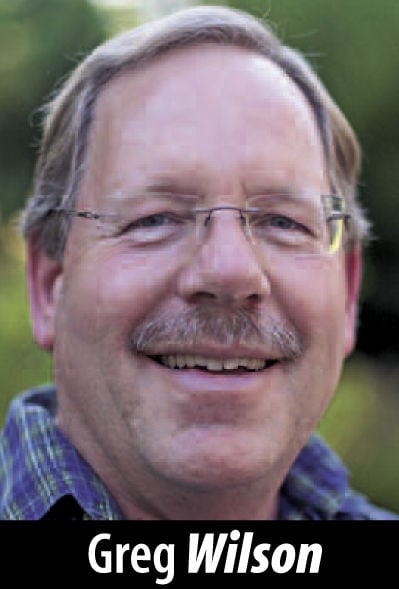
Greg Wilson is the creator of Walking Redwood City, a blog inspired by his walks throughout Redwood City and adjacent communities. He can be reached at greg@walkingRedwoodCity.com. Follow Greg on Twitter @walkingRWC.
There is nothing like a nice road trip that brings the family together. We have done them in Hawaii, Europe, East Coast, Alaska. We did not own even one of these cars - those were all rentals.
For millions of years mankind did not own cars. Even now only 10% of the world population owns cars. Turns out Humans thrive more if they don't drive. We can say for certain now that the invention of the car was detrimental to our health and lifestyles.
Basic human needs are clean air, clean water, shelter, food, social connections, etc. ... BUT transportation never was.
The government is in charge to get that water, food, etc. to the people, so some streets are necessary for trucks and deliveries, but the government is not in charge to provide every single person with their own car, their own private car storage, their own congestion-free way to get to whatever Starbucks or Ikea they want to go.
Advantages of cars
- Road Trips
- Camping Trips
- 10 bags of groceries (for TBot)
- Furniture Shopping (dito.)
- getting coffee or bagels in the morning
- Personal Freedom
(BUT none requires car ownership)
Disadvantages of cars
- Safety Issues, 40,000 killed, millions injured every year
- Billions of dollars in lost productivity
- Billions spend on new infrastructure
- billions needed to fix old infrastructure
- Traffic Congestion
- Air Pollution and Noise
- Tire Pollution and Brake Dust
- Ocean's Microplastics Pollution
- Obesity, diabetes, dementia, Alzheimer's, childhood asthma, all kinds of cancers.
- holding children back by driving them everywhere
- Oil Dependence and 9/11
- Wars in Iraq, Afghanistan and now Venezuela
There is clearly some government overreach here. Private Transportation is where 'Capitalism' and the 'Free Markets' would actually shine the most. Put the price of all these disadvantages on driving and storing cars and supply and demand would take care of the rest.
Yep. Make parking play on a level playing field. If a developer has over-estimated the price at which they can attract enough car-free tenants, well, they'll have to cut rents further and take a loss. And that's their problem, not the taxpayer's. We shouldn't just require parking, thus forcing those who would prefer to live car-free or car-lite to subsidize car-dependency for everyone.
eGerd – TBot here. I’m honored by the shout-out. The biggest takeaway (some may say hypocrisy) is that although you list multiple disadvantages of cars, you ignore them when it suits you, such as on road trips (and every time you get in a car). What price do you put on your road trip disadvantages? Apparently not much and so if you don’t “value” the disadvantages, why should others? Seems supply and demand is taking care of the market. BTW, I’m a bit miffed you didn’t add “a case of bottled water” in your list of advantages but I’ll survive. Perhaps I’ll embark on a road trip similar to everyone else when they hope in the car.
Hi Tbot, here I thought you were all about "capitalism".
But I understand, as all "good capitalists", as soon as a subsidy is going their way, they will defend it with their lives. Funny how that goes.
We have to keep in mind that driving is taxed like tobacco, alcohol, betting, gambling, drugs, etc.
These are all 'addictions' as is driving.
And you don't fix addictions by adding more "fuel" to it. Free cigarettes, cheap booze, drugs on every corner won't fix those addictions.
And yet that is exactly what the lawmakers have been doing with driving.
Freeways, free parking, free private car storage for days at a time. But as 'capitalism' teaches us, nothing in live is free, everything "free" is just another governmental program.
Now the government should subsidize stuff that leads to good and healthy behaviour, but it should punish the behavior that makes us addicted and sick.
For various reasons, the occasional road trip is not the problem, it's the daily errands that matter for our health. That kind of driving is making people very sick as obesity, diabetes and cancer rates have shown. For most people 50% of the trips could easily be replaced with healthier choices, good government and real capitalism would favor those.
eGerd – TBot here. There you go again, throwing stuff at the wall hoping something sticks. It isn’t. To wit, you assert “good capitalists” defend subsidies but I’d say you’re a “great capitalist” since you’re okay with drivers completely subsidizing bicycle infrastructure – defending freebies, if you will. Talk to us about subsidies when bicyclists begin paying their share for bicycle improvements and not freeloading off drivers. BTW, if the government was to subsidize stuff that leads to good and healthy behavior, shouldn’t Democrats stop using taxpayer money to put the welfare of criminals and terrorists over American citizens?
TBot Of course it sticks. Otherwise why so desperate to not look like a 'socialist' defending obvious and well-known subsidies for oil, cars and streets?
Only a real socialist would argue that driving isn't the greatest government overreach project ever created. How many times has the government bailed out the oil industry and the automobile industry?
In fact the tariffs are all about protecting Tesla from the superior Chinese EVs. And the war with Venezuela has nothing to do with drugs - it's about oil. In fact, the Iraq War and the "War on Terrorism" was all about oil. Gasoline killed many good American soldiers.
Anyways, currently the general fund and the National Debt are paying for your car infrastructure - making driving a very unpatriotic activity.
Whereas bike infrastructure is coming from Sales Taxes - the same taxes that pay for emergency services and public safety. No soldier ever had to die to support bicycles.
eGerd – TBot here. There you go again, again, throwing stuff at the wall hoping something sticks. It still isn’t. To wit, you assert “socialists” defend subsidies but I’d say you’re an “uber socialist” since you’re okay with drivers completely subsidizing bicycle infrastructure – defending freebies. You now attempt to throw blame at the oil industry but it matters not. Why? Because oil refined into gasoline is consumed by drivers who pay gas taxes, of which cyclists freeload to pay for cycling infrastructure. Talk to us about subsidies when bicyclists begin paying their share for bicycle improvements and not freeloading off drivers.
Bike infrastructure is paid from Sales Taxes which also pay for police, fire and ambulance. Which is fitting as more people on bicycles would lead to fewer collisions by cars. Safety pays off nicely.
Car infrastructure on the other hand is paid through National Debt. First through all these bonds of course. But secondly the dollar amount of societal benefit created through the automotive industry is dwarfing the dollar amount of damages society is paying through subsidies to oil and auto industries, subsidies for infrastructure, emergency health care cost, but most importantly supporting SLOTH leads to so many long-term care issues when all these people are getting old now.
(And "old" can start for these car people at age ~45 now)
eGerd – TBot here. I see you’re attempting a new tactic to throw against the wall but the result remains the same. Nothing is sticking. Do a search for “what do gas taxes pay for” and it’ll show your assertions are outright false and/or misleading, fooling nobody. The bottom line is that you’re still unable to justify why you’re demonizing “Big Oil” when bicyclists continue freeloading off of drivers. An inconvenient truth which remains a perpetual flaw in your arguments.
Or maybe they'll find tenants who are living car-free (taking a ride-share service or renting a vehicle when they really need one) and are delighted to finally have the option to rent an apartment without paying for a parking spot they don't want or need. There are more of those people than Greg thinks.
Keep the discussion civilized. Absolutely NO
personal attacks or insults directed toward writers, nor others who
make comments. Keep it clean. Please avoid obscene, vulgar, lewd,
racist or sexually-oriented language. Don't threaten. Threats of harming another
person will not be tolerated. Be truthful. Don't knowingly lie about anyone
or anything. Be proactive. Use the 'Report' link on
each comment to let us know of abusive posts. PLEASE TURN OFF YOUR CAPS LOCK. Anyone violating these rules will be issued a
warning. After the warning, comment privileges can be
revoked.
Please purchase a Premium Subscription to continue reading.
To continue, please log in, or sign up for a new account.
We offer one free story view per month. If you register for an account, you will get two additional story views. After those three total views, we ask that you support us with a subscription.
A subscription to our digital content is so much more than just access to our valuable content. It means you’re helping to support a local community institution that has, from its very start, supported the betterment of our society. Thank you very much!



(10) comments
There is nothing like a nice road trip that brings the family together. We have done them in Hawaii, Europe, East Coast, Alaska. We did not own even one of these cars - those were all rentals.
For millions of years mankind did not own cars. Even now only 10% of the world population owns cars. Turns out Humans thrive more if they don't drive. We can say for certain now that the invention of the car was detrimental to our health and lifestyles.
Basic human needs are clean air, clean water, shelter, food, social connections, etc. ... BUT transportation never was.
The government is in charge to get that water, food, etc. to the people, so some streets are necessary for trucks and deliveries, but the government is not in charge to provide every single person with their own car, their own private car storage, their own congestion-free way to get to whatever Starbucks or Ikea they want to go.
Advantages of cars
- Road Trips
- Camping Trips
- 10 bags of groceries (for TBot)
- Furniture Shopping (dito.)
- getting coffee or bagels in the morning
- Personal Freedom
(BUT none requires car ownership)
Disadvantages of cars
- Safety Issues, 40,000 killed, millions injured every year
- Billions of dollars in lost productivity
- Billions spend on new infrastructure
- billions needed to fix old infrastructure
- Traffic Congestion
- Air Pollution and Noise
- Tire Pollution and Brake Dust
- Ocean's Microplastics Pollution
- Obesity, diabetes, dementia, Alzheimer's, childhood asthma, all kinds of cancers.
- holding children back by driving them everywhere
- Oil Dependence and 9/11
- Wars in Iraq, Afghanistan and now Venezuela
There is clearly some government overreach here. Private Transportation is where 'Capitalism' and the 'Free Markets' would actually shine the most. Put the price of all these disadvantages on driving and storing cars and supply and demand would take care of the rest.
Yep. Make parking play on a level playing field. If a developer has over-estimated the price at which they can attract enough car-free tenants, well, they'll have to cut rents further and take a loss. And that's their problem, not the taxpayer's. We shouldn't just require parking, thus forcing those who would prefer to live car-free or car-lite to subsidize car-dependency for everyone.
eGerd – TBot here. I’m honored by the shout-out. The biggest takeaway (some may say hypocrisy) is that although you list multiple disadvantages of cars, you ignore them when it suits you, such as on road trips (and every time you get in a car). What price do you put on your road trip disadvantages? Apparently not much and so if you don’t “value” the disadvantages, why should others? Seems supply and demand is taking care of the market. BTW, I’m a bit miffed you didn’t add “a case of bottled water” in your list of advantages but I’ll survive. Perhaps I’ll embark on a road trip similar to everyone else when they hope in the car.
Hi Tbot, here I thought you were all about "capitalism".
But I understand, as all "good capitalists", as soon as a subsidy is going their way, they will defend it with their lives. Funny how that goes.
We have to keep in mind that driving is taxed like tobacco, alcohol, betting, gambling, drugs, etc.
These are all 'addictions' as is driving.
And you don't fix addictions by adding more "fuel" to it. Free cigarettes, cheap booze, drugs on every corner won't fix those addictions.
And yet that is exactly what the lawmakers have been doing with driving.
Freeways, free parking, free private car storage for days at a time. But as 'capitalism' teaches us, nothing in live is free, everything "free" is just another governmental program.
Now the government should subsidize stuff that leads to good and healthy behaviour, but it should punish the behavior that makes us addicted and sick.
For various reasons, the occasional road trip is not the problem, it's the daily errands that matter for our health. That kind of driving is making people very sick as obesity, diabetes and cancer rates have shown. For most people 50% of the trips could easily be replaced with healthier choices, good government and real capitalism would favor those.
eGerd – TBot here. There you go again, throwing stuff at the wall hoping something sticks. It isn’t. To wit, you assert “good capitalists” defend subsidies but I’d say you’re a “great capitalist” since you’re okay with drivers completely subsidizing bicycle infrastructure – defending freebies, if you will. Talk to us about subsidies when bicyclists begin paying their share for bicycle improvements and not freeloading off drivers. BTW, if the government was to subsidize stuff that leads to good and healthy behavior, shouldn’t Democrats stop using taxpayer money to put the welfare of criminals and terrorists over American citizens?
TBot Of course it sticks. Otherwise why so desperate to not look like a 'socialist' defending obvious and well-known subsidies for oil, cars and streets?
Only a real socialist would argue that driving isn't the greatest government overreach project ever created. How many times has the government bailed out the oil industry and the automobile industry?
In fact the tariffs are all about protecting Tesla from the superior Chinese EVs. And the war with Venezuela has nothing to do with drugs - it's about oil. In fact, the Iraq War and the "War on Terrorism" was all about oil. Gasoline killed many good American soldiers.
Anyways, currently the general fund and the National Debt are paying for your car infrastructure - making driving a very unpatriotic activity.
Whereas bike infrastructure is coming from Sales Taxes - the same taxes that pay for emergency services and public safety. No soldier ever had to die to support bicycles.
eGerd – TBot here. There you go again, again, throwing stuff at the wall hoping something sticks. It still isn’t. To wit, you assert “socialists” defend subsidies but I’d say you’re an “uber socialist” since you’re okay with drivers completely subsidizing bicycle infrastructure – defending freebies. You now attempt to throw blame at the oil industry but it matters not. Why? Because oil refined into gasoline is consumed by drivers who pay gas taxes, of which cyclists freeload to pay for cycling infrastructure. Talk to us about subsidies when bicyclists begin paying their share for bicycle improvements and not freeloading off drivers.
Bike infrastructure is paid from Sales Taxes which also pay for police, fire and ambulance. Which is fitting as more people on bicycles would lead to fewer collisions by cars. Safety pays off nicely.
Car infrastructure on the other hand is paid through National Debt. First through all these bonds of course. But secondly the dollar amount of societal benefit created through the automotive industry is dwarfing the dollar amount of damages society is paying through subsidies to oil and auto industries, subsidies for infrastructure, emergency health care cost, but most importantly supporting SLOTH leads to so many long-term care issues when all these people are getting old now.
(And "old" can start for these car people at age ~45 now)
eGerd – TBot here. I see you’re attempting a new tactic to throw against the wall but the result remains the same. Nothing is sticking. Do a search for “what do gas taxes pay for” and it’ll show your assertions are outright false and/or misleading, fooling nobody. The bottom line is that you’re still unable to justify why you’re demonizing “Big Oil” when bicyclists continue freeloading off of drivers. An inconvenient truth which remains a perpetual flaw in your arguments.
Or maybe they'll find tenants who are living car-free (taking a ride-share service or renting a vehicle when they really need one) and are delighted to finally have the option to rent an apartment without paying for a parking spot they don't want or need. There are more of those people than Greg thinks.
Welcome to the discussion.
Log In
Keep the discussion civilized. Absolutely NO personal attacks or insults directed toward writers, nor others who make comments.
Keep it clean. Please avoid obscene, vulgar, lewd, racist or sexually-oriented language.
Don't threaten. Threats of harming another person will not be tolerated.
Be truthful. Don't knowingly lie about anyone or anything.
Be proactive. Use the 'Report' link on each comment to let us know of abusive posts.
PLEASE TURN OFF YOUR CAPS LOCK.
Anyone violating these rules will be issued a warning. After the warning, comment privileges can be revoked.