Regional leaders are having difficulty concocting a future multicounty measure that will address the fiscal cliffs faced by some major transit agencies, such as Caltrain and BART.
An initiative to put a Bay Area transit funding measure on the 2026 ballot, led by state senators Scott Wiener, D-San Francisco, and Aisha Wahab, D-Hayward, were scrapped several months ago after failing to garner enough support. But the Metropolitan Transportation Commission, the region’s transit financing agency, is undergoing a renewed effort to address the massive projected deficits held by the region’s largest transit agencies.
Caltrain’s fare revenue more than halved between 2019 and 2023, and its postpandemic recovery levels are even lower than BART’s, according to recent estimates. Caltrain’s ridership is about 35% of its 2019 level, compared with about 44% for BART.
“If we don’t find a solution, there is going to be one hell of a fallout in this region,” James Spering, chair of MTC’s Transportation Revenue Measure Select Committee, said.
One option, discussed last month, would raise $540 million over 30 years via a half-cent sales tax and involve San Mateo, San Francisco, Alameda and Contra Costa counties — though other counties could opt in if they choose. About 90% of the funds would go to some of the largest operators like BART and Caltrain for the first eight years.
The second choice would be a nine-county regional measure, generating $1.5 billion through a parcel or payroll tax, with more funding going immediately to each county to use as they see fit.
During the Oct. 21 meeting, staff also added another option, which would be a similar version to the first choice but instead of the 30-year timeline, it would expire at the end of 10 years, which is also around when several counties’ sales tax measures expire.
But committee members have struggled to find strong consensus on the type of tax, timeline or even which counties to include.
Recommended for you
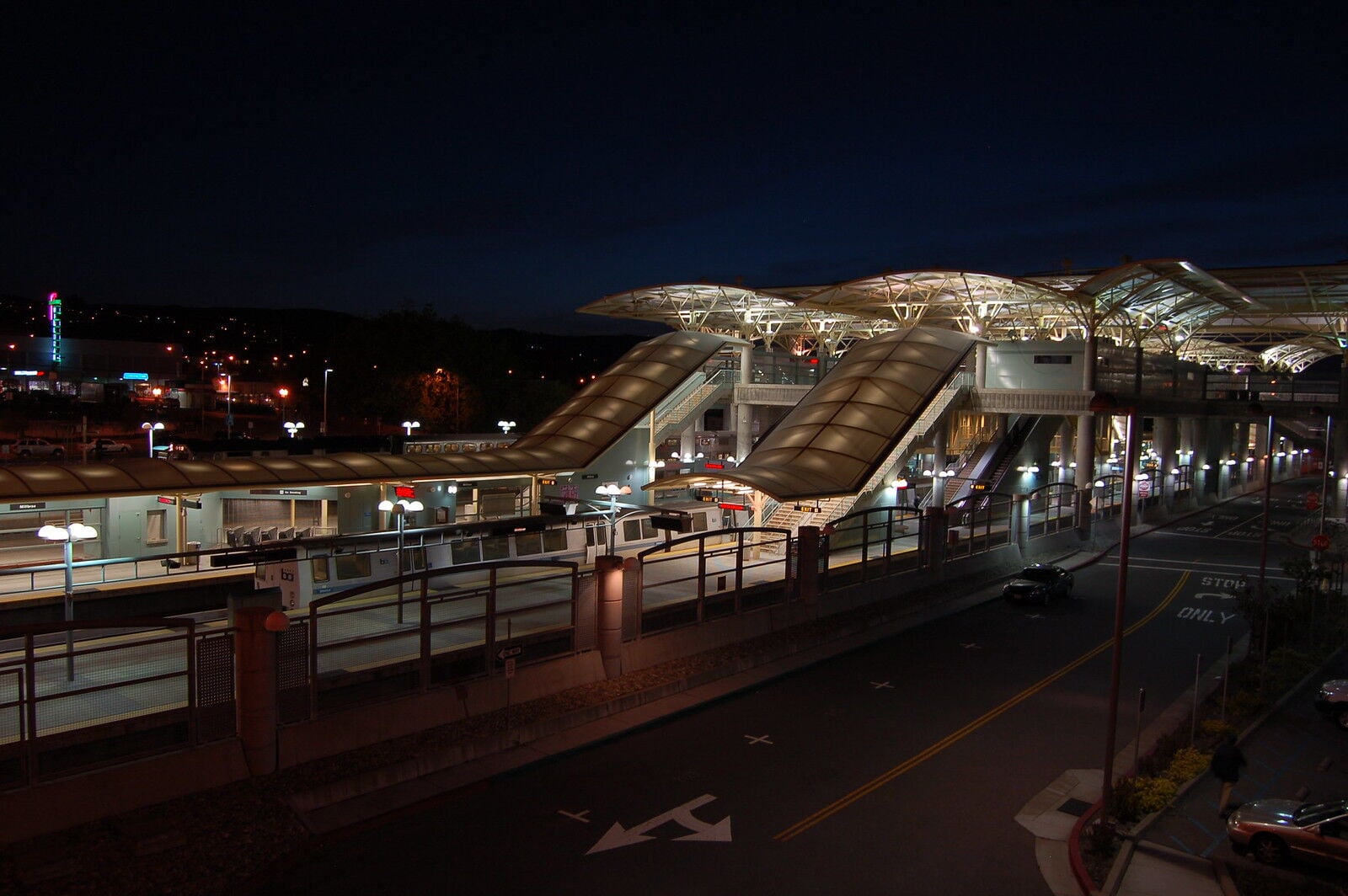
Most showed support for a four-county measure, rather than a broader Bay Area initiative, with Gina Papan, MTC commissioner and Millbrae councilmember, saying that keeping it small will be more palatable for her San Mateo County constituents. She also noted that a 10-year measure would be more likely to pass.
“I’m not sure that 30 years is sellable to the public, particularly in my jurisdiction. Yes, we want to be helpful, but it’s a little underbaked at this point,” Papan said.
Conversely, others, like committee member Adina Levin, have said that if the measure is too small, the lower funding levels may still not address transit operators’ needs and could still potentially result in service disruptions.
“If voters have to tax themselves with something that’s going to wind up with service cuts and less coordination, that’s going to be harder to pass than something that improves the system,” Levin said.
During the subcommittee meeting, most members also showed support for a sales tax, rather than a parcel or payroll tax. Papan said her jurisdiction “has 20 cities all with different parcel taxes,” which would muddy the chances of success.
Polls indicating levels of support for the various aspects of a potential measure were postponed until after the upcoming election. But several members, including David Canepa, MTC commissioner and San Mateo County supervisor, raised the lack of data as a concern, given most of the opinions and decisions by committee members and board members might be conjecture.
Public comments varied, with some transit advocates stating they prefer a larger, nine-county measure, as the four-county option does not fully address the needs of all regional transit agencies, including MUNI and AC Transit. Others, including some from various local unions, said they were not in support of any current options and preferred to see more investment in repairing current road infrastructure.
The MTC Board of Directors will discuss the measure at a future meeting. A finalized measure will need to be completed by the end of the year, as it must be introduced to the state Legislature in early 2025 to be included in the 2026 ballot.
Folks, don’t forget that these transit agencies caused the “fiscal cliffs” they’re trying to scare you into saving them from. These transit agencies are hoping they’ll fool others into paying more money to pay ever increasing transit workers’ salaries and pensions and benefits. During COVID and even to now, why are these transit agencies operating close to, if not at 100% capacity when ridership is much less than that, as detailed in this article?
Vote NO on whatever will be proposed as it will only provide money to pay transit workers’ ever increasing pensions and benefits. Let’s wait for transit agencies to make an honest effort to be fiscally responsible before rewarding them with more of our hard-earned money. BTW, note that the only option these folks are looking at is taking more money out of your pocket but there’s no option of being fiscally prudent.
If ridership is down for mass transit then the very simple step of reducing the schedules for Cal Trains, BART trains, & busses. Example, BART appears to run every 20 minutes, change this to every 30 minutes which would be a 33% reduction and it would still be incredibly convenient and flexible. Problem solved, just get the Unions out of the way.
Keep the discussion civilized. Absolutely NO
personal attacks or insults directed toward writers, nor others who
make comments. Keep it clean. Please avoid obscene, vulgar, lewd,
racist or sexually-oriented language. Don't threaten. Threats of harming another
person will not be tolerated. Be truthful. Don't knowingly lie about anyone
or anything. Be proactive. Use the 'Report' link on
each comment to let us know of abusive posts. PLEASE TURN OFF YOUR CAPS LOCK. Anyone violating these rules will be issued a
warning. After the warning, comment privileges can be
revoked.
Please purchase a Premium Subscription to continue reading.
To continue, please log in, or sign up for a new account.
We offer one free story view per month. If you register for an account, you will get two additional story views. After those three total views, we ask that you support us with a subscription.
A subscription to our digital content is so much more than just access to our valuable content. It means you’re helping to support a local community institution that has, from its very start, supported the betterment of our society. Thank you very much!










(2) comments
Folks, don’t forget that these transit agencies caused the “fiscal cliffs” they’re trying to scare you into saving them from. These transit agencies are hoping they’ll fool others into paying more money to pay ever increasing transit workers’ salaries and pensions and benefits. During COVID and even to now, why are these transit agencies operating close to, if not at 100% capacity when ridership is much less than that, as detailed in this article?
Vote NO on whatever will be proposed as it will only provide money to pay transit workers’ ever increasing pensions and benefits. Let’s wait for transit agencies to make an honest effort to be fiscally responsible before rewarding them with more of our hard-earned money. BTW, note that the only option these folks are looking at is taking more money out of your pocket but there’s no option of being fiscally prudent.
If ridership is down for mass transit then the very simple step of reducing the schedules for Cal Trains, BART trains, & busses. Example, BART appears to run every 20 minutes, change this to every 30 minutes which would be a 33% reduction and it would still be incredibly convenient and flexible. Problem solved, just get the Unions out of the way.
Welcome to the discussion.
Log In
Keep the discussion civilized. Absolutely NO personal attacks or insults directed toward writers, nor others who make comments.
Keep it clean. Please avoid obscene, vulgar, lewd, racist or sexually-oriented language.
Don't threaten. Threats of harming another person will not be tolerated.
Be truthful. Don't knowingly lie about anyone or anything.
Be proactive. Use the 'Report' link on each comment to let us know of abusive posts.
PLEASE TURN OFF YOUR CAPS LOCK.
Anyone violating these rules will be issued a warning. After the warning, comment privileges can be revoked.