Free marketeers have complained about excessive government regulation since time immemorial. You’d think, in a representative democracy, by now we would’ve figured out how to address their concerns. Of course, some will ascribe the ongoing tension to a vast left-wing conspiracy. But the actual answer is much more interesting.
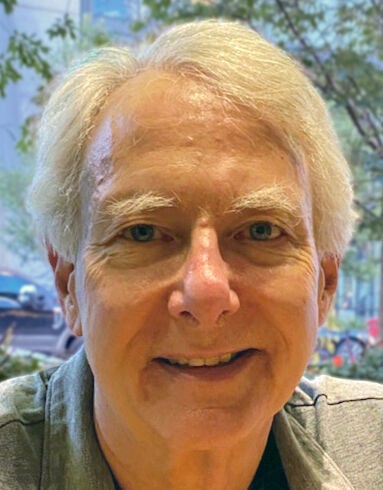
Mark Olbert
The widespread adoption of things that didn’t used to exist – public education, vastly easier communication and collaboration capabilities, better health care, just to name a few – shows people value change. To get what we want we’ve embraced market capitalism, which has a far better track record of satisfying our desires than anything else we’ve tried.
However, to unleash market capitalism’s creative power we must allow people the freedom to run their businesses. The Soviet Union demonstrated what happens when you don’t: much less cool new stuff and continual community dissatisfaction.
Unfortunately, market capitalism assumes the parties to a transaction know, and can monetize, all the costs and benefits associated with a transaction. But things like environmental pollution and cooking the planet don’t fit its paradigm. Consequently, market capitalism ignores them. Economists – of all political persuasions – recognize these “negative externalities” as one of market capitalism’s limitations.
Managing this limitation, and others, is a key responsibility of government. Adam Smith, the father of market economics, recognized this. He argued the community must step in to offset the flaws to protect itself, and its future. Failure to do so can lead to bad outcomes being subsidized by the community. All of us – whether we personally saw value in a polluting product or not – would be subsidizing a polluting manufacturer’s bottom line if we simply accepted the negative consequences of pollution.
But regulation isn’t the only approach communities take to address market capitalism’s flaws. Sometimes we ban products, even ones many people want. Because of its large population and economy, California is often at the forefront of such actions. We were, for example, the first state to require vehicles to emit less pollutants. Recently, we’ve begun to phase out certain types of engines by establishing dates after which they cannot be sold. Given the strong reaction such laws engender, why do we keep enacting them?
Recommended for you
Because individual choice can result in poor community outcomes. They’re examples of what’s called the Prisoner’s Dilemma. The traditional example of which involves two suspects arrested for committing a crime who are forbidden to talk to each other and interrogated separately. Whoever rats out the other goes free. If both turn state’s evidence, they both go to jail. The best overall outcome is if neither break so they both go free.
Prisoners dilemmas are common in economics. Take diesel engines. We use a lot of them because they are valuable in many situations. But they come with significant hidden environmental costs. Buying a diesel engine is analogous to ratting out your co-conspirator; you are better off but he must accept your pollution. The only way to avoid anyone suffering from their pollution is for no one to use diesel. That requires some outside agency to coordinate the choices individuals make.
That outside agency is government, and the coordination involves incentives, restrictions, or both. Done right, these non-market forces create enormous incentives for the marketplace to come up with better products. And market capitalism is fabulous at meeting demand for new and improved products.
While freedom is what powers market capitalism’s amazing creativity, negative externalities and prisoners dilemmas mean we can’t let it run free. Managing it will always be hard because – surprise! – the wealth generated by innovation gets used to preserve the new status quo and stymie regulation.
Manufacturers of polluting products will never demand phaseouts, regardless of how much harm their products cause. At least not until they’ve figured out how to develop something new and better to sell. But few businesses are going to cut profits today to obsolete a valuable product they’re currently allowed to sell. Unless they’re forced and/or incentivized to by the community.
Like fire, market capitalism is a powerful servant but a terrible master. The goal of embracing it is not to create billionaires; that’s simply a side effect. Instead, it’s to offer a better life to as many people as possible. Like any community tool, we, through our government, must decide how and when to use it, and what tasks we want it to perform. Even when that means banning things we currently enjoy.
Mark Olbert is a former mayor of San Carlos. He and his former school board colleague Seth Rosenblatt host The Boiling Frog podcast, which you can find at TheBoilingFrog.net.
So, overcoming the Prisoner's Dilemma, "... requires some outside agency to coordinate the choices individuals make." Hmmm... seems like if someone is coordinating your choices, then you're not really making choices.
Thanks for responding to my comment. So, coordinating choices now means "constraining" choices. Is that the word you really want to use? "Constraining" suggests forcing compulsion to follow a course of action. Again, that doesn't sound like anyone being forced into a course of action is really making choices.
Are dictates to eliminate gasoline powered vehicles a dozen years from now and banning natural gas furnaces, water heaters and stoves examples of "constraining" choices?
Progressives are fond of making claims they are pro-choice... and they are... until others want to make choices re: education, the First and Second Amendments, healthcare, union membership, light bulbs... and the list goes on.
Mr. Olbert, you may not realize this, but your column provides more of an incentive to reduce government interference. The key phrase undermining your premise… You say, “Done right…” The government has shown it can’t do right. Witness the money (much less the carbon emissions) wasted on the train-to-nowhere and the lack of forest management and wildfire actions, of which contribute more carbon emissions than CA has likely saved, for, well, ever, to name just two. Efforts at forcing folks to go all electric seems to forget that at least half of CA’s electricity (if not the whole of America) are generated by fossil-fuel burning generation plants. And then of course, we have China, India, undeveloped and even developed nations burning more fossil-fuels to meet their power requirements.
BTW, just the other day, a perfect example of just another problem with EVs… Energy Secretary, Jennifer Granholm, and her EV road trip. It must be nice having a staffer block a Georgia EV charging station with a gas-powered vehicle so Granholm can charge up. I hear the police were called but it sounds like blocking an EV charging station isn’t illegal so count on more folks to do the same. A new business idea? Use a car to block an EV from charging and then charge a small fee to move your car. Or maybe homeless folks can camp in front of an EV charger and charge a fee to move. Or, the simplest solution… folks can buy a hybrid or gas-powered car and they won’t have problems with range anxiety or fuel, or wasting time to find an EV charger and pay for someone to move themselves, or their car so they can access the charger.
Sorry, Mr. Olbert, but with your take on what you think government should do, the great Ronald Reagan’s saying has only become more apropos, “The nine most terrifying words in the English language are: I’m from the Government, and I’m here to help.”
Lol! That Reagan quote is one of the stupidest gross generalizations in human history. A great sound bite, of course. But communities do not function on sound bites alone, as we are seeing play out today courtesy of His Former Majesty 😆.
That’s the best you have, Mr. Olbert? A throwaway comment and nothing to rebut the hypocrisy of governments talking the talk but not walking the walk? Now that’s LOL, and sad. Perhaps the scale is daunting. Let's go smaller. Any comment on COP climate conference folks taking over 400 private planes to attend, being bathed in air-conditioned comfort, and dining on steaks from methane-producing cows while preaching, ironically, about carbon emissions? Any comment on Al Gore taking jets all over the place to talk, ironically, about greenhouse gases? Allow me to add another quote... This one from Jack Nicholson’s character in A Few Good Men, “You can’t handle the truth!”
Keep the discussion civilized. Absolutely NO
personal attacks or insults directed toward writers, nor others who
make comments. Keep it clean. Please avoid obscene, vulgar, lewd,
racist or sexually-oriented language. Don't threaten. Threats of harming another
person will not be tolerated. Be truthful. Don't knowingly lie about anyone
or anything. Be proactive. Use the 'Report' link on
each comment to let us know of abusive posts. PLEASE TURN OFF YOUR CAPS LOCK. Anyone violating these rules will be issued a
warning. After the warning, comment privileges can be
revoked.
Please purchase a Premium Subscription to continue reading.
To continue, please log in, or sign up for a new account.
We offer one free story view per month. If you register for an account, you will get two additional story views. After those three total views, we ask that you support us with a subscription.
A subscription to our digital content is so much more than just access to our valuable content. It means you’re helping to support a local community institution that has, from its very start, supported the betterment of our society. Thank you very much!





(6) comments
Good morning, Mark
So, overcoming the Prisoner's Dilemma, "... requires some outside agency to coordinate the choices individuals make." Hmmm... seems like if someone is coordinating your choices, then you're not really making choices.
Coordinating does not mean eliminating choice. It can mean constraining them. Which is what laws and regulations are for.
Good morning, Mark
Thanks for responding to my comment. So, coordinating choices now means "constraining" choices. Is that the word you really want to use? "Constraining" suggests forcing compulsion to follow a course of action. Again, that doesn't sound like anyone being forced into a course of action is really making choices.
Are dictates to eliminate gasoline powered vehicles a dozen years from now and banning natural gas furnaces, water heaters and stoves examples of "constraining" choices?
Progressives are fond of making claims they are pro-choice... and they are... until others want to make choices re: education, the First and Second Amendments, healthcare, union membership, light bulbs... and the list goes on.
Mr. Olbert, you may not realize this, but your column provides more of an incentive to reduce government interference. The key phrase undermining your premise… You say, “Done right…” The government has shown it can’t do right. Witness the money (much less the carbon emissions) wasted on the train-to-nowhere and the lack of forest management and wildfire actions, of which contribute more carbon emissions than CA has likely saved, for, well, ever, to name just two. Efforts at forcing folks to go all electric seems to forget that at least half of CA’s electricity (if not the whole of America) are generated by fossil-fuel burning generation plants. And then of course, we have China, India, undeveloped and even developed nations burning more fossil-fuels to meet their power requirements.
BTW, just the other day, a perfect example of just another problem with EVs… Energy Secretary, Jennifer Granholm, and her EV road trip. It must be nice having a staffer block a Georgia EV charging station with a gas-powered vehicle so Granholm can charge up. I hear the police were called but it sounds like blocking an EV charging station isn’t illegal so count on more folks to do the same. A new business idea? Use a car to block an EV from charging and then charge a small fee to move your car. Or maybe homeless folks can camp in front of an EV charger and charge a fee to move. Or, the simplest solution… folks can buy a hybrid or gas-powered car and they won’t have problems with range anxiety or fuel, or wasting time to find an EV charger and pay for someone to move themselves, or their car so they can access the charger.
Sorry, Mr. Olbert, but with your take on what you think government should do, the great Ronald Reagan’s saying has only become more apropos, “The nine most terrifying words in the English language are: I’m from the Government, and I’m here to help.”
Lol! That Reagan quote is one of the stupidest gross generalizations in human history. A great sound bite, of course. But communities do not function on sound bites alone, as we are seeing play out today courtesy of His Former Majesty 😆.
That’s the best you have, Mr. Olbert? A throwaway comment and nothing to rebut the hypocrisy of governments talking the talk but not walking the walk? Now that’s LOL, and sad. Perhaps the scale is daunting. Let's go smaller. Any comment on COP climate conference folks taking over 400 private planes to attend, being bathed in air-conditioned comfort, and dining on steaks from methane-producing cows while preaching, ironically, about carbon emissions? Any comment on Al Gore taking jets all over the place to talk, ironically, about greenhouse gases? Allow me to add another quote... This one from Jack Nicholson’s character in A Few Good Men, “You can’t handle the truth!”
Welcome to the discussion.
Log In
Keep the discussion civilized. Absolutely NO personal attacks or insults directed toward writers, nor others who make comments.
Keep it clean. Please avoid obscene, vulgar, lewd, racist or sexually-oriented language.
Don't threaten. Threats of harming another person will not be tolerated.
Be truthful. Don't knowingly lie about anyone or anything.
Be proactive. Use the 'Report' link on each comment to let us know of abusive posts.
PLEASE TURN OFF YOUR CAPS LOCK.
Anyone violating these rules will be issued a warning. After the warning, comment privileges can be revoked.