The field of biotechnology has great potential to improve the health and lives of our community and the world.
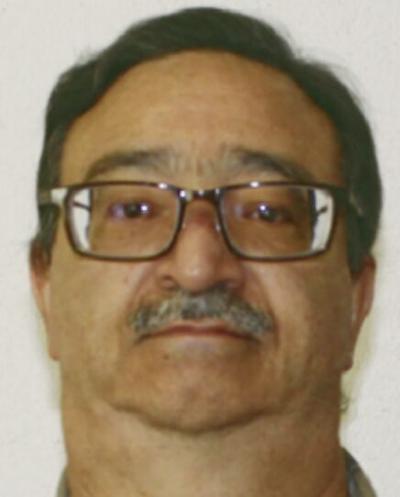
Paul Magginetti
Progress in this field has led to great strides in health care, but there are inherent risks. Industry insiders will tell you they are highly regulated, and their activities are very safe. What they won’t tell you is that privately funded research labs are not required to meet the most important regulations regarding biohazards and may not have the resources needed to meet them anyway. They won’t tell you about their checkered past when it comes to lab accidents.
Work with airborne biohazardous pathogens at the BSL3 or 4 level have inherent risks that require extraordinary precautions to prevent infection of workers and the general public. BSL3 labs conduct research on microbes that are airborne and can cause serious or potentially lethal disease through inhalation. BSL4 labs work with microbes, such as the Ebola virus and anthrax, that are so dangerous they can be used as weapons of terror. Infections caused by these types of microbes are often fatal and have no vaccine or treatment. We have just lived through the result of such a risk realized. Despite these standards, which are largely voluntary, lab accidents can and do happen. The last smallpox deaths in 1978 were the results of a lab accident, causing three deaths before it was contained. Research done with SARS resulted in two outbreaks in 2004, resulting in multiple deaths. Regardless of how you believe the COVID-19 virus started, it is a fact that subsequent efforts to study the virus led to lab-acquired infections in a Beijing lab in February of 2020 that spread to the community. A grad student working in a BSL3 lab in Missouri in 2016, while handling a lab animal, grazed a finger with a needle infected with chikungunya virus, a tropical virus with no vaccine or treatment. Only after getting sick and seeking emergency treatment did the student tell her supervisor about the slipped needle. These represent a fraction of the lab accidents that have occurred at reputable, fully regulated labs that failed despite regulation and oversight. More can be found at biosafetynow.org.
Now privately funded companies, with little or no oversight, want to get in on the act. Developers promise great wealth and prosperity for city councils willing to embrace the opportunities these developments present, insisting industry can regulate itself. This has never worked out well, as our polluted air, lands and waterways have proven. Local and county first responders are ill equipped to respond to a biohazardous pathogen release. Local BSL3 labs created during the pandemic emergency may lose funding for oversight now that the pandemic emergency is “over,” making detection of a biohazardous release unlikely, until it is too late. Unlike past industrial accidents, such a lab accident will not stay local. These pathogens know no jurisdictional or property boundaries and have the potential of spreading exponentially, person to person, far beyond a contaminated area.
Recommended for you
The practitioners of science aren’t saints, they’re human beings. Accidents can and will happen. Without an infrastructure in place for true, independent oversight, the risk of placing these labs in a highly populated urban environment far outweigh any potential benefits. Yet, with billions of dollars behind them, industry advocates are mobilizing considerable resources to convince local representatives to approve new BSL 3 and 4 labs in our communities, ignoring the risks. Biohazard labs at a BSL4 level have no place in a heavily populated urban environment and must have regulation and oversight by the CDC and Homeland Security. Until there is an infrastructure mandating true, independent oversight for all biohazard labs at a BSL3 level, they should not be permitted in our communities.
There are many applications within the industry that do not require the use of high level biohazard containment labs. Biotech industry advocates admit lower-level biohazard containment labs (i.e., BSL 1 and 2) represent the vast majority of new lab needs and pose a low risk to the community when proper, established precautions are taken. These promise similar opportunities without the oversight high level biohazard labs should require. Rules regarding labs that present a greater biohazard should reflect the desires of the community, not just the ambition of commerce. San Carlos will be the first to establish such rules at the City Council meeting 7 p.m. Monday, June 26. Now is the time to let your representatives know what level of risk is acceptable to you.
Paul Magginetti has a career of more than 40 years in the life sciences industry. He is a board member of the Greater East San Carlos Neighborhood Association and a contributing member of the Sierra Club, Loma Prieta Chapter, Biosafety working group.
Sarah Fields is the director of Community Engagement and Public Affairs for LifeMoves, the largest homeless services provider in San Mateo and Santa Clara counties. She serves on the San Mateo Parks and Recreation Commission as well as the Peninsula Multifaith Coalition’s Board of Directors. The views expressed here are her own.
Thanks for an informative perspective on the hazards of local city councils approving bio-science labs with a BSL-3 (or higher) classification. Hopefully, the San Carlos City Council will not yield to pressure from developers tonight. Hopefully, the Council will only allow the construction of labs in their city limited to a BSL-2 rating.
The Redwood City Council has received a recommendation from its Planning Commission to proceed with an environmental impact study for the development of labs in Redwood City that are just one and three-quarter's mile from East San Carlos neighborhoods. The developer, Longfellow, is seeking permission to bring tenants into labs who will be doing work at the BSL-3 level. Why? Well, Longfellow's ability to attract companies doing work at the BSL-3 level will positively impact Longfellow's bottom line. It's that simple.
San Carlos and Redwood City can say "Yes" to progress without jeopardizing the health and lives of their respective residents. Hopefully, both councils will say "No" to BSL-3 labs.
Simple. If you build it they will come. If you don’t, they won’t. But saying BSL-1 and -2 labs would promise similar opportunities are wrong, as you’ve illustrated in your discussion of the research performed at different BSL levels.
Keep the discussion civilized. Absolutely NO
personal attacks or insults directed toward writers, nor others who
make comments. Keep it clean. Please avoid obscene, vulgar, lewd,
racist or sexually-oriented language. Don't threaten. Threats of harming another
person will not be tolerated. Be truthful. Don't knowingly lie about anyone
or anything. Be proactive. Use the 'Report' link on
each comment to let us know of abusive posts. PLEASE TURN OFF YOUR CAPS LOCK. Anyone violating these rules will be issued a
warning. After the warning, comment privileges can be
revoked.
Please purchase a Premium Subscription to continue reading.
To continue, please log in, or sign up for a new account.
We offer one free story view per month. If you register for an account, you will get two additional story views. After those three total views, we ask that you support us with a subscription.
A subscription to our digital content is so much more than just access to our valuable content. It means you’re helping to support a local community institution that has, from its very start, supported the betterment of our society. Thank you very much!





(2) comments
Good morning, Paul
Thanks for an informative perspective on the hazards of local city councils approving bio-science labs with a BSL-3 (or higher) classification. Hopefully, the San Carlos City Council will not yield to pressure from developers tonight. Hopefully, the Council will only allow the construction of labs in their city limited to a BSL-2 rating.
The Redwood City Council has received a recommendation from its Planning Commission to proceed with an environmental impact study for the development of labs in Redwood City that are just one and three-quarter's mile from East San Carlos neighborhoods. The developer, Longfellow, is seeking permission to bring tenants into labs who will be doing work at the BSL-3 level. Why? Well, Longfellow's ability to attract companies doing work at the BSL-3 level will positively impact Longfellow's bottom line. It's that simple.
San Carlos and Redwood City can say "Yes" to progress without jeopardizing the health and lives of their respective residents. Hopefully, both councils will say "No" to BSL-3 labs.
Simple. If you build it they will come. If you don’t, they won’t. But saying BSL-1 and -2 labs would promise similar opportunities are wrong, as you’ve illustrated in your discussion of the research performed at different BSL levels.
Welcome to the discussion.
Log In
Keep the discussion civilized. Absolutely NO personal attacks or insults directed toward writers, nor others who make comments.
Keep it clean. Please avoid obscene, vulgar, lewd, racist or sexually-oriented language.
Don't threaten. Threats of harming another person will not be tolerated.
Be truthful. Don't knowingly lie about anyone or anything.
Be proactive. Use the 'Report' link on each comment to let us know of abusive posts.
PLEASE TURN OFF YOUR CAPS LOCK.
Anyone violating these rules will be issued a warning. After the warning, comment privileges can be revoked.