In early July, a poll of voters in the nine Bay Area Counties was released showing a solid majority would support up to a $3 increase in bridge tolls to pay for significant upgrades to our transportation system.
It is clear that voter’s frustration with traffic has reached a breaking point. With the passage of Senate Bill 1 ($52 billion in state dollars), the potential for Regional Measure 3 (the bridge toll increase), a potential half-cent sales tax plan in San Mateo County, along with federal dollars, we have a once-in-a-generation opportunity to create a transportation network that will significantly ease our current traffic congestion and develop a long-range vision for the future.
Historically, our task here in San Mateo County was to figure out how to move people to San Francisco, which used to be the job center of the Bay Area. But patterns have changed over the last several decades and we have grown to the point of having close to 500,000 jobs on the Peninsula and South Bay. This reality forces us to seriously rethink the entire equation. With BART being extended in the East Bay to San Jose and a connection with Caltrain, we will effectively have rail around the Bay. With the growing concentration of new jobs in southern San Mateo and Northern Santa Clara County, we need to expand our thinking and ambitions.
“Sacramento to Silicon Valley in one hour” is the vision I would like to promote. While this may be many years away from reality, I am convinced that with new technology and faster speeds it will be possible at some point. The reality today is that we must embrace the concept of a “mega-region” that includes the Bay Area, Sacramento and San Joaquin Valley. How do we connect these areas by rail and enable people to find more affordable housing and be able to get to work in a timely fashion?
The idea of Dumbarton Rail has been around for decades. It gained steam when SamTrans purchased the Dumbarton right of way, from Redwood City to the East Bay, an 11.5-mile stretch. This includes an abandoned rail bridge that has deteriorated over the years. The sticking point for rail has always been insufficient riders to justify this project. Currently, however, SamTrans is finalizing a study of the Dumbarton highway and rail corridor, scheduled to be released later this summer. I anticipate that new ridership numbers will begin to reflect the enormous job growth in the Peninsula and South Bay and the value of potential connections to BART, Capitol Corridor and ACE rail. Taken together, these connections could create the groundwork for the emerging mega-region.
Under this scenario, Dumbarton rail is the key missing link to seizing an historic opportunity to address our two most complex issues, traffic and access to affordable housing. In the months ahead, it is critical you stay tuned to this debate and make your voices heard. We need to get this right.
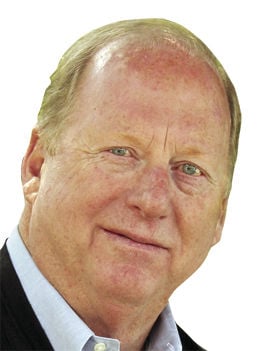
Warren Slocum represents District 4 on the San Mateo County Board of Supervisors and is a member of the Metropolitan Transportation Commission.
The critical point that planners and the public haven't quite adapted to is that the Bay Area now has job centers all over. Our transportation systems, whether highways, trains or buses haven't adapted to this new reality: they are organized around getting people to and from urban centers like San Francisco, Oakland and San Jose.
We have pretty much built Bay Area highways to capacity (or have plans in the works to do so). Past plans for additional highways can no longer be realized due to the shortsighted selling off of the right of way.
The Ubers and Lyfts, while of value, are not solving nor will they solve the problem. Multiple studies have proven that in our cities ride share vehicles are actually exacerbating traffic woes. Although they will cause fewer car crashes and fewer deaths on the roads, autonomous vehicles will not address the capacity problem.
The only solution is high-capacity transit on dedicated right of way, with ride-share or employer shuttles addressing the last-mile problem. Every other developed economy in the world has successfully adopted this model (or never moved away from it). It's only here that we haven't accepted the reality that a car-focused transportation system can't scale. However, our balkanized local transit systems can't seem to work together even to the point of coordinating timed passenger exchanges.
Dumbarton rail is an idea whose time has come. A regionally integrated system like in other countries is overdue.
Keep the discussion civilized. Absolutely NO
personal attacks or insults directed toward writers, nor others who
make comments. Keep it clean. Please avoid obscene, vulgar, lewd,
racist or sexually-oriented language. Don't threaten. Threats of harming another
person will not be tolerated. Be truthful. Don't knowingly lie about anyone
or anything. Be proactive. Use the 'Report' link on
each comment to let us know of abusive posts. PLEASE TURN OFF YOUR CAPS LOCK. Anyone violating these rules will be issued a
warning. After the warning, comment privileges can be
revoked.
Please purchase a Premium Subscription to continue reading.
To continue, please log in, or sign up for a new account.
We offer one free story view per month. If you register for an account, you will get two additional story views. After those three total views, we ask that you support us with a subscription.
A subscription to our digital content is so much more than just access to our valuable content. It means you’re helping to support a local community institution that has, from its very start, supported the betterment of our society. Thank you very much!



(1) comment
The critical point that planners and the public haven't quite adapted to is that the Bay Area now has job centers all over. Our transportation systems, whether highways, trains or buses haven't adapted to this new reality: they are organized around getting people to and from urban centers like San Francisco, Oakland and San Jose.
We have pretty much built Bay Area highways to capacity (or have plans in the works to do so). Past plans for additional highways can no longer be realized due to the shortsighted selling off of the right of way.
The Ubers and Lyfts, while of value, are not solving nor will they solve the problem. Multiple studies have proven that in our cities ride share vehicles are actually exacerbating traffic woes. Although they will cause fewer car crashes and fewer deaths on the roads, autonomous vehicles will not address the capacity problem.
The only solution is high-capacity transit on dedicated right of way, with ride-share or employer shuttles addressing the last-mile problem. Every other developed economy in the world has successfully adopted this model (or never moved away from it). It's only here that we haven't accepted the reality that a car-focused transportation system can't scale. However, our balkanized local transit systems can't seem to work together even to the point of coordinating timed passenger exchanges.
Dumbarton rail is an idea whose time has come. A regionally integrated system like in other countries is overdue.
Welcome to the discussion.
Log In
Keep the discussion civilized. Absolutely NO personal attacks or insults directed toward writers, nor others who make comments.
Keep it clean. Please avoid obscene, vulgar, lewd, racist or sexually-oriented language.
Don't threaten. Threats of harming another person will not be tolerated.
Be truthful. Don't knowingly lie about anyone or anything.
Be proactive. Use the 'Report' link on each comment to let us know of abusive posts.
PLEASE TURN OFF YOUR CAPS LOCK.
Anyone violating these rules will be issued a warning. After the warning, comment privileges can be revoked.