In November of 2019, a revised vision was unveiled for the publicly owned land at the north end of Burlingame, a parcel of 6.42 acres under the jurisdiction of the Peninsula Health Care District. Clearly the new plan has moved the needle in the direction of the public good. But there is still a lot more that can be done to achieve the utmost public good.
The initial proposal was for a senior community that included 375 apartments, 90% at market rate and 10% minimally discounted. The new proposal includes a total of 477 senior apartments, with 39 percent affordable at lower-income levels.
But why not 100 percent?
Over the past year, community members — of which we are three of many — have pressed the PHCD to embrace the idea of developing the site with 100 percent affordable housing. We have argued that the need for affordable housing is extreme and that the shortage of it has led to enormous personal suffering and to the weakening of our community as a whole. We have argued that it is not appropriate to use public land to serve purposes that the private market can and will fulfill. We have also argued that building 100 percent affordable housing would better enable the PHCD to fulfill its mission and achieve its goals of safeguarding and furthering community members’ health. While we believe our case has been compelling, as of this writing, the PHCD has not explained why a development of 100% affordable housing cannot be done.
According to PHCD literature, the objective of the proposed development — which is referred to as the Peninsula Wellness Community — is to improve the “lifelong wellness” of the people living there. But if the goal is to uphold health and wellness, the critical question becomes this: How is the greatest health benefit to be realized? Is it by improving the living situation of people of means who can afford expensive market-rate housing? Or is it by providing affordable housing to people who are currently living in substandard and unhealthy housing, who exist under constant anxiety about how they will pay the rent, and who are often forced to forego food and medical care in the interest of maintaining a roof over their heads? In our estimation, it is clearly the latter. For people living in these circumstances, of which there is a growing number in our community, the health dividend of a safe, decent and affordable home is inestimable. It far exceeds the health dividend of improving housing options and the living situation for people of financial means.
Recommended for you
We believe — and we are joined in this by a broad coalition — that there is a superior vision for this land. We maintain that the highest and best use of the land would be to turn it into a campus fully devoted to affordable housing and that the housing should be available to seniors, health care employees and people with disabilities of all ages. If the PHCD were to pursue this vision, it could transform a vacant parcel into a true powerhouse for advancing the health and well-being of the community.
In the past few years, rents in San Mateo County have more than doubled, a development that has had a profound and debilitating effect on middle-and lower-income community members. Their lives have come under siege and their health put at great risk under the weight of this spectacular rise in housing costs. The shortage of affordable housing is the leviathan that threatens our community and the lives of its residents today.
On behalf of a growing coalition of community advocates, we encourage the PHCD to continue its consideration of how this land can be used in a manner that is more highly sensitive to current community needs. Public land provides a valuable and unique opportunity to address the needs that the private market cannot, and it is imperative that we take the fullest possible advantage of this. By developing a campus fully devoted to affordable rental homes, the PHCD can demonstrate its responsiveness to current realities, more effectively uphold its mission and unleash the power of this rare parcel of public land to provide for the public good.
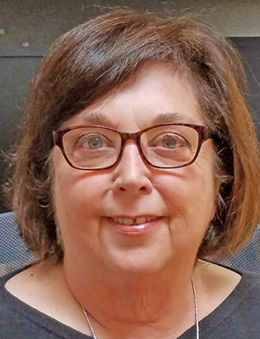
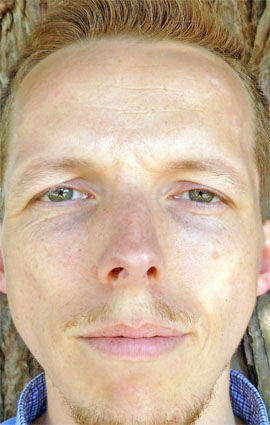
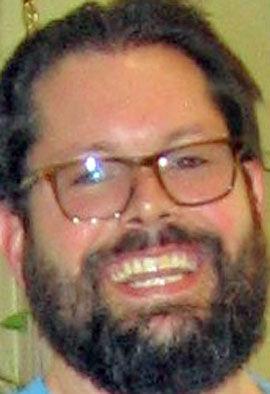
Cindy Cornell is the founder of Housing for All Burlingame, Benjamin McMullen is of the Center for Independence of Individuals with Disabilities, and Justin Alley represents One San Mateo.
Cindy - why not have the PHCD deed the property to a non-profit organization that develops the housing using tax-exempt revenue bonds. The revenue would come from the rental agreements with the tenants which covers the debt service on the bond and can result in lower than normal effective housing cost. This financing structure is used in Northern Europe for housing and we used it for financing the energy efficiency program at the University of California when I worked there. The energy savings (cost avoidance) paid for the debt service. This should be a win-win for all.
Keep the discussion civilized. Absolutely NO
personal attacks or insults directed toward writers, nor others who
make comments. Keep it clean. Please avoid obscene, vulgar, lewd,
racist or sexually-oriented language. Don't threaten. Threats of harming another
person will not be tolerated. Be truthful. Don't knowingly lie about anyone
or anything. Be proactive. Use the 'Report' link on
each comment to let us know of abusive posts. PLEASE TURN OFF YOUR CAPS LOCK. Anyone violating these rules will be issued a
warning. After the warning, comment privileges can be
revoked.
Please purchase a Premium Subscription to continue reading.
To continue, please log in, or sign up for a new account.
We offer one free story view per month. If you register for an account, you will get two additional story views. After those three total views, we ask that you support us with a subscription.
A subscription to our digital content is so much more than just access to our valuable content. It means you’re helping to support a local community institution that has, from its very start, supported the betterment of our society. Thank you very much!




(2) comments
This is a good argument that I hope can be dealt with locally. Keep Sacramento out of our cities
Cindy - why not have the PHCD deed the property to a non-profit organization that develops the housing using tax-exempt revenue bonds. The revenue would come from the rental agreements with the tenants which covers the debt service on the bond and can result in lower than normal effective housing cost. This financing structure is used in Northern Europe for housing and we used it for financing the energy efficiency program at the University of California when I worked there. The energy savings (cost avoidance) paid for the debt service. This should be a win-win for all.
Welcome to the discussion.
Log In
Keep the discussion civilized. Absolutely NO personal attacks or insults directed toward writers, nor others who make comments.
Keep it clean. Please avoid obscene, vulgar, lewd, racist or sexually-oriented language.
Don't threaten. Threats of harming another person will not be tolerated.
Be truthful. Don't knowingly lie about anyone or anything.
Be proactive. Use the 'Report' link on each comment to let us know of abusive posts.
PLEASE TURN OFF YOUR CAPS LOCK.
Anyone violating these rules will be issued a warning. After the warning, comment privileges can be revoked.