The concept of electricity began thousands of years ago. Static electricity intrigued ancient philosophers but it took many thousands of years before the concept was expanded and scientists began experimenting to gain better use of this knowledge. It took many different experimenters working from many different angles to finally put together coherent and useful inventions that led up to the world in which we now live.
Electricity flowing through copper wire wrapped around an iron bar led a British inventor, William Sturgeon (1783-1850), to demonstrate the electromagnet, a component essential for motors and sending signals. However, it was Samuel Morse that improved on some experiments that Joseph Henry did and Morse end up inventing a successful telegraph system that became a commercial success in America.
Thomas Edison, while working on perfecting the efficiency of the telegraph, made a discovery that produced the phonograph — sound coming from electricity and a piece of foil. It was in 1877 that Edison announced the production of a phonograph and the creation of the Edison Phonograph Speaking Company. In 1879, the invention of a light bulb happened.
Lee de Forest , due to his inventions related to the vacuum tube and other electronics technology, is many times referred to as the “Father of Radio.” Due to his personality and aggressive business methods, he led a controversial life and many contested this label. Nevertheless, his inventions opened up and perfected the radio. Later in life, he lived in California and developed the Phonofilm process which made the movies talk. For that, he received the Oscar.
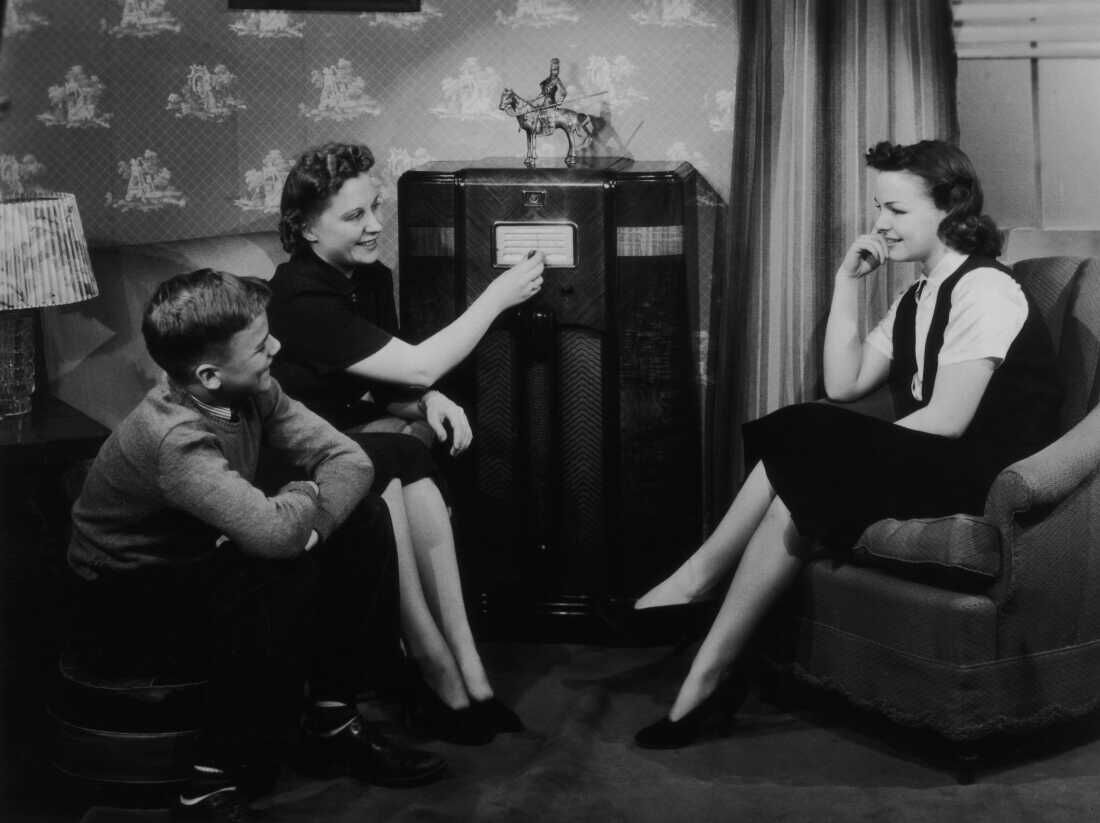
It was after the Titanic catastrophe in 1912 that radios were perfected for mass communication. The public couldn’t get enough of them. Now you didn’t have to go to a concert hall to hear fine music. Film at this time was the most popular entertainment source but now you could be entertained in your own front room.
In 1920, there were 106,521,537 people in the United States and life expectancy of males was 53.6 years, for female it was 54.6 years.
The invention of small, inexpensive radios shattered and shaped the world like no other invention before it. It was astonishing. The entertainment formats were unlimited: adventure, comedy, drama, horror, mystery, musical variety, romance thrillers. By 1930, radios were in cars.
Recommended for you
Classical musical programs included “The Voice of Firestone” and the “Bell Telephone Hour.” Country music programs like the “National Barn Dance” (1924) and the “Grand Ole Opry” (1927) catered to many people. Stars who had only been seen in vaudeville became better known due to their radio programs. Stars like: Fred Allen, Jack Benny, Victor Borge, Fanny Brice, Bob Burns, Jimmy Durante, Bob Hope, etc.
Serials became extremely popular in the 1930s. At first, they were in the form of children’s adventure shows and lasted for 15 minutes. Then Proctor and Gamble and Colgate-Palmolive, companies, which sold soap, started producing programs that appealed to women. They became called “soaps” and included programs like “The Guiding Light” (1937). Between 1937 and 2009, when it ceased airing, it produced 15,762 episodes. Other soaps such as “As the World Turns,” “General Hospital,” “Days of Our Lives,” “All My Children,” etc. filled in the day for the housewives. I can remember the traditional organ music sound while walking by houses and knew the person had a soap on.
As the nation left the roaring twenties, the early 1930s found that 12 million American households had radios.
By 1939, more than 28 million households had radios.
One of the most memorable radio programs was put on the air in 1933 when writer Wyllis Cooper introduced “Lights Out” for the listeners of the witching hour. Late night program competition was mostly music and Cooper had a 15-minute program idea he felt was needed. His format emphasizing crime thrillers and the supernatural became an immediate big hit. In 1935, the program was picked up by NBC and broadcast nationally. After a couple of months, the program was expanded to a half hour and, by 1936, Cooper had about 600 fan clubs over the United States. Unfortunately, not all the programs were recorded and very few records of these programs exist. His grisly stories were spiked with dark, tongue-in-cheek humor and characters who were eaten or skinned alive, vaporized, had arms torn off by robots, etc. really kept you on edge as you listened to it in the front room. My brothers and sisters jockeyed for the best position in front of our radio on Wednesdays in anticipation of hearing the most popular show on radio. The sound effects of the show — doors opening and shutting, knife in body, body falling, etc. were stupendous and as realistic as could be done at that time. Between 1934 to mid-1936, Cooper produced close to 120 scripts for “Lights Out.”
Cooper left the program in 1936 and a writer of equal skill, Arch Oboler, began writing the scripts. The show remained popular but Oboler quit to pursue other goals and others wrote the scripts until 1939 when the show was canceled. In 1942, Oboler revived the script and the program was aired in prime time. However, Oboler began each episode with a ominously tolling bell over which Oboler read the cryptic tagline: “It … is … later … than … you … think.” After 1943, the show lost its popularity and television adaptations were tried but failed to resurrect the original “Lights Out.”
Rediscovering the Peninsula runs every weekend. It is compiled through our archives created by Jim Clifford and the late Darold Fredricks.
Keep the discussion civilized. Absolutely NO
personal attacks or insults directed toward writers, nor others who
make comments. Keep it clean. Please avoid obscene, vulgar, lewd,
racist or sexually-oriented language. Don't threaten. Threats of harming another
person will not be tolerated. Be truthful. Don't knowingly lie about anyone
or anything. Be proactive. Use the 'Report' link on
each comment to let us know of abusive posts. PLEASE TURN OFF YOUR CAPS LOCK. Anyone violating these rules will be issued a
warning. After the warning, comment privileges can be
revoked.
Please purchase a Premium Subscription to continue reading.
To continue, please log in, or sign up for a new account.
We offer one free story view per month. If you register for an account, you will get two additional story views. After those three total views, we ask that you support us with a subscription.
A subscription to our digital content is so much more than just access to our valuable content. It means you’re helping to support a local community institution that has, from its very start, supported the betterment of our society. Thank you very much!










(0) comments
Welcome to the discussion.
Log In
Keep the discussion civilized. Absolutely NO personal attacks or insults directed toward writers, nor others who make comments.
Keep it clean. Please avoid obscene, vulgar, lewd, racist or sexually-oriented language.
Don't threaten. Threats of harming another person will not be tolerated.
Be truthful. Don't knowingly lie about anyone or anything.
Be proactive. Use the 'Report' link on each comment to let us know of abusive posts.
PLEASE TURN OFF YOUR CAPS LOCK.
Anyone violating these rules will be issued a warning. After the warning, comment privileges can be revoked.