Karina Castro’s unimaginably brutal murder at the hands of her intimate partner is hard to comprehend.
Intimate partner violence, or domestic violence, triggers our need to ask “how could this happen?” because the fear that our most intimate partners could be so dangerous is terrifying. We say to ourselves: “How could anyone be this wrong about who they chose to let in to their lives?” Could we make this same choice? In the desire to make sense of this incredible betrayal, we look for a reason, something and someone to blame. We want black and white answers to understand a dynamic that is fraught with complexity. In this instance, there are two obvious targets when we attempt to respond to the question, “what went wrong” — the legal system and the mental state of the perpetrator.
We want the legal system to keep us safe. The fact that Karina Castro had a restraining order makes us feel the police should somehow have been able to surveil her home and, to at any moment, swoop in and arrest her partner for violating the order. Unfortunately, restraining orders don’t work that way. There is no siren that goes off in the local police department when a restraining order is crossed. Restraining orders are a legal step that allows the police to act, if a violation is reported. Reporting violations rests in the hands of individuals wrestling with complex relationship issues. A restraining order’s efficacy lies in the community surrounding the potential victim and the community’s willingness to speak up and call out, when they see things. If the police had been called right when this perpetrator showed up, would that have prevented this murder? We won’t ever know.
Then the specter of mental health rears its head. We should have known this perpetrator had severe mental health issues and was not following treatment. This assumes that if someone has a disorder such as schizophrenia, that they are dangerous to society. That is not the case. There may be correlation; sometimes when brutal crimes are committed, those people also have severe mental health issues. But correlation is not causation. Having mental illness does not mean the person is more likely to kill their domestic partner. In fact, a history of violence is more predictive than any specific mental illness diagnosis. So, while it is better for people with mental health issues to get treatment, that alone does not stop domestic violence. If Karina Castro’s killer had been in treatment would that have prevented this murder? Again, we won’t ever know.
The complexity of domestic violence comes from a confluence of factors, such as: how the individuals in the relationship were raised, their expectations of each other, the strain their relationship is facing, their ability to separate and to fully engage in legal protections like restraining orders and the accessibility for all persons to receive mental health services. There is no one factor that causes an intimate partner homicide.
We must stop seeking the one thing to blame because, in this search, we seek to make the prevention of abuse a solution that does not involve all of us. It takes a community to overcome domestic violence. Neighbors and friends and co-workers need to report concerns, society needs to set the expectation that any level of abuse is unacceptable in any relationship, and people suffering mental illness deserve truly affordable and accessible treatment. Singular or one-size-fits-all reasoning is too simple for such a deeply complex and imitate crime.
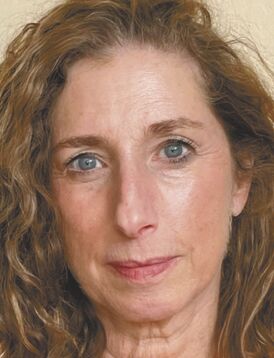
Dr. Karen Ferguson is the CEO at CORA, Community Overcoming Relationship Abuse, and a licensed clinical psychologist. With a long history of nonprofit social services leadership, Dr. Ferguson brings an expertise in humanitarian and social justice programming.
Keep the discussion civilized. Absolutely NO
personal attacks or insults directed toward writers, nor others who
make comments. Keep it clean. Please avoid obscene, vulgar, lewd,
racist or sexually-oriented language. Don't threaten. Threats of harming another
person will not be tolerated. Be truthful. Don't knowingly lie about anyone
or anything. Be proactive. Use the 'Report' link on
each comment to let us know of abusive posts. PLEASE TURN OFF YOUR CAPS LOCK. Anyone violating these rules will be issued a
warning. After the warning, comment privileges can be
revoked.
Please purchase a Premium Subscription to continue reading.
To continue, please log in, or sign up for a new account.
We offer one free story view per month. If you register for an account, you will get two additional story views. After those three total views, we ask that you support us with a subscription.
A subscription to our digital content is so much more than just access to our valuable content. It means you’re helping to support a local community institution that has, from its very start, supported the betterment of our society. Thank you very much!



(1) comment
Thank you for this enlightened and compassionate letter.
Welcome to the discussion.
Log In
Keep the discussion civilized. Absolutely NO personal attacks or insults directed toward writers, nor others who make comments.
Keep it clean. Please avoid obscene, vulgar, lewd, racist or sexually-oriented language.
Don't threaten. Threats of harming another person will not be tolerated.
Be truthful. Don't knowingly lie about anyone or anything.
Be proactive. Use the 'Report' link on each comment to let us know of abusive posts.
PLEASE TURN OFF YOUR CAPS LOCK.
Anyone violating these rules will be issued a warning. After the warning, comment privileges can be revoked.