Clean. Reliable. Affordable. Those are the challenging but achievable goals for California’s electric grid.
To affordably and reliably get the clean energy required to run a state as populous and prosperous as California, we have to build. We must build all of the rooftop renewables that we can. We need to build unprecedented amounts of new solar and battery storage at big power plants throughout California. And we must import significant quantities of renewable energy from other states to fill the gaps.
We need all three. And the third means renewed and deeper collaboration with our energy partners across the West.
State Sen. Josh Becker’s proposal, Senate Bill 540, represents the carefully considered path to achieving that partnership. SB 540 continues the march started by several western energy officials who proposed a new independently governed entity offering an expansive suite of wholesale electricity market functions across the largest possible footprint. Making a market that spans the North American West is fundamental to providing a road map for solar and wind projects to get built, helping fill the gaps left by our transformative buildout of clean energy in California.
SB 540 is also critical to enabling California’s participation in that market, and ensures our state has a leadership role since other competing market concepts are less likely to share the commitment to our clean energy goals.
During a 2020 heat wave, California’s grid operator was forced to institute rotating outages, a necessary step to protect the grid in California and neighboring states. Gov. Gavin Newsom led a careful multiagency after-action analysis, identified causes and made changes to market design. The state began accelerating the deployment of batteries to help stabilize the grid.
Heat waves and related emergencies highlight the challenges of decarbonizing a grid as large as California’s amid ever-worsening climate change. Unfortunately, we need to redouble our efforts because climate change is going to get worse even as we become more dependent on renewable energy resources that do not produce energy at all times.
SB 540 will allow us to rely on our neighbors in a pinch, and allow them to rely on us as well. This bill is a key next step.
This is nothing new. Since the Pat Brown era, California has always collaborated in securing its electricity. The transformation we are leading — with our pathbreaking commitment to clean electricity, commitment to electric vehicles and broader goal of demonstrating what a prosperous, opportunity-creating clean energy economy can look like — requires a renewed focus on interstate institutions and structures that have shaped our modern energy reality in ways that may be hard to see. They are taken for granted.
As the Western Interstate Energy Board brings together stakeholders in California and other states to continue a west-wide pathway, clean, reliable, affordable energy is edging closer to reality. Consumers, utilities and regulators must continue developing a shared market concept that creates wins for everyone.
SB 540 ensures that California can continue to benefit from those wins and increase collaboration and efficiencies across the West. History — both the early path to national economic leadership and the recent close calls with our grid — counsel continued work to create the governance necessary to build and run the 100% clean grid that is California’s North Star.
My research with economists, engineers and policy analysts has shown that clear, equitably enforced market rules are key for achieving California’s energy and climate goals. SB 540 is the next major step on a course toward practical solutions to this challenge.
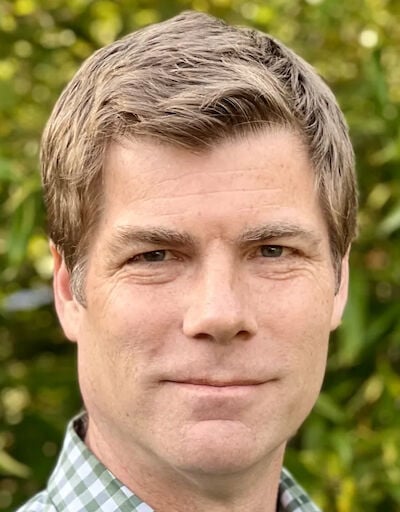
Michael Wara is the director of the Climate and Energy Policy Program and a senior research scholar at the Stanford Woods Institute for the Environment. He is also a senior director for policy at the Sustainability Accelerator within the Stanford Doerr School of Sustainability.
Thank you! I look forward to hearing about what we can do to help support SB 540 and get this legislation passed.
Unfortunately, there was a good bipartisan, national energy permitting reform bill ready for a vote last fall. Trump told the Republicans to not support it so that he could take credit for it after he was in office. Now there is so much chaos coming out of DC, who knows if this will ever happen? It is so important for California to move forward with rational and much needed legislation like this. We cannot continue burning dirty energy and expect to have a world with a predictable climate, giving us ample food, reasonable insurance costs, and the natural world as we know it.
Thanks for your guest perspective, Mr. Wara, but I don’t believe your optimistic goal will ever succeed unless California builds numerous nuclear power plants – the cleanest form of electricity generation. A few years ago, Edward Ring penned an article providing his take on Mark Jacobson’s simulation report (https://californiaglobe.com/articles/examining-californias-renewable-energy-plan/). In that article, he concluded that although we may be able to cover 1000 square miles with solar panels on existing roofs, I’m not sure Californians want 10,000 square miles of land covered with windmills and 15,000 square miles of ocean covered with windmills. What happens if the wind doesn’t blow and the sun doesn’t shine? And let’s not get started with what happens to the hazardous waste when solar panels end their useful life.
I wish you good luck in your endeavor but there will be inevitable electricity rate increases due to this misguided attempt at providing only “clean” energy. BTW, there’s still the issue of forest and fire management. The carbon emitted from forest fires easily surpasses any supposed carbon “savings” from clean energy.
"Clean. Reliable. Affordable." The Europeans, who are much further ahead in this endeavor, will tell you that these terms are mutually exclusive, specifically the last one. The proposed bill is a worthwhile effort and is overdue but the assumption is that the neighboring states will have carbon free energy available to us. Wouldn't you think that they would use it for their own requirements first? California was at one time interconnected with neighboring states and never had outage problems. Of course, once the Energy Commission started monkeying around with elusive and unreliable green energy, we are now trying to catch up with thoroughly unreliable, expensive, and distributed sources of electricity. The author even mentioned that massive battery storage needs to be installed next to generation plants. What type of plants is he referring to? Fossil fuel fired, of course, so those are still not out of the picture. Let's not kid ourselves, green energy is great for those who insist on paying a premium but the industrial and commercial base, i.e. data centers, will vanish from the areas served by this proposed grid due to economics. Again, look at what is happening in Germany and the Netherlands where automobile manufacturing and chemical industries are closing down, throwing tens of thousands of workers out on the streets. It is so convenient for an academic to preach from his pulpit and not have to worry about the dire consequences.
A conversion to green energy is a laudable goal but can’t happen until we have enough “aways on” green energy. Batteries are impossibly expensive and dangerous as a recent storage battery fire at a California power plant showed.
But there is a promising green project called the “Advanced Clean Energy Storage” project in Delta Utah that stores hydrogen made from solar on sunny days in pre-existing underground salt caverns for use when there's no sun or wind. This could be a game changer depending on costs.
There are 3 things a community needs to be successful - in this order - Cheap Energy - Affordable Housing - the right to grow and cultivate our own food locally. California has none of these.
The reason that PG&E prices are going up, up, up is the fact that PG&E makes money on the transportation part. Hence PG&E and it's "sponsored" politicians push for energy being produced far, far away. But what San Mateo really needs is more local production and at least one energy source that covers 20% of the baseline. That could be one form of smaller nuclear power, that is frowned upon for various reasons. That could be geothermal, which California with all our fault lines is a great location for.
My guess is that Senator Becker is looking for more out-of-state projects to "greenwash" local carbon emissions. Currently Peninsula Clean Energy (PCE) pretends to own hydropower from Shasta, wind power from Kern County and from solar farms in the desert. All of these power sources existed long before PCE existed, none of these power sources would stop producing without PCE, all San Mateo is doing is buying "green bragging rights". But since more and more counties are doing the same to look green, San Mateo now has to venture way out to source "virtual" wind power from New Mexico.
This is all a scam of course. How do we know?
If San Mateo politicians like Kevin Mullin, Josh Becker, Diane and Gina Papan, David Canepa, Rico E. Medina, Jeff Gee, and the long list of C/CAG and PCE members were really "green" we would see three things as a start:
- protected bike lanes everywhere
- much better public transportation including bus lanes
- a few wind turbines along our coast and the Bay
These are the easiest and cheapest projects to show a little climate action by local politicians.
But there is more that PCE and its huge workforce and board could be exploring. San Mateo always likes to be compared to Silicon Valley, but we don't see interesting projects like Flywheel Energy Storage (FES), local geothermal, local wind, how about some gravity-based energy storage systems. Instead they are buying into the short-lived and dangerous lithium-ion battery storage from companies in Texas (of all places) and watch it burn down.
Keep the discussion civilized. Absolutely NO
personal attacks or insults directed toward writers, nor others who
make comments. Keep it clean. Please avoid obscene, vulgar, lewd,
racist or sexually-oriented language. Don't threaten. Threats of harming another
person will not be tolerated. Be truthful. Don't knowingly lie about anyone
or anything. Be proactive. Use the 'Report' link on
each comment to let us know of abusive posts. PLEASE TURN OFF YOUR CAPS LOCK. Anyone violating these rules will be issued a
warning. After the warning, comment privileges can be
revoked.
Please purchase a Premium Subscription to continue reading.
To continue, please log in, or sign up for a new account.
We offer one free story view per month. If you register for an account, you will get two additional story views. After those three total views, we ask that you support us with a subscription.
A subscription to our digital content is so much more than just access to our valuable content. It means you’re helping to support a local community institution that has, from its very start, supported the betterment of our society. Thank you very much!



(6) comments
Thank you! I look forward to hearing about what we can do to help support SB 540 and get this legislation passed.
Unfortunately, there was a good bipartisan, national energy permitting reform bill ready for a vote last fall. Trump told the Republicans to not support it so that he could take credit for it after he was in office. Now there is so much chaos coming out of DC, who knows if this will ever happen? It is so important for California to move forward with rational and much needed legislation like this. We cannot continue burning dirty energy and expect to have a world with a predictable climate, giving us ample food, reasonable insurance costs, and the natural world as we know it.
Thanks for your guest perspective, Mr. Wara, but I don’t believe your optimistic goal will ever succeed unless California builds numerous nuclear power plants – the cleanest form of electricity generation. A few years ago, Edward Ring penned an article providing his take on Mark Jacobson’s simulation report (https://californiaglobe.com/articles/examining-californias-renewable-energy-plan/). In that article, he concluded that although we may be able to cover 1000 square miles with solar panels on existing roofs, I’m not sure Californians want 10,000 square miles of land covered with windmills and 15,000 square miles of ocean covered with windmills. What happens if the wind doesn’t blow and the sun doesn’t shine? And let’s not get started with what happens to the hazardous waste when solar panels end their useful life.
I wish you good luck in your endeavor but there will be inevitable electricity rate increases due to this misguided attempt at providing only “clean” energy. BTW, there’s still the issue of forest and fire management. The carbon emitted from forest fires easily surpasses any supposed carbon “savings” from clean energy.
"Clean. Reliable. Affordable." The Europeans, who are much further ahead in this endeavor, will tell you that these terms are mutually exclusive, specifically the last one. The proposed bill is a worthwhile effort and is overdue but the assumption is that the neighboring states will have carbon free energy available to us. Wouldn't you think that they would use it for their own requirements first? California was at one time interconnected with neighboring states and never had outage problems. Of course, once the Energy Commission started monkeying around with elusive and unreliable green energy, we are now trying to catch up with thoroughly unreliable, expensive, and distributed sources of electricity. The author even mentioned that massive battery storage needs to be installed next to generation plants. What type of plants is he referring to? Fossil fuel fired, of course, so those are still not out of the picture. Let's not kid ourselves, green energy is great for those who insist on paying a premium but the industrial and commercial base, i.e. data centers, will vanish from the areas served by this proposed grid due to economics. Again, look at what is happening in Germany and the Netherlands where automobile manufacturing and chemical industries are closing down, throwing tens of thousands of workers out on the streets. It is so convenient for an academic to preach from his pulpit and not have to worry about the dire consequences.
A conversion to green energy is a laudable goal but can’t happen until we have enough “aways on” green energy. Batteries are impossibly expensive and dangerous as a recent storage battery fire at a California power plant showed.
But there is a promising green project called the “Advanced Clean Energy Storage” project in Delta Utah that stores hydrogen made from solar on sunny days in pre-existing underground salt caverns for use when there's no sun or wind. This could be a game changer depending on costs.
There are 3 things a community needs to be successful - in this order - Cheap Energy - Affordable Housing - the right to grow and cultivate our own food locally. California has none of these.
The reason that PG&E prices are going up, up, up is the fact that PG&E makes money on the transportation part. Hence PG&E and it's "sponsored" politicians push for energy being produced far, far away. But what San Mateo really needs is more local production and at least one energy source that covers 20% of the baseline. That could be one form of smaller nuclear power, that is frowned upon for various reasons. That could be geothermal, which California with all our fault lines is a great location for.
My guess is that Senator Becker is looking for more out-of-state projects to "greenwash" local carbon emissions. Currently Peninsula Clean Energy (PCE) pretends to own hydropower from Shasta, wind power from Kern County and from solar farms in the desert. All of these power sources existed long before PCE existed, none of these power sources would stop producing without PCE, all San Mateo is doing is buying "green bragging rights". But since more and more counties are doing the same to look green, San Mateo now has to venture way out to source "virtual" wind power from New Mexico.
This is all a scam of course. How do we know?
If San Mateo politicians like Kevin Mullin, Josh Becker, Diane and Gina Papan, David Canepa, Rico E. Medina, Jeff Gee, and the long list of C/CAG and PCE members were really "green" we would see three things as a start:
- protected bike lanes everywhere
- much better public transportation including bus lanes
- a few wind turbines along our coast and the Bay
These are the easiest and cheapest projects to show a little climate action by local politicians.
But there is more that PCE and its huge workforce and board could be exploring. San Mateo always likes to be compared to Silicon Valley, but we don't see interesting projects like Flywheel Energy Storage (FES), local geothermal, local wind, how about some gravity-based energy storage systems. Instead they are buying into the short-lived and dangerous lithium-ion battery storage from companies in Texas (of all places) and watch it burn down.
Welcome to the discussion.
Log In
Keep the discussion civilized. Absolutely NO personal attacks or insults directed toward writers, nor others who make comments.
Keep it clean. Please avoid obscene, vulgar, lewd, racist or sexually-oriented language.
Don't threaten. Threats of harming another person will not be tolerated.
Be truthful. Don't knowingly lie about anyone or anything.
Be proactive. Use the 'Report' link on each comment to let us know of abusive posts.
PLEASE TURN OFF YOUR CAPS LOCK.
Anyone violating these rules will be issued a warning. After the warning, comment privileges can be revoked.