In his 2005 book “Collapse,” author Jared Diamond traces the failure of several early civilizations back to their failure to see that their communities were growing beyond the ability of their natural resources to support them. Most had grown up in abundant forests but, as they grew, they chopped down the very forest they needed to survive.
A similar dilemma is facing San Mateo County. We are growing beyond the ability of our resources to sustain us but, in our case, the resources are not forests, but employees. Help-wanted signs in many stores and restaurants attest to a shortage of applicants for lower-paying jobs such as retail clerks and kitchen staff. Schools and health care facilities are finding it difficult to hire employees for low- to median-income jobs such as janitors, teachers and nurses. And even the booming tech industry is finding it hard to recruit new workers without raising already high salaries to even higher levels.
So what’s going on? It all comes down to cost of living. High home prices and rents are forcing moderate and lower-income families (which represent about 50 percent of the total county population) out of the county as neighborhoods gentrify.
A 2014 study stated that between 2010 and 2014, the cities in San Mateo County added 55,000 new jobs, but built only 2,000 new housing units.
So while the highest paid executives and some two-income families can afford to live here, moderate and lower-income families are forced to move to less expensive areas such as East Bay, the Central Valley or South Bay. This means approximately 40 percent of employees commute out of the county every workday, 40 percent commute in and 20 percent commute within the county. Since much of this travel is by car, our roads are congested and often gridlocked and employees arrive at work strung-out, exhausted and looking for a way out. This is bad news for employers
At what point does the strain become so high that the whole system unravels? We have had booms and busts in San Mateo County before (the dot-com collapse in 2000-2001, the Great Recession in 2008-2011), and it’s entirely feasible that the tech businesses which are driving our economy today may decide to leave for a more welcoming location elsewhere tomorrow once the cost to retain and train employees passes a maximum limit.
Recommended for you
So why is the cost of housing so high? Basic supply and demand. Cities up and down the Peninsula are approving new commercial developments, but not approving housing for the new employees that those developments will bring in. They all know this, but they choose to ignore it. Instead, they selfishly plan to reap the economic benefits of commercial development while looking to other communities to build the needed housing. This is acting much the way polluters do who benefit from their pollution, then default to others to clean it up. It is socially irresponsible and economically damaging and it is putting strain on the very businesses our local economy needs to survive.
It’s time for all the cities to take responsibility for this problem. It’s time for them to ensure that all future commercial development will not be approved until the developer and the city agree to build enough new housing to offset the expected new job growth. This does not mean putting money away in a housing fund to build housing in the future. It means building the housing concurrent or even before the commercial development. And the housing that is built should be affordable for the types of employees expected to occupy the new development.
If the housing scarcity persists, many current employees will be forced to move out of the area, new employees will be discouraged from moving in, and both new and existing businesses will find it more difficult to hire employees to maintain or expand their business. This in turn will trigger a mass exodus of businesses from the county leading to an economic downturn.
One wonders what was going through the mind of the man in ancient times who chopped down the last tree in the forest that sustained him. One wonders today what is going through the minds of city officials who continue to approve jobs-producing developments, but fail to see the need for housing to sustain them. It’s time the cities see the error of their ways and recognize the value of a healthy jobs/housing balance for what it is — essential for survival.
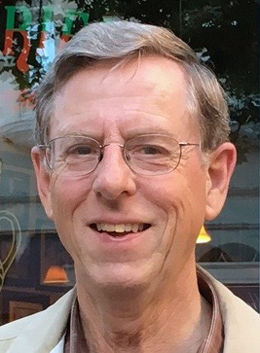
David Crabbe is a architect who lives in San Carlos. He specializes in the design of single-family and multi-family affordable housing, and is a member of the Sierra Club Loma Prieta Sustainable Land Use Committee and the Housing Leadership Council of San Mateo County.
The only problem is, when you build all this high density "affordable" housing to supply the working class, how is anyone going to move around? It is already gridlock now and mass public transportation is not the answer. This is why the future for the Peninsula is none too bright. That, coupled with the downturn of "tech" likely to come later this year or early next year.
How is mass transit 'not the answer?' It's literally the only answer. Also: people have been predicting the so-called tech-downfall for the past 6 years now. I won't be holding my breath.
The only solution I see is to allow some of the hi tech to move away from the peninsula. More local housing will just further overwhelm the local transportation system.
To answer your question: "One wonders today what is going through the minds of city officials who continue to approve jobs-producing developments, but fail to see the need for housing to sustain them", I would suggest "not much." Despite their lofty academic pedigrees and respectable careers we have been subjected to some of the most thoughtless elected officials imaginable. Look what is happening in Redwood City with the former Malibu Grand Prix site and with Facebook in Menlo Park. These people seem incapable of understanding even the most basic rule of economics; supply and demand.
There is a misconception here on the Peninsula that building more housing increases traffic. Nothing could be further from the truth. The worst traffic congestion we have in the city of San Mateo is caused by people who live east of the bay commuting across the San Mateo/Hayward bridge (Hwy 92) because there is not enough housing on this side of the bay. Every afternoon, between about 3pm-6:30 pm Hwy 92 is choked with cars along with all the streets and highways that connect with it. Thousands of cars idling in traffic spewing out greenhouse gases because Peninsula cities prefer office building over housing. We have an opportunity to approve a significant housing project called Concar Passage on the site of a low density 14.5 acre strip mall in San Mateo that is within a short walk from a Caltrain station. There will be lots of opposition from the NIMBYs. It is important that the YIMBYs speak out in support.
More local housing moves traffic from the highways to city streets as new residents use their cars to travel locally, and to their job if public transportation is acceptable, available, and not already overcrowded
Tom you say...."People who now live in the East Bay and clog Hwy 92 twice a day will be able to live close to where they work"...so folks who can't afford to live on the Peninsula will now magically be able to buy housing in San Mateo?...Tom, this is not going to be an affordable housing development...like Bay Meadow you will see condo's going for $1.8 million and homes for $2.8 million..
Hawkeye, did you read the paragraph about gridlock? Some of it is due to 40 percent of employees in the county coming from OUTSIDE the county. More housing can help with that.
Speaking of building more: There is a community meeting March 7th at 7pm at the Marriott San Mateo where the Concar/Passages developer is hosting discussion of the 900+ units they propose to build at Concar/Delaware.
Then, March 27th at 7:30pm at City Hall Council Chambers: The Planning Commission Study Session for the Concar/Passages proposal, where commissioners may identify the preliminary issues they will want to see addressed by City staff and the applicant. The Commission makes NO decisions at their study session, but will accept input from both the public and applicant, so be prepared to speak during the public comment section of the meeting about your thoughts and concerns.
If you have any questions or would like to be added to the email list for the Concerned Citizens of San Mateo, please send me your email address and the neighborhood in which you live to ccosm2018@gmail.com.
Yes, we should not build more commercial property without housing built first to supply workers for them.
BUT we must not build any more housing until we build infrastructure up to support the housing that we build. We can't just build houses. We have to build roads, transit, water, waste handling, schools, grocery stores, and every other thing along with it.
Public transit is full. Roads are full. If it doesn't rain, we are in a crisis water shortage.
What we are doing now is going to be a disaster soon enough. But if we simply add housing without the necessary support for the people who live here, the area will become a dystopia, and the region will be ruined.
It's a good theory that he advances, but it's not actually correct.
If you look at the jobs/housing ratios by county, and the ABAG goal of 1.4-1.5 jobs per housing unit, the only big problem is San Francisco County, with good reasons. First, you have confiscatory rent control which has resulted in affordable rental housing being converted to market-rate for-sale housing (Ellis Act Conversions). Second, by subsidizing large corporations, San Francisco County has added approximately eight times as many jobs as housing units. Third, rent control keeps a large number of affordable ADUs from being rented out at all. Fourth, I have even seen some people proposing the repeal of Costa-Hawkins, which would remove even more rental housing from the market, and drive up housing costs even more. On the plus side it would create more for-sale housing as Ellis Act conversions soar, but it would mean more gentrification and displacement of lower-income workers.
Ironically, the state senator seeking to punish more responsible cities and counties was a major cause of the problem in San Francisco to begin with, when he was on the San Francisco Board of Supervisors, giving tax breaks to companies, and if you look at his campaign contributions you'll understand why.
The real problem is in affordable housing. This is NOT a supply and demand problem. Building more market-rate housing will NOT fix this. Even the SF Controller admitted that supply and demand doesn't regulate housing prices in San Francisco.
It should come as no surprise that if we want to solve the affordability problem for low-income workers that what we actually have to do is to build more affordable housing, a lot more. Some entity will have to subsidize a huge amount of construction of below market rate units. We will need to raise taxes or fees to pay for this housing.
There is also the “Big Lie” that if you build high-density housing projects close to commercial office space that it will reduce traffic because everyone will want to, and can afford to, live within walking or biking distance of their job. Of course as we all are well aware, it doesn’t work like that in real life. You don’t move every time you change jobs, or every time your company changes locations so you can be close to work. People put down roots in their community, they have homes and mortgages, they have spouses that work and they have children in school. It’s sad that some of the YIMBY groups have fallen for this whole idea, but if you look at who’s funding these groups it’s unsurprising.
Building high-density housing close to actual mass transit is a good idea. But the ludicrous SB827 doesn’t propose doing that. Areas with no mass transit at all would be subject to the provisions of SB827, and the traffic congestion and environmental degradation would be enormous.
As someone else pointed out, and as heretical as it may sound, the key is to address the demand side. Not every tech job in the world needs to be on the narrow piece of land from San Francisco to San Jose. If we want to promote environmental sustainability, open space, and quality of life, it would be great if some companies would expand in other areas, particularly in areas with high unemployment, sufficient housing, and uncrowned schools.
I totally agree, businesses need to move further away from the SF Bay area. Merced,Salinas,San Martin, Patterson, Marysville,Modesto etc. who wants to raise a family in an overpriced,cheaply built apartment? single family homes need to be built so California residents can own their piece of pie and reap the rewards of real estate ownership. as opposed to a handful of mega wealthy ,some "non-profit", housing development tycoons who obviously have been wooing and probably lining the pockets of City,County and State officials. The immediate bay area is the 5 lb. bag with 20 lbs in it. no relief expected anytime soon
But is that the only solution? I think people in cities such as New York, Tokyo, London, etc. would say that we are not very densely populated. Cities such as Seattle that have, through actually building new housing, have managed to cause rents to fall. The consumption of resources can be dealt with if we actually commit to changes such as collecting gray water, treating and reusing our waste water, making changes to public transit. It takes a will to do it. There is building and there is smart building. A large project is proposed for the shopping center at Concar and Delaware. This is after the current project Station Park Green is finished. Any plans to modify CalTrain schedules? Places to add Express Sam Trans or AC Transit buses? Plans to extend BART? Make a loop that connects to the East Bay along the same path as the San Mateo Bridge? Our piecemeal approach has created a problem that is causing schools on the Peninsula to scrape to find teachers to the point where school districts are trying to build their own affordable housing for employees.
I'm all for increased apartment buildings if public transportation improvements/growth, highways, main thoroughfares expanded, overpasses at freeway intersections , train tunnels, Dumbarton Bridge overpasses, etc. There must be a few architects,civil engineers, or people with a vision to create a successful futuristic plan
I'm confused by commenters saying that "this isn't a supply/demand issue" before going on to explain that there's simply too much demand for the existing supply?
It's also distressing to see commenters on here wishing for a local recession to relieve said demand. That's not a strategy for alleviating the housing crisis.
Keep the discussion civilized. Absolutely NO
personal attacks or insults directed toward writers, nor others who
make comments. Keep it clean. Please avoid obscene, vulgar, lewd,
racist or sexually-oriented language. Don't threaten. Threats of harming another
person will not be tolerated. Be truthful. Don't knowingly lie about anyone
or anything. Be proactive. Use the 'Report' link on
each comment to let us know of abusive posts. PLEASE TURN OFF YOUR CAPS LOCK. Anyone violating these rules will be issued a
warning. After the warning, comment privileges can be
revoked.
Please purchase a Premium Subscription to continue reading.
To continue, please log in, or sign up for a new account.
We offer one free story view per month. If you register for an account, you will get two additional story views. After those three total views, we ask that you support us with a subscription.
A subscription to our digital content is so much more than just access to our valuable content. It means you’re helping to support a local community institution that has, from its very start, supported the betterment of our society. Thank you very much!



(19) comments
The only problem is, when you build all this high density "affordable" housing to supply the working class, how is anyone going to move around? It is already gridlock now and mass public transportation is not the answer. This is why the future for the Peninsula is none too bright. That, coupled with the downturn of "tech" likely to come later this year or early next year.
How is mass transit 'not the answer?' It's literally the only answer. Also: people have been predicting the so-called tech-downfall for the past 6 years now. I won't be holding my breath.
The only solution I see is to allow some of the hi tech to move away from the peninsula. More local housing will just further overwhelm the local transportation system.
To answer your question: "One wonders today what is going through the minds of city officials who continue to approve jobs-producing developments, but fail to see the need for housing to sustain them", I would suggest "not much." Despite their lofty academic pedigrees and respectable careers we have been subjected to some of the most thoughtless elected officials imaginable. Look what is happening in Redwood City with the former Malibu Grand Prix site and with Facebook in Menlo Park. These people seem incapable of understanding even the most basic rule of economics; supply and demand.
Great article, Dave, thanx for writing it.
There is a misconception here on the Peninsula that building more housing increases traffic. Nothing could be further from the truth. The worst traffic congestion we have in the city of San Mateo is caused by people who live east of the bay commuting across the San Mateo/Hayward bridge (Hwy 92) because there is not enough housing on this side of the bay. Every afternoon, between about 3pm-6:30 pm Hwy 92 is choked with cars along with all the streets and highways that connect with it. Thousands of cars idling in traffic spewing out greenhouse gases because Peninsula cities prefer office building over housing. We have an opportunity to approve a significant housing project called Concar Passage on the site of a low density 14.5 acre strip mall in San Mateo that is within a short walk from a Caltrain station. There will be lots of opposition from the NIMBYs. It is important that the YIMBYs speak out in support.
More local housing moves traffic from the highways to city streets as new residents use their cars to travel locally, and to their job if public transportation is acceptable, available, and not already overcrowded
Tom you say...."People who now live in the East Bay and clog Hwy 92 twice a day will be able to live close to where they work"...so folks who can't afford to live on the Peninsula will now magically be able to buy housing in San Mateo?...Tom, this is not going to be an affordable housing development...like Bay Meadow you will see condo's going for $1.8 million and homes for $2.8 million..
Hawkeye, did you read the paragraph about gridlock? Some of it is due to 40 percent of employees in the county coming from OUTSIDE the county. More housing can help with that.
LOL, 40 % travel OUT of the county to their jobs. More business development would help that.
Speaking of building more: There is a community meeting March 7th at 7pm at the Marriott San Mateo where the Concar/Passages developer is hosting discussion of the 900+ units they propose to build at Concar/Delaware.
Then, March 27th at 7:30pm at City Hall Council Chambers: The Planning Commission Study Session for the Concar/Passages proposal, where commissioners may identify the preliminary issues they will want to see addressed by City staff and the applicant. The Commission makes NO decisions at their study session, but will accept input from both the public and applicant, so be prepared to speak during the public comment section of the meeting about your thoughts and concerns.
If you have any questions or would like to be added to the email list for the Concerned Citizens of San Mateo, please send me your email address and the neighborhood in which you live to ccosm2018@gmail.com.
Thank you for letting us know Lisa
Yes, we should not build more commercial property without housing built first to supply workers for them.
BUT we must not build any more housing until we build infrastructure up to support the housing that we build. We can't just build houses. We have to build roads, transit, water, waste handling, schools, grocery stores, and every other thing along with it.
Public transit is full. Roads are full. If it doesn't rain, we are in a crisis water shortage.
What we are doing now is going to be a disaster soon enough. But if we simply add housing without the necessary support for the people who live here, the area will become a dystopia, and the region will be ruined.
It's a good theory that he advances, but it's not actually correct.
If you look at the jobs/housing ratios by county, and the ABAG goal of 1.4-1.5 jobs per housing unit, the only big problem is San Francisco County, with good reasons. First, you have confiscatory rent control which has resulted in affordable rental housing being converted to market-rate for-sale housing (Ellis Act Conversions). Second, by subsidizing large corporations, San Francisco County has added approximately eight times as many jobs as housing units. Third, rent control keeps a large number of affordable ADUs from being rented out at all. Fourth, I have even seen some people proposing the repeal of Costa-Hawkins, which would remove even more rental housing from the market, and drive up housing costs even more. On the plus side it would create more for-sale housing as Ellis Act conversions soar, but it would mean more gentrification and displacement of lower-income workers.
Ironically, the state senator seeking to punish more responsible cities and counties was a major cause of the problem in San Francisco to begin with, when he was on the San Francisco Board of Supervisors, giving tax breaks to companies, and if you look at his campaign contributions you'll understand why.
The real problem is in affordable housing. This is NOT a supply and demand problem. Building more market-rate housing will NOT fix this. Even the SF Controller admitted that supply and demand doesn't regulate housing prices in San Francisco.
It should come as no surprise that if we want to solve the affordability problem for low-income workers that what we actually have to do is to build more affordable housing, a lot more. Some entity will have to subsidize a huge amount of construction of below market rate units. We will need to raise taxes or fees to pay for this housing.
There is also the “Big Lie” that if you build high-density housing projects close to commercial office space that it will reduce traffic because everyone will want to, and can afford to, live within walking or biking distance of their job. Of course as we all are well aware, it doesn’t work like that in real life. You don’t move every time you change jobs, or every time your company changes locations so you can be close to work. People put down roots in their community, they have homes and mortgages, they have spouses that work and they have children in school. It’s sad that some of the YIMBY groups have fallen for this whole idea, but if you look at who’s funding these groups it’s unsurprising.
Building high-density housing close to actual mass transit is a good idea. But the ludicrous SB827 doesn’t propose doing that. Areas with no mass transit at all would be subject to the provisions of SB827, and the traffic congestion and environmental degradation would be enormous.
As someone else pointed out, and as heretical as it may sound, the key is to address the demand side. Not every tech job in the world needs to be on the narrow piece of land from San Francisco to San Jose. If we want to promote environmental sustainability, open space, and quality of life, it would be great if some companies would expand in other areas, particularly in areas with high unemployment, sufficient housing, and uncrowned schools.
I totally agree, businesses need to move further away from the SF Bay area. Merced,Salinas,San Martin, Patterson, Marysville,Modesto etc. who wants to raise a family in an overpriced,cheaply built apartment? single family homes need to be built so California residents can own their piece of pie and reap the rewards of real estate ownership. as opposed to a handful of mega wealthy ,some "non-profit", housing development tycoons who obviously have been wooing and probably lining the pockets of City,County and State officials. The immediate bay area is the 5 lb. bag with 20 lbs in it. no relief expected anytime soon
But is that the only solution? I think people in cities such as New York, Tokyo, London, etc. would say that we are not very densely populated. Cities such as Seattle that have, through actually building new housing, have managed to cause rents to fall. The consumption of resources can be dealt with if we actually commit to changes such as collecting gray water, treating and reusing our waste water, making changes to public transit. It takes a will to do it. There is building and there is smart building. A large project is proposed for the shopping center at Concar and Delaware. This is after the current project Station Park Green is finished. Any plans to modify CalTrain schedules? Places to add Express Sam Trans or AC Transit buses? Plans to extend BART? Make a loop that connects to the East Bay along the same path as the San Mateo Bridge? Our piecemeal approach has created a problem that is causing schools on the Peninsula to scrape to find teachers to the point where school districts are trying to build their own affordable housing for employees.
I'm all for increased apartment buildings if public transportation improvements/growth, highways, main thoroughfares expanded, overpasses at freeway intersections , train tunnels, Dumbarton Bridge overpasses, etc. There must be a few architects,civil engineers, or people with a vision to create a successful futuristic plan
I'm confused by commenters saying that "this isn't a supply/demand issue" before going on to explain that there's simply too much demand for the existing supply?
It's also distressing to see commenters on here wishing for a local recession to relieve said demand. That's not a strategy for alleviating the housing crisis.
You're right, we need to build more housing! It's great to see Sierra Club members embrace dense infill development.
Welcome to the discussion.
Log In
Keep the discussion civilized. Absolutely NO personal attacks or insults directed toward writers, nor others who make comments.
Keep it clean. Please avoid obscene, vulgar, lewd, racist or sexually-oriented language.
Don't threaten. Threats of harming another person will not be tolerated.
Be truthful. Don't knowingly lie about anyone or anything.
Be proactive. Use the 'Report' link on each comment to let us know of abusive posts.
PLEASE TURN OFF YOUR CAPS LOCK.
Anyone violating these rules will be issued a warning. After the warning, comment privileges can be revoked.