
There has been much behind-the-scenes grumbling about district elections and whether they have been a big, if unavoidable, mistake.
But the race for the District 4 seat on the San Mateo County Supervisors, being vacated by incumbent Warren Slocum due to term limits, may be the model for historic changes that district elections can make possible.
Of the five candidates, four are people of color — Lisa Gauthier, Maggie Cornejo, Antonio Lopez and Paul Bocanegra — and three are Latinos. D4 is 43% Hispanic, the most in the county, according to U.S. census data used to design the supervisorial districts in 2021.
With no offense to the insurgent campaign of Celeste Brevard, a project manager at Stanford and resident of Menlo Park, this election surely will result in the election of a nonwhite supervisor. In just two years, the board could go from four white males and one female to two members who are nonwhite and, quite possibly, a majority that is female.
This is precisely the result intended by the creation of district elections —opening up the halls of power to unrepresented or underrepresented communities.
Certainly, this district has had minority representation before. Ruben Barrales from Redwood City, became the first Hispanic elected to the board in 1992. He served until 1998. Rose Jacobs Gibson, then an East Palo Alto councilmember, was appointed to replace Barrales in 1999. She was elected in 2000, reelected in 2004 and 2008.
All that occurred when supervisors were elected countywide. The appointment of Jacobs Gibson was a special initiative of Supervisor Mike Nevin to add diversity to the board.
This race has special significance for North Fair Oaks. D4 includes Redwood City, east Menlo Park, East Palo Alto, and this unincorporated community wedged between Redwood City and Atherton. It is 73% Latino, according to the North Fair Oaks Community Council website. Whoever wins the D4 race will be, in essence, the mayor of North Fair Oaks.
This makes all the more fascinating the presence of three Latino candidates on the ballot — two of them of Mexican descent, which is of particular significance given the perception that many of the Hispanic residents of North Fair Oaks have their roots in Mexico. The neighborhood immediately adjacent to Middlefield Road, the main thoroughfare in North Fair Oaks, is known as “Little Michoacan” because many residents have immigrated from that state in southwestern Mexico.
Recommended for you
When this campaign first began taking shape, I speculated that the three Latino candidates could cut into one another’s base of support. This might still be the case, but some insiders say the number of Latinos running has energized the community and is having a noticeable impact on voter registration drives. “This has inspired (the Latino community) to be hopeful,” one said.
DIXON’S DOLLARS: When Portola Valley tech executive Peter Dixon jumped into the race to replace U.S. Rep. Anna Eshoo in the 16th Congressional District, attention attached immediately to his personal and professional Silicon Valley connections — he is co-founder of a Silicon Valley startup and his father, Donald Dixon, is a venture capital industry elder statesman.
The attention was warranted. Dixon announced this week that in just 21 days, he has raised $1.4 million for his campaign. “This was a cold start for us,” he said in an interview. “It was really going through my entire network and calling everyone who had ever believed in me or ever known me, and ask them to believe in what I’m trying to do.” Dixon acknowledged tech money was “definitely present,” but he stressed the great majority of the money is from inside the district.
As for his candidacy’s “cold start,” Dixon began the race with virtually no political profile. He will have to use his money across all campaign platforms to vault himself past several other better-known candidates. He has little time to spare — the election is 48 days away and mail-in ballots could drop in two weeks.
“This is a dead sprint” that is “three times faster than running a startup,” Dixon said. But “once people know who I am, their propensity to vote for me increases six-fold.”
Raised on the Peninsula, Dixon volunteered for the Marine Corps after 9/11 and served in combat in Iraq and Afghanistan before working in the U.S. State Department during the tenure of Hillary Clinton. He retired as a major.
He is worried that the American and Silicon Valley dream — that hard work and innovation lead to success — is fading.
Silicon Valley “has been one of the main economic drivers for the country and the nation. … The Silicon Valley dream seems like it’s increasingly narrow for people to access it,” Dixon said.
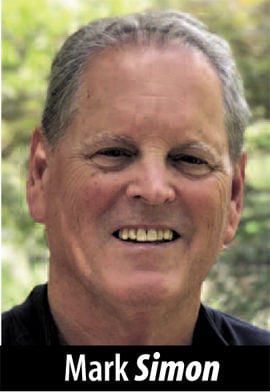
Mark Simon is a veteran journalist, whose career included 15 years as an executive at SamTrans and Caltrain. He can be reached at marksimon@smdailyjournal.com.


(0) comments
Welcome to the discussion.
Log In
Keep the discussion civilized. Absolutely NO personal attacks or insults directed toward writers, nor others who make comments.
Keep it clean. Please avoid obscene, vulgar, lewd, racist or sexually-oriented language.
Don't threaten. Threats of harming another person will not be tolerated.
Be truthful. Don't knowingly lie about anyone or anything.
Be proactive. Use the 'Report' link on each comment to let us know of abusive posts.
PLEASE TURN OFF YOUR CAPS LOCK.
Anyone violating these rules will be issued a warning. After the warning, comment privileges can be revoked.