California lawmakers are advancing legislation to revise how school districts implement Proposition 28, the voter-approved initiative that promised roughly $1 billion annually in new arts and music education in schools.
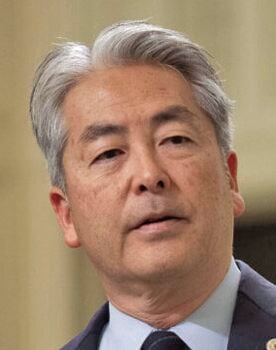
Al Muratsuchi
Assembly Bill 2440, authored by Assemblymember Al Muratsuchi, D-Torrance, provides new guidance after many schools’ Prop. 28 spending has come to a standstill because of ambiguous state rules. Passed by voters in 2022, Prop. 28 dedicates 1% of all K-12 education funds specifically for arts education each year.
Despite the investment, many school districts have struggled to turn new arts funding into expanded classroom instruction. Abe Flores, deputy director at the arts education nonprofit Create CA, said many school districts may have to give up unspent funds at the end of 2026 when the three-year spending window comes to an end.
“What we were noticing in some districts was a chilling effect, that ‘we’re just going to hold back and not spend this money until we get that clarity,’” on how to hire and launch new arts programs within Prop. 28’s rules, Flores said. “It was really going to affect a lot of smaller schools disproportionately, and so with this bill, we’re hoping school leaders can make decisions confidently.”
AB 2440, which unanimously passed the Assembly in May, would allow school districts to pool funds designated for individual schools into a shared budget. Smaller districts could then hire itinerant arts teachers to serve multiple schools, fund districtwide orchestras, bands and choirs and share arts equipment and instruction.
“If there’s a school district that’s getting $100,000, and they have four schools, each generating $25,000, it isn’t enough (money) to hire one person at the school site level,” Flores said. The bill helps school districts “be more flexible with staffing realities,” especially with teacher shortages, by sharing resources, he said.
Flores said the influx of Prop. 28 money has also revealed gaps in expertise and personnel across districts, which can largely determine whether schools grow arts instruction.
He pointed to Long Beach Unified, the fifth-largest school district in California, which used a district-level arts education coordinator, existing arts infrastructure and a plan to come up with a strategy to spend new Prop. 28 funds.
“It was the districts who were smaller, who didn’t have the cash flow, who didn’t have the capacity, didn’t have a vision or a plan, that were having a hard time spending down this money in fear of doing something wrong,” Flores said. “They had less to build off of.”
Los Angeles Unified, for example, has hired dozens of arts educators across music, theater, visual arts and dance, with the nearly $132 million in additional money the district has received through Prop. 28. Palo Alto Unified, with about $1.6 million in new Prop. 28 funds, has funded new spectra art classes and a glass-blowing program as well as expanded a music program for students with extensive needs.
Yet for many districts, the lack of workforce capacity, combined with ambiguous spending rules, has stunted arts expansion in schools, Kyle Holmes, director of the California County Superintendents’ Statewide Arts Initiative, said at an Assembly hearing in February.
Recommended for you
“We’ve heard from districts all over the state that are going to have to return some of their Prop. 28 funding at the end of this year,” Holmes told lawmakers. “Not because they don’t want to support the arts, but because they don’t want to be out of compliance with how they spend it.”
Prop. 28 requires that schools use funds to “supplement, not supplant” existing dollars for arts education, and that at least 80% of funds be used to hire educators. Chad Zullinger, past president of the California Music Educators Association, told EdSource that confusion around those rules has led to many districts misusing funds.
Zullinger said CMEA surveyed arts educators about their school’s use of Prop. 28 funds. One teacher said their school tapped into Prop. 28 funds to pay for choir, band, theater and dance stipends that were already included in the district budget — a possible violation of the “supplement, not supplant,” rule, he said.
In 2025, former LAUSD superintendent and Prop. 28 author Austin Beutner, along with eight students and their parents, sued LAUSD, alleging the district unlawfully diverted $76.7 million in Prop. 28 funding to pay for existing salaries. The lawsuit, which remains pending after a judge denied LAUSD’s effort to dismiss the case, has deterred districts from spending on the arts due to fear of litigation, advocates said in the February hearing.
To address concerns, AB 2440 would establish a clearer formula for how schools can spend their Prop. 28 funds.
For example, the bill allows funds lost from the previous year to be removed from a school’s existing pool of funds for the arts, enabling the use of Prop. 28 funds. Many districts had worried that if a PTA stopped funding an arts program, the district may be required to replace those dollars with non-Prop. 28 funds before it could spend Prop. 28 money, said Flores.
And with the sunsetting of Covid-era emergency relief funds, “we wanted to make it really clear that they’re not held accountable to those funds,” Flores said, “to allow them to confidently spend that (Prop. 28) money.”
Districts that are unable to meet the rule that at least 80% of Prop. 28 funds go to hiring educators can also seek a waiver from the California Department of Education. AB 2440 directs districts with a waiver to spend those funds on curriculum, instructional materials and professional development aligned with California’s arts standards.
Since individual Prop. 28 funds may decrease with enrollment declines, Zullinger, past president of the California Music Educators Association, said flexibility on spending and pooled funds would enhance smaller districts’ ability to grow the arts.
Zullinger said AB 2440 could help ensure that state and school leaders deliver on Prop. 28’s promise to expand the arts in every school.
“We’re trying to find that administrative mandate that connects to the fiscal mandate of the voters,” Zullinger said. “So that administrators see that (the arts) is something the public is looking at in addition to reading and math (scores).”
Keep the discussion civilized. Absolutely NO
personal attacks or insults directed toward writers, nor others who
make comments. Keep it clean. Please avoid obscene, vulgar, lewd,
racist or sexually-oriented language. Don't threaten. Threats of harming another
person will not be tolerated. Be truthful. Don't knowingly lie about anyone
or anything. Be proactive. Use the 'Report' link on
each comment to let us know of abusive posts. PLEASE TURN OFF YOUR CAPS LOCK. Anyone violating these rules will be issued a
warning. After the warning, comment privileges can be
revoked.
Please purchase a Premium Subscription to continue reading.
To continue, please log in, or sign up for a new account.
We offer one free story view per month. If you register for an account, you will get two additional story views. After those three total views, we ask that you support us with a subscription.
A subscription to our digital content is so much more than just access to our valuable content. It means you’re helping to support a local community institution that has, from its very start, supported the betterment of our society. Thank you very much!



(0) comments
Welcome to the discussion.
Log In
Keep the discussion civilized. Absolutely NO personal attacks or insults directed toward writers, nor others who make comments.
Keep it clean. Please avoid obscene, vulgar, lewd, racist or sexually-oriented language.
Don't threaten. Threats of harming another person will not be tolerated.
Be truthful. Don't knowingly lie about anyone or anything.
Be proactive. Use the 'Report' link on each comment to let us know of abusive posts.
PLEASE TURN OFF YOUR CAPS LOCK.
Anyone violating these rules will be issued a warning. After the warning, comment privileges can be revoked.