


A group of around 20 men are seated in a circle on a recent Thursday afternoon at the Soledad Correctional Training Facility. They are reading “The New Jim Crow,” which focuses on the institutional racism that’s shaped the U.S. prison system.
The conversation is thoughtful and personal, centered on their lives and their incarceration.
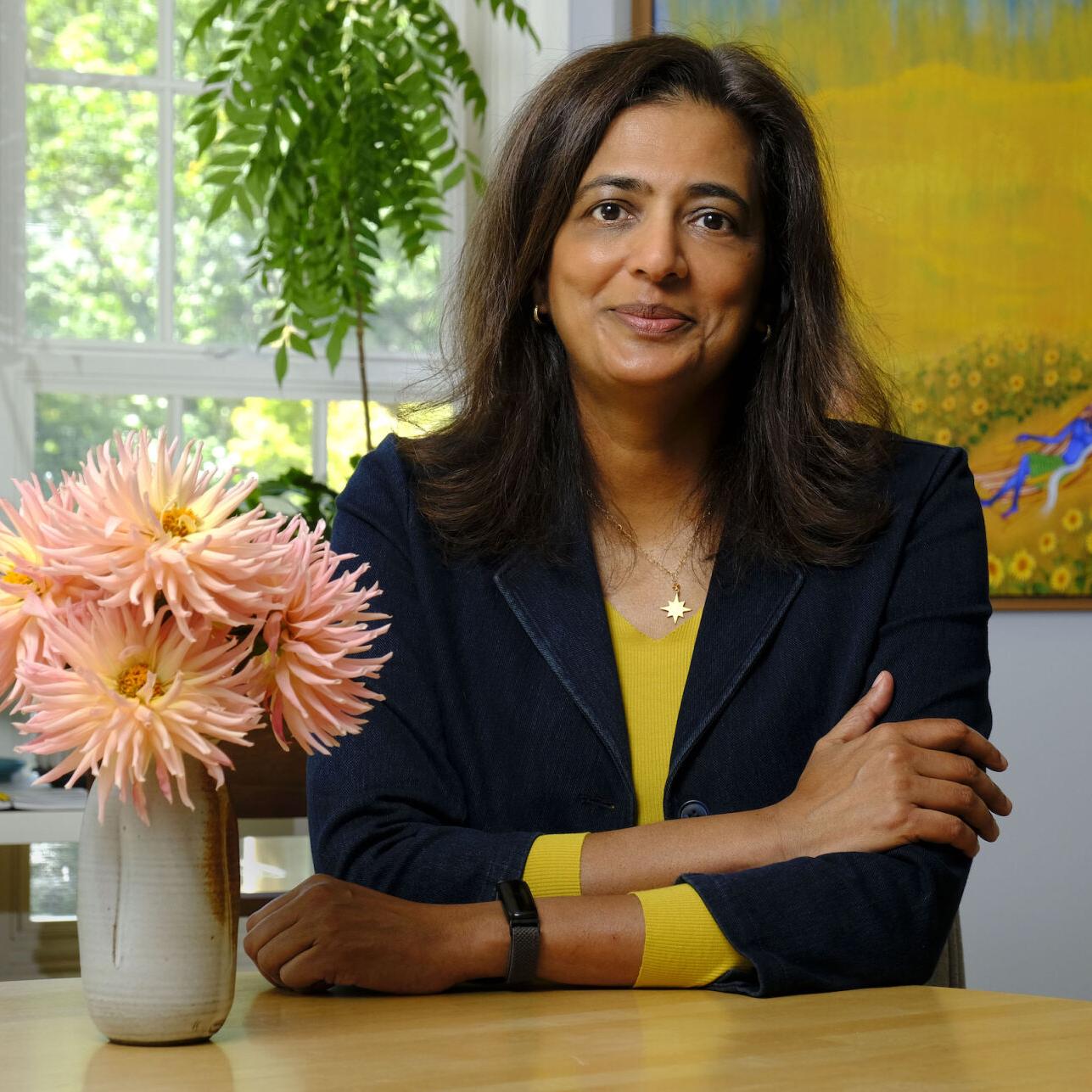
Two years ago, Kirsten Castle, a San Mateo County resident, UC Santa Cruz Ph.D. student and mother of four, might have been sitting alongside them in the prison’s chapel for this weekly meeting of the Soledad Prison Project — part book club, part personal reflection.
It’s a testament to her impact that for months after Castle’s murder at eight months pregnant and by the hands of her partner in August of 2024, her picture would still hang on a plastic chair in that circle. The photo would memorialize her both as co-founder of the reading group but mostly, and most importantly, as a woman who always saw the humanity of the incarcerated men with whom she worked.
“She understood that we were the next-door neighbor who made a wrong decision, but it don’t define who are as a person,” David Turner, a member of the reading group, said. “That’s even more profound when the criminal began to realize and accept that he was wrong, he made the wrong choices, and he wants to make change. He really needs someone like Kirsten to come in, who says, ‘Hey, I already see you as a person.’”
A tragedy, and a connection
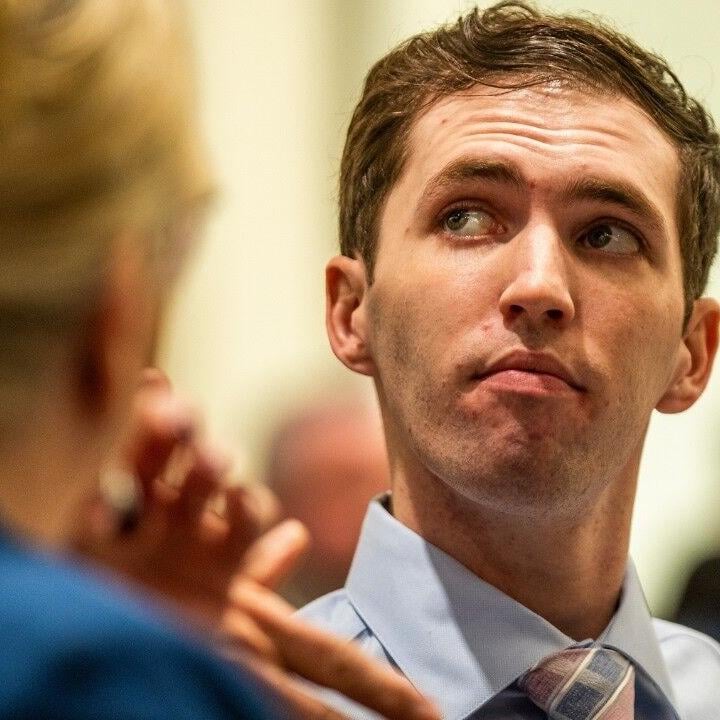
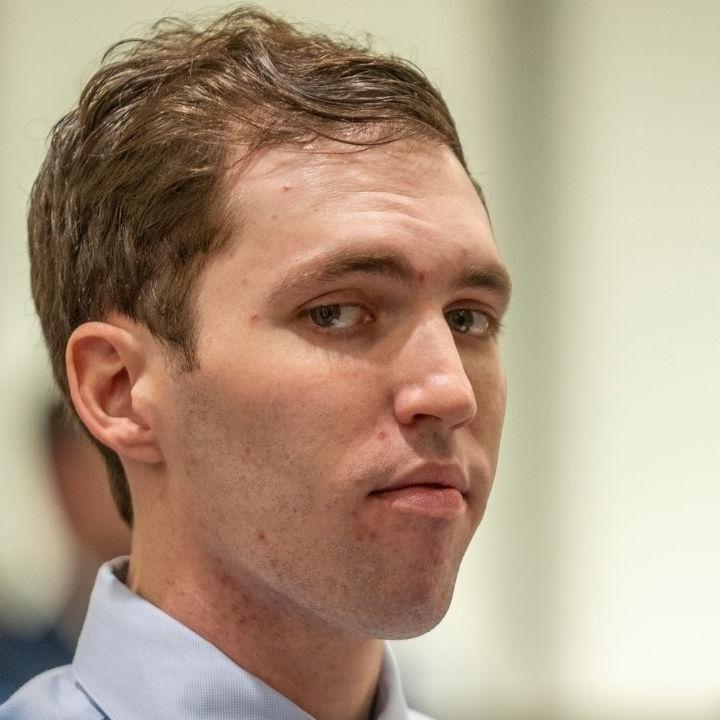
Many in San Mateo County know Castle only through the circumstances of her death or the criminal trial against her killer, who was found guilty of two counts of second-degree murder and sentenced to 30 years in prison.
Castle was found lifeless in her San Mateo apartment on Aug. 4, 2024, with a cause of death consistent with asphyxiation or strangulation. Andrew Coleman, the man convicted of her murder and the murder of her unborn child, drove to Los Angeles after her death and was arrested that night.
Karen Ferguson, CEO of domestic violence nonprofit Community Overcoming Relationship Abuse, became connected with Kirsten’s mother, Nancy Castle, after her death.
From there, the men at Soledad reached out, and acquainted Ferguson with the details of Kirsten’s life. They were devastated by the violent loss of Castle, who talked with them as an equal about feminism, sexual and domestic violence, and incarceration. They wanted to raise money for a domestic violence nonprofit in her honor — and they did, collecting more than $2,500 for the CORA Kirsten Castle Emergency Fund.
“It is so much of a collision,” Ferguson said. “Bad guys in prison are supposed to be bad guys, and people who teach about domestic violence shouldn’t die by domestic violence, and both of those are not true.”
Castle’s relationships with the men at Soledad began with a UC Santa Cruz class called Transcommunal Peacemaking, in which students work through the idea of fostering community with diverse groups of people alongside inmates. The class is where Castle formed bonds with the men, some of whom would continue on to participate in the Soledad Prison Project.
Reading group
After the class finished, she partnered with Amos Stevenson — an incarcerated individual at Soledad who was in her small group for the class. She wanted to bring back to life the idea of the reading group, which had previous iterations at the facility.
Castle pushed for the project and saw it through bureaucratic hoops, Stevenson said, suggesting books like “Abolition. Feminism. Now.” and Angela Davis’ “Are Prisons Obsolete?” — readings that could, on their face, seem radical to bring into a prison.
“She started telling me the names of the books,” he said. “I’m like, ‘I don’t know if they’re going to approve those books.’”
The books were approved, however, and the group began. By all accounts, Castle was a natural in the class and reading group. Her own experiences with having an incarcerated loved one gave her an academic passion for systemic injustice in the prison system. In one paper, she honed in on the experiences of women with incarcerated partners. In a practical sense, that made her comfortable around the men at Soledad and in turn, made them comfortable around her.
“Her views and her approach was different. She looked at us as human, and came with a passion [to] try to make change,” a member of the group who goes by the name Mustafa said. “That’s where the bonds came into play.”
Cheated by her loss
Learning of Castle’s death came as a shock. Stevenson’s first reaction was disbelief, he said, having learned of her pregnancy the last time they’d spoken.
“‘Did you hear what happened with Kirsten?’” Stevenson recounted hearing the reading group coordinator asking him. “I’m like, ‘well, she had a baby.’ No, she said, ‘she got killed by a boyfriend.’”
The other men in the group who knew Castle also vividly remember how it felt to learn of her death. People were distraught, Mustafa recalled, and felt cheated by her loss. As painful as it was, it was also a chance to be resolved in practicing the principles Castle espoused.
“That was like our sister, our little sister. So when she passed, when she got murdered, that was a problem for us,” Mustafa said. “We try to look at it from how she would view it, right? I’m saying we’re giving the benefit of doubt. We’re still human, though, so we still got character defects, and anger is one of them.”
Stevenson, in particular, struggled with feelings of guilt after her death, he said. He himself was a perpetrator of domestic violence, however, work he had done both with and without Castle while incarcerated gave him tools to unlearn systems of violence against women. Because of this, he caught himself feeling that he should have seen the signs in her life.
“I should have been able to see those warning signs. I should have been able to help,” he said. “I went to those regrets and things, like, ‘What could I did to help change the situation?’”
Visible impact
Recommended for you
In an effort to create something positive with those feelings, Stevenson proposed the idea of a memorial for Kirsten at Soledad. It was approved, and that was the first time Nancy, Kirsten’s mother, was able to see for herself the impact that her daughter was having on other’s lives.
“I never knew her as a student. I never knew her as a professional. I only knew her as a daughter,” Nancy Castle said. “[Then] we went to the memorial. I had these banners. I had cards written to me, telling me what an amazing person she was, and how helpful she was with their lives, posters with little notes. And then I began to realize that she really impacted these people, and they were very special to her.”
After Kirsten Castle’s death, people Nancy Castle had never met began to reach out, telling her about her academic and advocacy work. She was awarded a posthumous Ph.D. in June, which Nancy Castle accepted in her honor, and she has continued work with CORA after the fundraising effort the men spearheaded.
It’s given her insight into the life Kirsten Castle led outside of her family, something she wishes she could share with her daughter.
“I would tell her that she was more well loved than she thought, and that her studies are going to open doors for further research,” Nancy Castle said.
Her professors and peers also remember her as someone who was interested in academia as a real-world vehicle for bettering people’s lives, something that came from her own life. She was a nontraditional student, attending school while parenting four children.
Academic work
When a scholarly article of Kirsten Castle’s was published after her death, the reflections of the men at Soledad on her work accompanied it, one of her advisors, UCSC Professor Camilla Hawthorne, said. That was a testament to her passion for sharing and making something useful, and tangible, of her work.
“For her, it was never studying something in the abstract,” Hawthorne said. “It was always about research and study in the service of transforming the world.”
Her research focus on the communities that the partners of incarcerated women form — and the racialized challenges they face — also came from personal interest in people that are often lost within the carceral system, her peer in the transcommunality class and fellow UCSC student Mitra Zarinebaf said.
“There is another form of caretaking within these groups of women who have to deal with this, and I think it creates really powerful relationships,” she said. “It also forms organization and community that are, bittersweetly, very unique to California. And I think it’s quite powerful, and it’s understudied.”
‘Some pretty nice pizza’
Even as a scholar, it was her commitment to people that others remember her by. At the transcommunality class graduation, Kirsten Castle brought in pizza to celebrate, bringing it from San Mateo County all the way to Soledad, jumping through layers of bureaucratic hoops to ensure her delivery made it inside. For men in prison, a special delivery of cheesy, doughy artisanal slices isn’t an everyday occurrence.
“Pizza got approved, came in, and it was some pretty nice pizza. I don’t know where in San Mateo that pizza came from, but it was pretty good,” Stevenson said. “It was fun, everybody enjoyed eating. She was like, ‘I would have been mad if that pizza didn’t come in!’ … I think that just lifted everybody up, that she was willing.’”
Professor John Brown Childs, who authored a book on transcommunality and ran the UCSC-Soledad class collaboration, also remembered Kirsten Castle’s effort with the pizza, and the effort she went to, getting it donated from local shops.
“It might not sound like much, but in prison, that was a big thing,” he said. “I couldn’t have done that, and no one else did it or thought of doing it … that’s one small example of a much bigger aspect of her, which is generosity, respect for people’s humanity.”
In reality, that donor was Nancy Castle all along, helping with her daughter’s work even though she didn’t know the details.
“I remember when she said, ‘I promised these guys that this is the end of our class, and we all did so well, and they learned a lot, and I learned a lot,’” Nancy Castle said. “I said, ‘Oh yeah, well, that would be great.’ And she says, but the problem is the funds.”
A lasting legacy
Although Kirsten Castle is no longer with her loved ones, her memory and her principles live on. For her mother, that has looked like finding forgiveness for her daughter’s killer.
“Forgiveness allows me to move forward, and hatred, just hatred, won’t move me forward,” she said. “Supporting her legacy has brought me to that point.”
For Stevenson, who has transferred yards and can no longer participate in the reading group day to day, it means keeping Kirsten Castle’s beliefs in challenging unfair systems and promoting second chances in his own life.
“She definitely believed everybody deserves a second chance,” Stevenson said. “What Kirsten, what she created, people [are] still living and benefiting.”
And for the men who meet each week, reading literature that lets them transcend the boundaries of prison and grappling with their circumstances and crimes in thoughtful, emotional ways is a way in and of itself to keep her alive.
“That was honor, though, for her to come up with the idea,” Rodney Lawson Jr., who now chairs the group, said. “That’s where we had to step up to make sure the group keeps running.”












(0) comments
Welcome to the discussion.
Log In
Keep the discussion civilized. Absolutely NO personal attacks or insults directed toward writers, nor others who make comments.
Keep it clean. Please avoid obscene, vulgar, lewd, racist or sexually-oriented language.
Don't threaten. Threats of harming another person will not be tolerated.
Be truthful. Don't knowingly lie about anyone or anything.
Be proactive. Use the 'Report' link on each comment to let us know of abusive posts.
PLEASE TURN OFF YOUR CAPS LOCK.
Anyone violating these rules will be issued a warning. After the warning, comment privileges can be revoked.