When a parent dies and leaves a house, the adult children often assume what their parents did, that they can keep the home and pay roughly the property-tax bill the family has paid for years. In California, that assumption used to hold. Since 2021, it mostly doesn’t — and the gap between what people expect and what the law now says is quietly costing heirs real money.
The change came with Proposition 19. The old rule let a parent pass a home to a child who kept the parent’s low assessed value; under Proposition 19 that break survives only if an heir moves in as a primary residence within one year and files the paperwork — and even then it’s capped. For a home that won’t become an heir’s primary residence — a rental, a vacation place, one nobody will live in — there’s no exclusion at all, and the county reassesses to full market value. On a house bought decades ago, the tax bill can double or triple overnight, and the day title passes the meter starts: reassessed tax, insurance, upkeep, sometimes a mortgage, none of it pausing while probate clears.
Here is my view, after watching this play out across California since 2012: The inheritance side of Prop. 19 overshot, and the legislature should fix it. The measure was sold to voters as relief for seniors, the disabled and wildfire survivors, and on that score it works. It lets those homeowners move their low tax basis to a new home anywhere in California, so a longtime owner can finally downsize or relocate without a punishing jump in property taxes. But to pay for those benefits it quietly gutted a protection families relied on for a generation — the right to pass a home to your children without the tax basis resetting. That part wasn’t the headline, and most people never saw it coming.
The cruelty is in the timing. A family doesn’t discover the trap until a parent has died and the one-year residency clock is already running — past the point when planning could have helped. An heir who can’t uproot a job or kids to move into the family home within 12 months loses the basis entirely. The result is predictable: Homes held for decades get sold under deadline pressure, during grief, to cover a tax bill for which no one budgeted. A law pitched as protecting California families is, in practice, forcing the sale of their homes.
The political fix keeps stalling. A citizen initiative to restore the parent-child exclusion (Attorney General No. 25-0017) just failed to qualify for the November 2026 ballot, the third repeal attempt to fall short after 2022 and 2024. That leaves the legislature, which can act directly and more precisely than a ballot measure: require that Prop. 19’s inheritance consequences be disclosed at the estate-planning stage, not discovered after a death, and extend the one-year window so grieving families aren’t forced into a fire sale to keep a basis they were promised they could keep.
I’ll be straight about the cost, because a fair argument has to. The Legislative Analyst estimates restoring the exclusion would reduce revenue for schools and local governments by roughly $1 billion a year at first, growing toward $2 billion over time. That is real money, and it is the strongest case for the law as written. But consider who pays under the current rules: not large investors, who treat reassessment as a line item, but middle-class heirs who simply wanted to keep their parents’ house. A tax that lands hardest on the people least equipped to anticipate it is the wrong way to fund even good things.
If you’ve already inherited a home, the practical advice hasn’t changed: If you qualify for the exclusion, file the paperwork now; if you don’t, price out the carrying costs before the bills pile up, and treat this as a market perspective, not tax or legal advice. But the larger point is for the rest of us, who still get a vote. Prop. 19 asked families to trade away a generational protection and didn’t make the trade plain. California should give that protection back — and this time, say out loud what it costs.
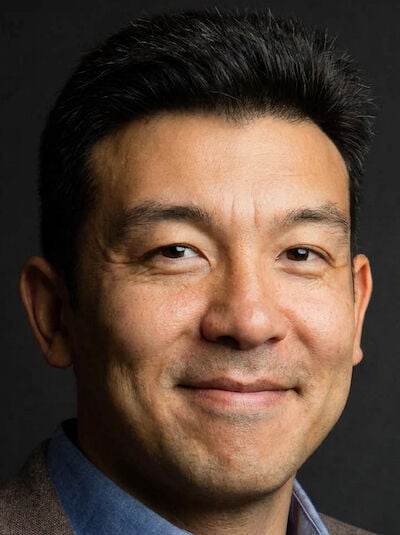
YK Kuliev is a licensed California real estate agent (DRE #02006033) and founder of Fast Home Buyer California (Realty Helpers LLC), a statewide cash home buyer who has handled 100+ California transactions since 2012. He can be reached at (916) 235-3805 or yk@fasthomebuyercalifornia.com.
Keep the discussion civilized. Absolutely NO
personal attacks or insults directed toward writers, nor others who
make comments. Keep it clean. Please avoid obscene, vulgar, lewd,
racist or sexually-oriented language. Don't threaten. Threats of harming another
person will not be tolerated. Be truthful. Don't knowingly lie about anyone
or anything. Be proactive. Use the 'Report' link on
each comment to let us know of abusive posts. PLEASE TURN OFF YOUR CAPS LOCK. Anyone violating these rules will be issued a
warning. After the warning, comment privileges can be
revoked.
Please purchase a Premium Subscription to continue reading.
To continue, please log in, or sign up for a new account.
We offer one free story view per month. If you register for an account, you will get two additional story views. After those three total views, we ask that you support us with a subscription.
A subscription to our digital content is so much more than just access to our valuable content. It means you’re helping to support a local community institution that has, from its very start, supported the betterment of our society. Thank you very much!

















(0) comments
Welcome to the discussion.
Log In
Keep the discussion civilized. Absolutely NO personal attacks or insults directed toward writers, nor others who make comments.
Keep it clean. Please avoid obscene, vulgar, lewd, racist or sexually-oriented language.
Don't threaten. Threats of harming another person will not be tolerated.
Be truthful. Don't knowingly lie about anyone or anything.
Be proactive. Use the 'Report' link on each comment to let us know of abusive posts.
PLEASE TURN OFF YOUR CAPS LOCK.
Anyone violating these rules will be issued a warning. After the warning, comment privileges can be revoked.