Caltrain is facing an unsettled financial future as it deals with stagnating low ridership numbers and economic pressure, with SamTrans faring better thanks to higher ridership rates and funding sources.
Caltrain’s biggest concern is that ridership numbers continue to be lower than before the pandemic, with officials looking at different ways to increase numbers. Caltrain fares represent a significant portion of revenue for the transit agency, more than other agencies, increasing the importance of strong ridership numbers.
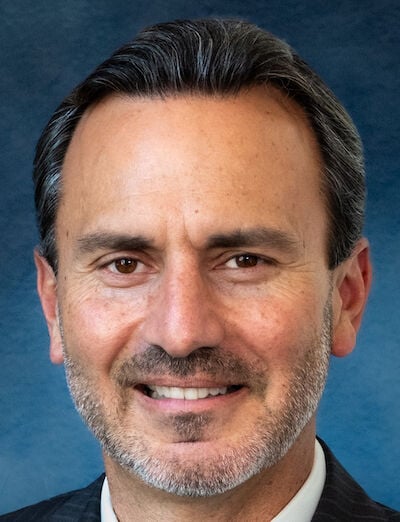
Ray Mueller
A Caltrain executive director’s February report said total monthly ridership as a share of pre-pandemic levels was only 24% as of December 2022, one of the lowest among Bay Area transit agencies. BART was at 37%, while SamTrans was highest at 70%. According to the executive report, the monthly transfers between BART and Caltrain at the Millbrae station in January 2023 were 14,678, while the pre-COVID number was 34,837 transfers. Fare and parking revenue is also down.
Caltrain and SamTrans Board Member Ray Mueller, also a San Mateo County supervisor, said the main focus is on increasing ridership. However, he noted it was beyond Caltrain’s control because fewer people ride to San Francisco for work and recreation.
“If we don’t have ridership, we have a problem,” Mueller said. “The big thing we need to figure out is how people are going to be getting back on the train.”
Caltrain and SamTrans Board Member Jeff Gee, also the Redwood City mayor, agreed ridership return is the most critical issue, as the commuter today no longer goes to the office as often as pre-pandemic. Many people have a long-term hybrid work schedule, forcing a rethink about future service. Gee said consideration of new definitions of commute periods and weekend service was appropriate given the new transit patterns. He noted examining changes to the traditional Monday through Friday commute times and reallocating weekday service to Tuesday through Thursday was something at which to look. Since Caltrain cannot change its route locations, it can only focus on when and how often it provides service.
“We have to reimagine and redefine the service,” Gee said.
Gee said the board would explore new ideas about when and who to provide service to at its next financial workshop in late March or early April. Mueller said there were no easy answers to getting ridership back, although night and weekend sports service to San Francisco has been helpful. Mueller said he wants to work with board members and the mayor of San Francisco to develop solutions. He hopes to have discussions with San Francisco representatives at a later date.
“The ridership numbers really do threaten Caltrain right now, and we have to be realistic about it,” Mueller said.
Recommended for you
Tax revenue helps finances
Caltrain’s short-term finances are stable thanks to federal funding and more revenue than expected from Measure RR, a sales tax increase to fund Caltrain services. Caltrain staff now projects a $1.6 million surplus for the 2023 fiscal year, compared to a $2.5 million deficit. Gee said the board was committed to figuring out Caltrain’s more uncertain long-term financial future, adding Caltrain is in talks with state and federal representatives on how they can help transit agencies in the Bay Area given the financial circumstances. Both Gee and Mueller said any conversations about cuts to service or price increases at Caltrain were not occurring.
Electrification is also an issue, as service disruption has occurred to allow construction. Converting from diesel to electric trains across the rail system will increase service to six trains per peak hour per direction and allow operating speeds to increase. The electrification project has not gone as well as Caltrain would like, Gee said, with an increased focus on making sure the contractor is providing the resources and progress marks needed to meet Caltrain’s milestone of service by September 2024.
SamTrans’ financial and ridership outlook is stronger than Caltrain’s, with ridership at significantly higher recovery rates and higher sales tax revenue. The transit agency expected a deficit of $19 million in the fiscal year 2023, using its surplus to cover the balance. However, it ended up with a surplus of $9.5 million after sales tax revenue was higher than anticipated. SamTrans spokesperson Tasha Bartholomew said by email the transit agency is expected to have an operating budget surplus over the next 10 years. Gee attributed the higher ridership rates to its Reimagine SamTrans plan that provides higher-frequency service on key corridors and improves efficiency to meet changing public needs in San Mateo County.
Future challenges
Potential future financial challenges are capital outlay costs associated with the state-mandated transition to a 100% zero-emission fleet by 2040. SamTrans is expected to make the transition by 2034. Gee noted it could cost as much as $500 million, with the transit agency looking at how to pay for it. Bartholomew said SamTrans is looking into applying for low-carbon fuel standard credits or applying for financing from California’s Greenhouse Gas Cap-and-Trade Program aimed at fighting climate change. While future funding is needed, Mueller said the financial picture presented is solid.
“The revenue picture that we are seeing come in, supported by sales tax dollars as well, is pretty strong,” Mueller said.
SamTrans is monitoring current economic issues across the country, as a recession would cause sales tax revenue to drop. Mueller said SamTrans could also look to increase revenue through digital media advertising at bus stops and modernizing infrastructure to bring in revenue, although any potential changes would have substantial community input.
Why is it that these folks only focus on increasing ridership (i.e. revenue) when the train may have left the station in regards to increasing ridership to support the system as-is? I read nothing here about reducing costs? Why don’t we reduce costs in lockstep with the reduction in ridership (i.e. labor, or taking trains out of service)? If there’s an increase in ridership and we need more personnel or trains, act accordingly. You can bet your bottom dollar, or thousands of dollars, that there will be more and more pleas in the near and far future to support this endeavor, even though there is decreased ridership, perhaps permanent.
It's been standard policy to spend billions to bankrupt the rail line since before it was Caltrain. Now that's it's elevated this is an opportunity to turn it into the Highline like the park in New York- a pedestrian promenade with outdoor seating.
Keep the discussion civilized. Absolutely NO
personal attacks or insults directed toward writers, nor others who
make comments. Keep it clean. Please avoid obscene, vulgar, lewd,
racist or sexually-oriented language. Don't threaten. Threats of harming another
person will not be tolerated. Be truthful. Don't knowingly lie about anyone
or anything. Be proactive. Use the 'Report' link on
each comment to let us know of abusive posts. PLEASE TURN OFF YOUR CAPS LOCK. Anyone violating these rules will be issued a
warning. After the warning, comment privileges can be
revoked.
Please purchase a Premium Subscription to continue reading.
To continue, please log in, or sign up for a new account.
We offer one free story view per month. If you register for an account, you will get two additional story views. After those three total views, we ask that you support us with a subscription.
A subscription to our digital content is so much more than just access to our valuable content. It means you’re helping to support a local community institution that has, from its very start, supported the betterment of our society. Thank you very much!








(2) comments
Why is it that these folks only focus on increasing ridership (i.e. revenue) when the train may have left the station in regards to increasing ridership to support the system as-is? I read nothing here about reducing costs? Why don’t we reduce costs in lockstep with the reduction in ridership (i.e. labor, or taking trains out of service)? If there’s an increase in ridership and we need more personnel or trains, act accordingly. You can bet your bottom dollar, or thousands of dollars, that there will be more and more pleas in the near and far future to support this endeavor, even though there is decreased ridership, perhaps permanent.
It's been standard policy to spend billions to bankrupt the rail line since before it was Caltrain. Now that's it's elevated this is an opportunity to turn it into the Highline like the park in New York- a pedestrian promenade with outdoor seating.
Welcome to the discussion.
Log In
Keep the discussion civilized. Absolutely NO personal attacks or insults directed toward writers, nor others who make comments.
Keep it clean. Please avoid obscene, vulgar, lewd, racist or sexually-oriented language.
Don't threaten. Threats of harming another person will not be tolerated.
Be truthful. Don't knowingly lie about anyone or anything.
Be proactive. Use the 'Report' link on each comment to let us know of abusive posts.
PLEASE TURN OFF YOUR CAPS LOCK.
Anyone violating these rules will be issued a warning. After the warning, comment privileges can be revoked.