Three people accused of human trafficking and labor-related crimes in San Mateo County were given prison sentences, with some activists calling for more support services for survivors.
Joshua Gamos, 46, was sentenced to nine years and eight months, Noel Gamos, 44, received five years and Carlina Gamos, 70, received five years and eight months, according to the California Attorney General’s Office. The three are members of the same family and were arrested and charged in 2018 for allegedly committing crimes while operating Rainbow Bright, a northern San Mateo County-based adult residential and child care company. The trio were accused of targeting members of the Filipino community, many of whom were new to the country, for labor exploitation.
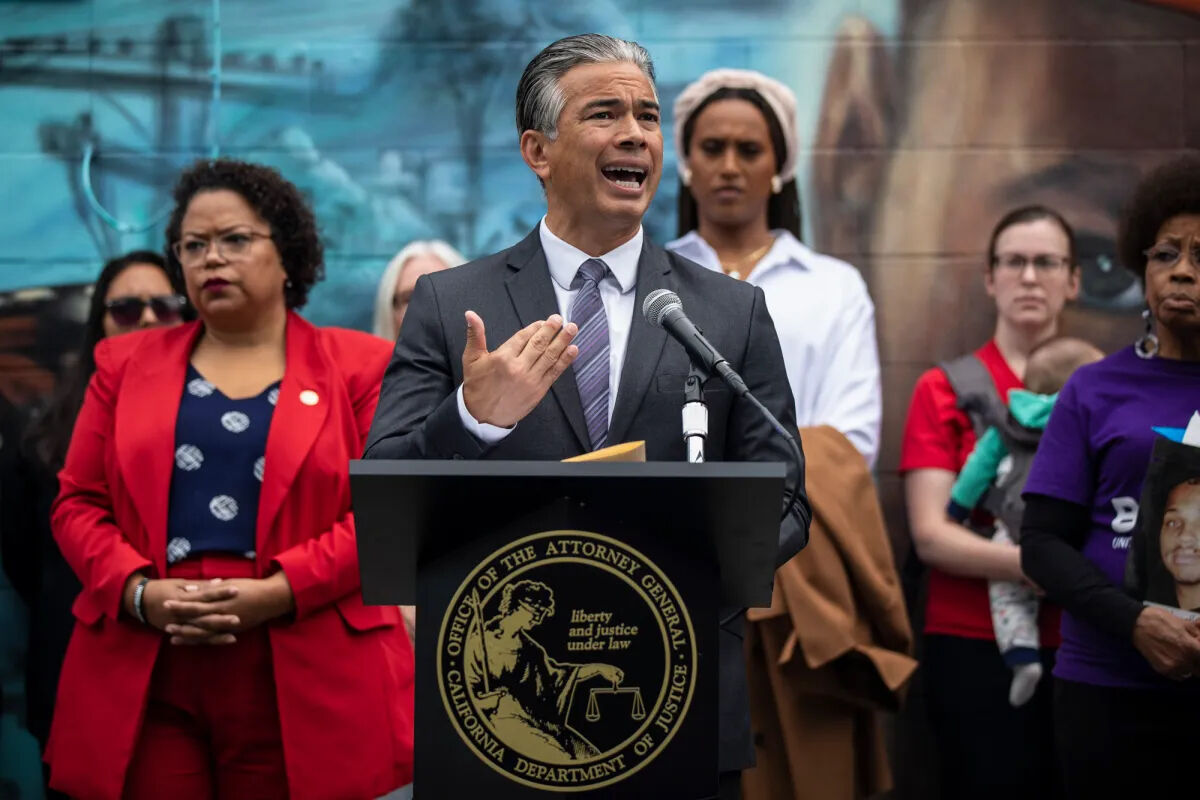
“The jury returned 38 felony guilty verdicts with multiple enhancements and aggravating factors against these defendants,” Attorney General Rob Bonta said in a Feb. 7 press release. “However, today’s sentencing did not recognize the level of horror that the Rainbow Bright victims experienced at the hands of the Gamos Family. And after 10 years of abuse and nearly five years of court proceedings, today’s sentencing only put them through more trauma. The victims showed resilience and courage throughout the proceedings. We stand with them and will continue our fight to protect all Californians from injustice — because all Californians deserve dignity and respect.”
According to the Attorney General’s Office, Rainbow Bright employees were forced to work 24 hours a day and live in substandard conditions on floors and in garages, with regular threats to turn over employees to U.S. immigration officials. The sentencing took place Feb. 7 in San Mateo County Superior Court.
Some Bay Area activists who support those affected by human trafficking were concerned that labor trafficking in society and the courts is not taken as seriously as it should be, with some attending the court proceedings on Feb. 7 to show solidarity with the survivors.
Recommended for you
Perla Flores, program director for nonprofit Community Solutions, which provides services for people in Santa Clara County, was concerned about a lack of understanding from judicial officials of the emotional impacts of labor trafficking. She argued human labor trafficking is often not given the same weight of consequences as sex trafficking and does not always have the same protections, something she wants to see strengthened through state and federal laws. Flores noted labor trafficking is harder to identify and has a higher burden of proving there was coercion compared to sex trafficking in the justice system. She noted labor trafficking disproportionally affects people of color and foreign-born individuals, who are more vulnerable to losses of housing and income that come with reporting someone. Flores is advocating survivors get confidential services earlier, like a confidential advocate, who will help stabilize their lives in the years after.
“When somebody is identified as a victim, it’s really scary because they lose their income, housing and if they don’t know anybody here in the area, it’s so important that they are immediately connected to confidential providers who can provide support through crisis,” Flores said.
A yearlong investigation by the California Attorney General’s Office Tax Recovery and Criminal Enforcement Task Force, working in partnership with the San Mateo County District Attorney’s Office and the U.S. Department of Labor, among other agencies, uncovered the issue and led to charges. The Attorney General’s Office said in the release that the California Department of Justice’s Victims’ Services Unit worked with the San Mateo County District Attorney’s Victims’ Services Unit and victim service providers to provide resources for survivors and their families, and to offer support and information at every stage of the prosecution.
Sharan Dhanoa is the director of the South Bay Coalition to End Human Trafficking, an organization that responds to human trafficking issues. She noted the survivors would need services for years to help address housing, legal and financial needs caused by their experiences.
“Direct service providers are really important in cases like this because once the victims identify, they will need housing and basic necessities and counseling for years,” Dhanoa said.
Keep the discussion civilized. Absolutely NO
personal attacks or insults directed toward writers, nor others who
make comments. Keep it clean. Please avoid obscene, vulgar, lewd,
racist or sexually-oriented language. Don't threaten. Threats of harming another
person will not be tolerated. Be truthful. Don't knowingly lie about anyone
or anything. Be proactive. Use the 'Report' link on
each comment to let us know of abusive posts. PLEASE TURN OFF YOUR CAPS LOCK. Anyone violating these rules will be issued a
warning. After the warning, comment privileges can be
revoked.
Please purchase a Premium Subscription to continue reading.
To continue, please log in, or sign up for a new account.
We offer one free story view per month. If you register for an account, you will get two additional story views. After those three total views, we ask that you support us with a subscription.
A subscription to our digital content is so much more than just access to our valuable content. It means you’re helping to support a local community institution that has, from its very start, supported the betterment of our society. Thank you very much!









(0) comments
Welcome to the discussion.
Log In
Keep the discussion civilized. Absolutely NO personal attacks or insults directed toward writers, nor others who make comments.
Keep it clean. Please avoid obscene, vulgar, lewd, racist or sexually-oriented language.
Don't threaten. Threats of harming another person will not be tolerated.
Be truthful. Don't knowingly lie about anyone or anything.
Be proactive. Use the 'Report' link on each comment to let us know of abusive posts.
PLEASE TURN OFF YOUR CAPS LOCK.
Anyone violating these rules will be issued a warning. After the warning, comment privileges can be revoked.