



South San Francisco has benefited from its vibrant commercial base, but increased development and fiscal hurdles are sowing the seeds for a lively city council race this November.
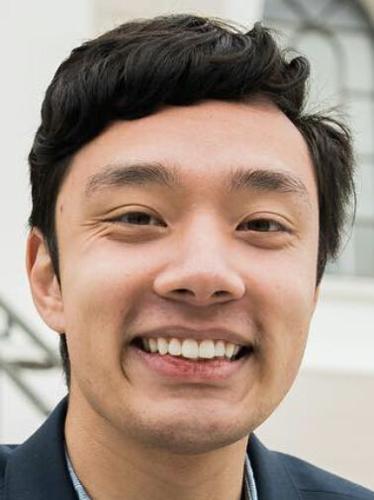
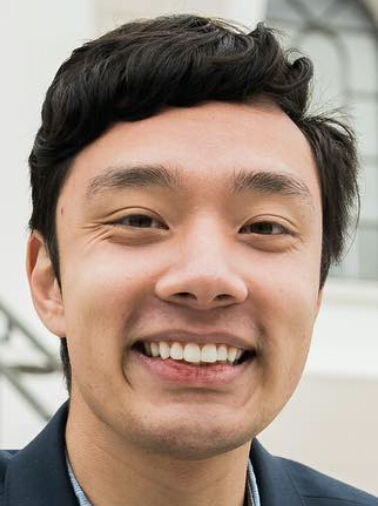
Seats for Districts 2 and 4 are up for reelection, currently held by Councilmember Mark Nagales and Mayor James Coleman, respectively, each of whom are facing at least one opponent in the upcoming election, as of Wednesday, Aug. 7.
Public safety
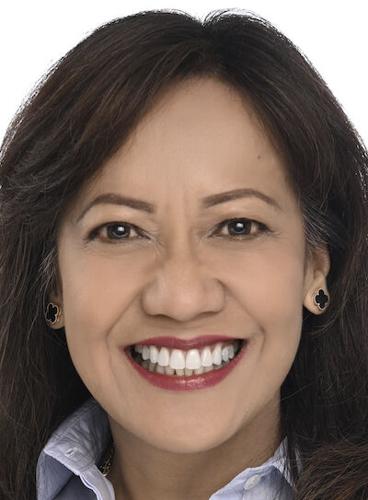
District 2 encompasses the Westborough neighborhood and is also home to St. Augustine Catholic Church, which experienced an attempted shooting earlier this year. Vivian Ramos, who is vying for Nagales’ seat, is on the church’s leadership and immediately headed there upon hearing the news that day.
“Public safety for me is number one, even before the shooting. If you become like San Francisco, it doesn’t matter if we’re a wealthy city or if we have good schools, you’re going to have crime,” she said. “Instead of shrinking the budget for public safety, we actually need to expand programs so that there’s no violent crimes in our community, in our churches and in our schools.”
No one was injured in the attempted shooting, and the suspect, Debari Augustine, was arrested soon afterward. But the incident still holds a strong grip over public safety perceptions and how to approach mental health crises.
Nagales said supporting certain programs and technology, such as license plate readers, have helped allay such fears.
“We were able to arrest the individual that day. Thanks to eyewitnesses on the ground, they were able to identify the shooter and the vehicle that person was in, and because of the online license plate cameras, our police officers were able to identify the vehicle,” he said.
Coleman added that investing in mental health resources, especially among first responders, has yielded promising results.
“We have seen a decrease in the number of mental health commitments, which is good because that shows how effective our mental health clinicians are when it comes to their first responder response,” he said. “They respond to 911 calls of course but, in addition to that, they also do follow-up calls with individuals, and it has allowed them to keep in touch with individuals who have had mental health crises in the past and offer resources. We’ve seen that actually reduce the amount of times that individuals have to call 911 for mental health crises.”
Development
The city has been lauded, both by the state and local advocates, for its housing progress, especially relative to other Peninsula cities, but that doesn’t mean there isn’t community backlash. Some residents in the Old Town neighborhood have voiced opposition to a proposed affordable housing development on Linden Avenue, and most notably, a fight to reopen the Municipal Services Building — which housed recreation programs before the new recreation center opened across the street last October — has grown increasingly contentious over the past year. In 2017, the building was rezoned, opening the possibility for residential development, including below-market-rate housing. But a large group of residents, many senior citizens, have maintained a steady presence at City Council meetings, demanding that the city take the building out of the housing element — a document that, in part, identifies where new housing, such as the MSB site, could be developed.
“We kicked off this process where we’re going to tackle the issue head-on. In our first meeting [this month], we’re going to be hiring a consultant, a community facilitator to take input from the community about what they want to see for the future of the MSB to help inform the council,” Coleman said. “We need to really do a deeper dive, study the building, see what the constraints are and what makes the most sense for the community.”
The issue is a tough tightrope for many elected officials to walk, as some communities’ resistance to new development is mounting at the same time the state intensifies oversight on local housing production. The state-assigned housing goals, or Regional Housing Needs Allocation, for South City more than doubled between last cycle and the current 2023-31 cycle. It needs to plan for almost 4,000 new homes by 2031, one-third of which must be for low-income households.
“I hear it from people all the time [who say], ‘It’s too much and it’s too fast,’ and I understand that, but there are also outside factors involved. If we don’t build the housing we need for South City, the state will come after us … and could potentially take away essential dollars,” Nagales said. “I think [some residents’] concern is that they want to see more single-family homes. Our land is very restricted, so a lot of development we’re doing is building up, so we have to find that balance of building at a certain height level where people feel comfortable.”
Recommended for you
Fiscal health
Despite the unique revenue advantage that comes from hosting some of the largest life science companies in the world, the city still faces ongoing deficits. The most recent fiscal year 2024-25, which ended in June, saw a roughly $8 million budget deficit, per most recent estimates. That’s largely why Avin Sharma, finance manager at Stanford University and board member of the South San Francisco Housing Authority, said he wanted to run.
“Being a finance guy, it does impact our city services, and I feel that’s where I can bring my financial experience to ensure that at least we get to a balanced budget so that our residents have all the services we deserve,” Sharma said.
Sharma, who also holds graduate degrees in engineering and business administration, isn’t the only one motivated to run on account of their finance and business acumen. Ramos said that as a leader for global financial corporations, such as Charles Schwab and Franklin Templeton, she has decades of experience managing complex operations and budgets. She added that while the 5% cuts across all city departments this year was commendable, more can and should be done.
“We should look at all of the suppliers in the city. Is there any place where we could consolidate vendors?” she said. “On the investment side, I looked at what they’re investing in, [which are] treasury bills, because it needs to be safe, and I understand that. But there are now new vehicles that you could do, like an ETF of treasury bills. Have they looked at those yields?”
Coleman acknowledged the deficit, though he added it’s part of regional and national cost increases, such as health care premiums, as well as the state’s initial withholding of vehicle license fee revenue, both of which are out of the city’s control. Nonetheless, staff have been diligent in securing grant money, he said, and a ballot measure to update the business license tax, which will go before voters in November, would bring in an additional $3.4 million annually, almost cutting the deficit in half.
Social equity
The updated tax structure would require large biotech firms to pay a higher proportion of business license revenue. But landing on the right level of taxation while keeping the city attractive for prospective firms involved numerous council discussions — especially as the industry is a crucial funding spigot for some of the city’s social programs like child care subsidies and affordable housing programs.
Those are important factors to take into account, Nagales said, especially as families rely on such services to stay in South City. He said he was only able to stay in his hometown due to a first-time homebuyer loan program, and some of his proudest work comes from expanding constituents’ access to child care.
“In the six years since I’ve been elected, we’ve accomplished a lot, and I secured $9 million to build a new child care center in Westborough,” Nagales said. “I’m also the only councilmember with young children, so it is a very personal issue for me.”
Mostly buoyed by funds from the American Rescue Plan Act, the city also piloted a guaranteed income program in 2021, which provided $500 a month to 160 residents, whose average monthly income was about $1,800 for a 3.5-person household. According to the report, more than 80% of participants used the funds for rent and groceries, and the biggest self-sufficiency gains were related to health care coverage, mental health and housing.
But Sharma said he would’ve applied more scrutiny to such a program if he were in office, saying that $500 a month is not particularly significant, and the $1 million used for the program could have helped the financial predicament the city faces today. He said he would also ensure that the city’s economic advancement programs would focus solely on South City residents, not neighboring residents.
The two incumbents, Coleman and Nagales, said they are proud of the work they’ve been a part of, though recognized more work remains.
“You’re always still learning,” Coleman said. “I’ve learned how to be very collaborative and to be more open-minded with a lot of the policy decisions that we’re making throughout San Mateo County.”
Plans to file for council end on Aug. 9. Edmund DeGuzman has also filed to run for the District 4 seat, which has not been fully processed as of Aug. 7.





(0) comments
Welcome to the discussion.
Log In
Keep the discussion civilized. Absolutely NO personal attacks or insults directed toward writers, nor others who make comments.
Keep it clean. Please avoid obscene, vulgar, lewd, racist or sexually-oriented language.
Don't threaten. Threats of harming another person will not be tolerated.
Be truthful. Don't knowingly lie about anyone or anything.
Be proactive. Use the 'Report' link on each comment to let us know of abusive posts.
PLEASE TURN OFF YOUR CAPS LOCK.
Anyone violating these rules will be issued a warning. After the warning, comment privileges can be revoked.