

For Nora Melendez, students returning to campus in the fall could offer some relief to a family feeling squeezed by quarantine.
“We need to go to work — like a majority of people,” said the East Palo Alto mother of three who has worked intermittently as a bookkeeper since the shelter-in-place mandate was ordered to stem the spread of COVID-19.
But noting rising counts of confirmed coronavirus cases and an increasing probability that her oldest son’s school will start the school year with some reliance on online learning, Melendez balanced her family’s health and safety against their own economic interest.
“It’s hard to make the decision to distance learn, which at this point would be the best and most responsible. But how do you manage that with needing to go to work? And how do you manage needing to work, with no work being available? So it’s a very, very tight spot that we are in. And I would imagine most Americans are in a very tight spot,” she said.
Online versus on campus
As the sound of the first school bell nears, districts throughout San Mateo County have approved, or will soon select, plans for the new year. And while each district is picking a strategy which officials feel best meets the need of the school community while recognizing local health conditions, most are opting for a hybrid model.
The blended system would allow certain students to return to campus for a portion of the week, while the rest of instruction would be offered online. Details vary according to location, but many officials feel the system is a sensible compromise between divergent interests.
County Superintendent Nancy Magee said the approach is preferable because it partially meets the needs of those on both sides of the issue while offering flexibility needed to address potential changes in the health landscape.
“The state didn’t go from shelter in place to open overnight. So why should we expect schools to do that? We need to take a measured approach,” said Magee.
She maintained that perspective against a recognition that many in the school community are dissatisfied with the proposal.
Detractors have concerns about inadequate academic rigor associated with online learning, as well as the social and emotional tolls taken by keeping kids from the classroom and the myriad challenges posed to parents attempting to manage professional obligations.
One of those critics is Matthew Lipson, a Redwood City resident who was underwhelmed by the quality of education his two high school children received last spring when the health hazard immediately required schools to adopt online learning.
Observing what he considered reduced expectations from educators who forfeited letter grading and mandated few lessons for students before classes were released for the summer, Lipson expressed his frustration.
“We are failing our students, we are failing our children,” said Lipson, who was skeptical enough training has taken place over the summer months to assure past errors can be avoided in the future.
Professional development
To address that fear, Magee said her office partnered with the San Mateo County Community College District over the summer and trained more than 300 educators seeking to build their virtual teaching skills.
Hector Camacho, president of the San Mateo County Board of Education, said the popularity of the program is a testament to the commitment of the local teaching community.
But noting the program could not accommodate the overwhelming demand, Camacho suggested a more ambitious approach to assuring teachers are adequately prepared for the unique learning arrangement expected to arrive in the fall.
Camacho proposed removing five days from the standard 180 days on the instruction calendar to be reserved entirely for intensive professional development sessions.
Noting the significant budget implications associated with the proposal which would need to be approved by state officials, Camacho acknowledged the challenges with implementation. But he maintained the investment is likely necessary to assure teachers are ready to take on a sizable task.
Recommended for you
“We can do this, but they need the support to do it,” he said.
Daina Lujan, president of the San Mateo County School Boards Association, agreed and noted previous missteps can be used to identify areas of improvement as well.
“There are many areas of opportunity to step back and reflect on what are the lessons learned and invest in quality professional development,” said Lujan, who is also a member of the South San Francisco Unified School District Board of Trustees and the principal at Meadows Elementary School in Millbrae.
For her part, Lujan said additional training could help parents and teachers feel more comfortable with the quality of education offered in the upcoming school year.
Labor concerns
Beyond unrest with training protocol, many educators harbor deeper reservations with the health risks associated with requiring teachers and students to return to campus, said E. Toby Boyd, president of the California Teachers Association.
“Schools should not open until they are safe,” said Boyd, whose labor group has pushed hard throughout the state to keep campuses closed.
For his part, Boyd urged state and federal lawmakers to make more money available to schools, which could assure all the appropriate safety measures are in place before going back to the classroom.
In the interim, he expressed confidence that California’s teachers were up for the challenges associated with starting classes in an unconventional fashion. And while he was unfamiliar with Camacho’s professional development proposal, he noted the union did offer members some online education training.
For her part, Lujan measured the reluctance of teachers and campus staff to return against the push from some parents and community members to reopen campuses.
“School districts are in a pressure cooker,” she said.
Caught in the middle
As officials navigate through these sticky issues, the future hangs in the balance for Melendez.
With some expectation that the coming school year will feature a significant amount of online learning, she fears the learning loss her 4-year-old son will suffer.
“Distance learning is never going to replace in-person learning. It’s just not,” said Melendez, who said the last few months of online learning were largely ineffective because her son struggled to focus on a computer screen for an extended term.
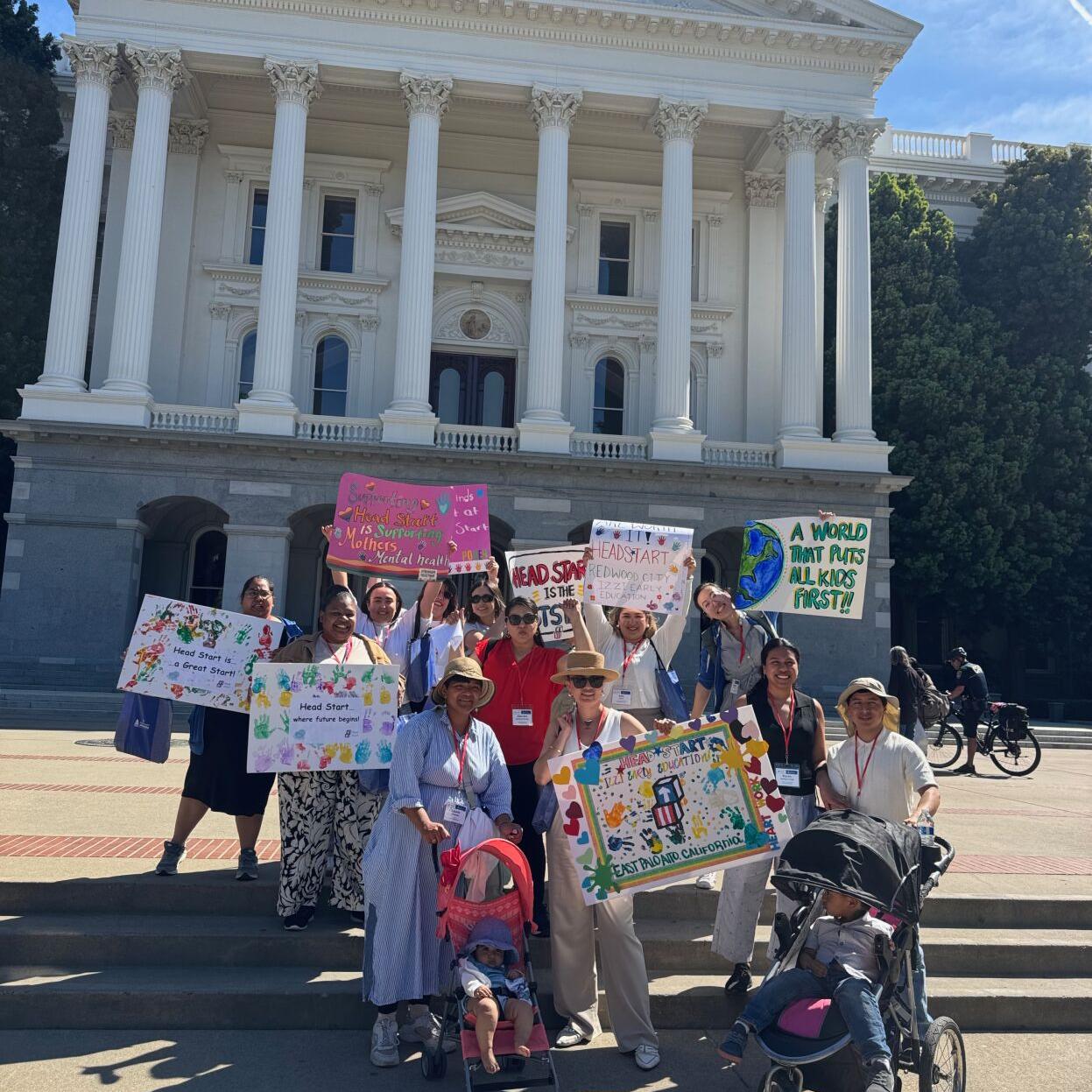
But with her two younger children absorbed into a stable social bubble at their Head Start program, she hoped to have more free time to supplement her oldest son’s education in the fall.
Despite the countless challenges associated with facing an uncertain future, the optimistic Melendez would not let the circumstances douse her spirits.
“Our goal as parents has always been give the kids as much stability as possible throughout all this and keep them thriving, keep them happy, keep them safe,” she said. “And we have been able to do that so far.”
(650) 344-5200, ext. 106








(0) comments
Welcome to the discussion.
Log In
Keep the discussion civilized. Absolutely NO personal attacks or insults directed toward writers, nor others who make comments.
Keep it clean. Please avoid obscene, vulgar, lewd, racist or sexually-oriented language.
Don't threaten. Threats of harming another person will not be tolerated.
Be truthful. Don't knowingly lie about anyone or anything.
Be proactive. Use the 'Report' link on each comment to let us know of abusive posts.
PLEASE TURN OFF YOUR CAPS LOCK.
Anyone violating these rules will be issued a warning. After the warning, comment privileges can be revoked.