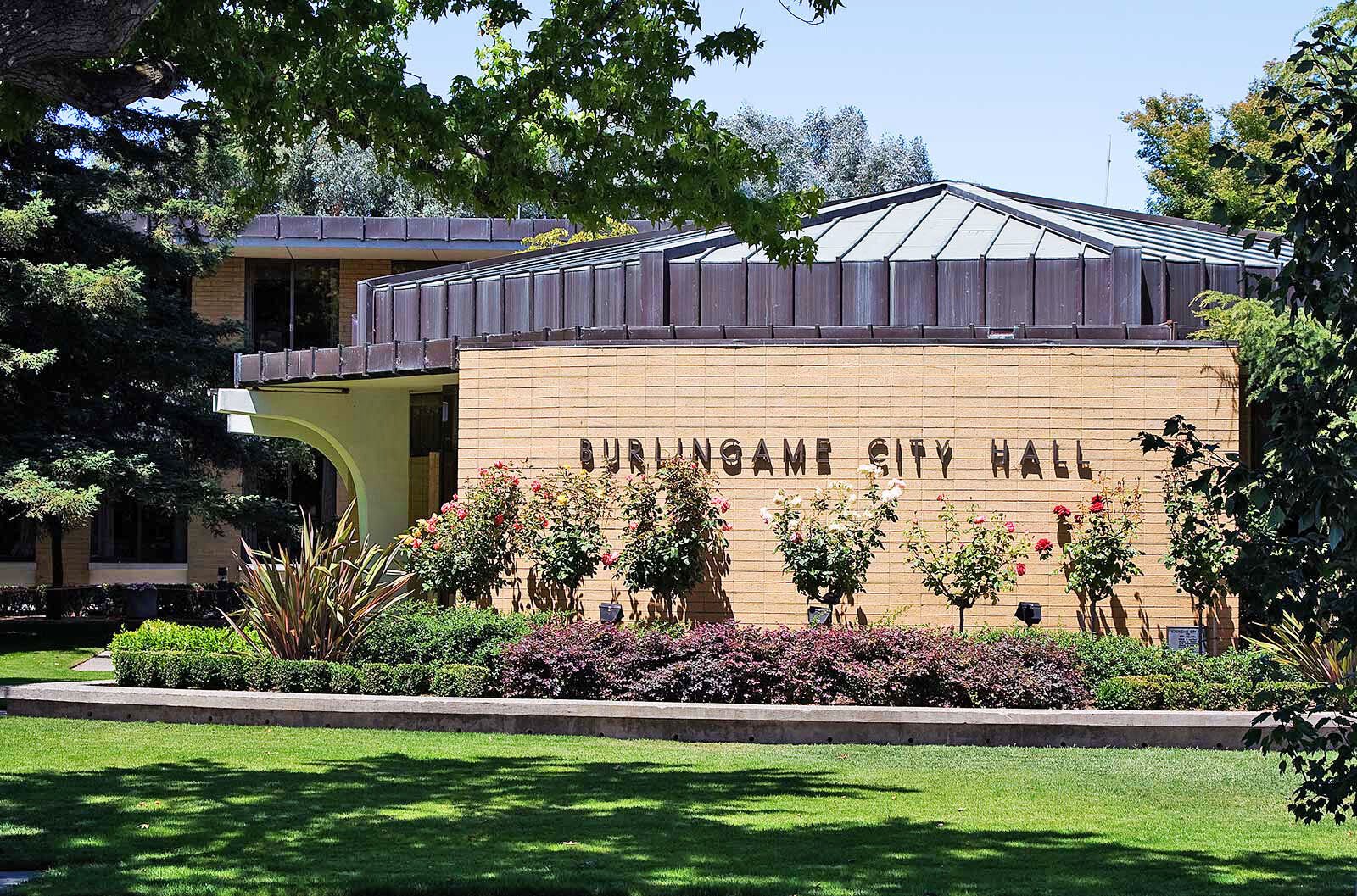
The Burlingame City Council last week continued its ongoing look at potential business license tax increases, with councilmembers providing a mixed bag of feedback on proposed rates and restructurings.
The council had previously indicated its support for replacing the city’s current $100 flat rate tax with one levied on gross receipts, a move that would adjust how much a business pays based on size. Many other jurisdictions in the county have adopted such structures, while Burlingame’s flat rate charge has not changed since 2005, and produces revenue among the lowest compared with neighbors.
But councilmembers this week expressed hesitation with proceeding with a recommendation projected to increase the city’s revenue from business taxes from under $600,000 annually to more than $5.2 million.
“I do think we need to see an increase in the business license tax,” said Councilmember Ann O’Brien Keighran. “My concern is … we’re going from one extreme to another extreme.”
The proposal, prepared by a consultant hired by the city, would charge between 0.001 and 0.003 times gross receipts in addition to a $25 flat rate per business. Businesses with higher margins would be subject to the higher rate, while others, like grocery stores that traditionally have thin margins, would be granted the lower rate.
Other comparably sized cities with gross receipt taxes include San Bruno, Menlo Park and Foster City, which gain $2.2 million, $2.3 million and $1.7 million from the tax, respectively. Burlingame is home to 5,897 businesses, more than the other cities, according to the consultant.
Not included in that estimate, however, is Burlingame’s transient occupancy tax, which applies to hotels and short-term rentals. Given the many hotels in Burlingame and its proximity to the airport, the city gains a considerable portion of its revenue from the tax. The revenue stream, however, was slashed amid the pandemic as travel ground to a crawl, with about $5.7 million flowing in for the 2020-21 fiscal year compared with $29.4 million in 2018-19. As a result, the city has been seeking to diversify its income sources.
And while the city, traditionally fiscally conservative, has savings, it also has considerable infrastructure needs on the horizon. The council has long sought funding for a bridge for the Caltrain tracks to pass over Broadway, a $316 million undertaking for which the city is still $300 million short. Planned sea level rise infrastructure could also come with a lofty price tag.
Any new tax would first require voter approval. Councilmember Donna Colson requested more information on available tax options and noted the need for polling to examine voter support. She too expressed concern regarding the scope of the hike.
“I’m open to having the conversation, but I really think [the recommended model] as it’s structured is way too high,” she said.
Recommended for you
Baked into a business tax restructuring would also likely be a cannabis tax. The city currently has no cannabis retailers, but last year councilmembers voted to allow delivery services to operate within the city. If a gross receipts tax were to be adopted, a special bracket for such a business could be created.
Despite hesitancy regarding an all-encompassing business tax, councilmembers unanimously agreed a cannabis delivery tax should be implemented. City Manager Lisa Goldman said the two should be combined to avoid requiring multiple separate taxes on the ballot, noting that requesting two tax increases at the same time usually results in both failing.
Councilmember Michael Brownrigg, cannabis tax aside, said he was not in favor of a business tax increase. He said he believes the hotel tax will recover as travel returns and added the city already takes “a lot of money out of the commercial sector.”
“I completely get that we’re low, I completely get that other cities do it different, but other cities aren’t blessed with our hotel sector,” he said. “I think therefore we can afford to not take a bite out of the business sector right now.”
He noted also the complexity that could come with picking “winners and losers” regarding which types of businesses would be subject to which tax brackets.
For his part, Mayor Ricardo Ortiz expressed interest in creating set rates for various business sizes. He said rates could be $300, $200, $100 and $50, depending on gross receipts.
“I think there’s a way we can raise a little revenue without creating any hardship for these businesses,” he said. “$100 is really ridiculously low, and to say $300 is going to be a hardship is kind of silly.”
Councilmember Emily Beach said she would like further discussion on a parcel tax, something she had previously mentioned as a possibility. She pointed to East Palo Alto’s Measure HH from 2018, which levied a $2.50-per-square-foot tax on buildings larger than 25,000 square feet, as a potential model. Other councilmembers agreed more time was needed to discuss the idea.
The council will reconvene on the subject during a future meeting before making a final decision.
Note to readers:This story has been changed to correct the amount the city collected in transient occupancy tax.
So due to Burlingame shutting down retailers because of this COVID thing and because the city was missing out on their share of sales tax revenue from local businesses due to lack of sales, the city feels they need to backfill the shortage by taking more hard-earned money from business owners? Watch out business owners. Perhaps Burlingame business owners should move to a more welcoming and hospitable city, just a few miles up or down the road. More of the money they earn will then go into their pockets.
Keep the discussion civilized. Absolutely NO
personal attacks or insults directed toward writers, nor others who
make comments. Keep it clean. Please avoid obscene, vulgar, lewd,
racist or sexually-oriented language. Don't threaten. Threats of harming another
person will not be tolerated. Be truthful. Don't knowingly lie about anyone
or anything. Be proactive. Use the 'Report' link on
each comment to let us know of abusive posts. PLEASE TURN OFF YOUR CAPS LOCK. Anyone violating these rules will be issued a
warning. After the warning, comment privileges can be
revoked.
Please purchase a Premium Subscription to continue reading.
To continue, please log in, or sign up for a new account.
We offer one free story view per month. If you register for an account, you will get two additional story views. After those three total views, we ask that you support us with a subscription.
A subscription to our digital content is so much more than just access to our valuable content. It means you’re helping to support a local community institution that has, from its very start, supported the betterment of our society. Thank you very much!







(1) comment
So due to Burlingame shutting down retailers because of this COVID thing and because the city was missing out on their share of sales tax revenue from local businesses due to lack of sales, the city feels they need to backfill the shortage by taking more hard-earned money from business owners? Watch out business owners. Perhaps Burlingame business owners should move to a more welcoming and hospitable city, just a few miles up or down the road. More of the money they earn will then go into their pockets.
Welcome to the discussion.
Log In
Keep the discussion civilized. Absolutely NO personal attacks or insults directed toward writers, nor others who make comments.
Keep it clean. Please avoid obscene, vulgar, lewd, racist or sexually-oriented language.
Don't threaten. Threats of harming another person will not be tolerated.
Be truthful. Don't knowingly lie about anyone or anything.
Be proactive. Use the 'Report' link on each comment to let us know of abusive posts.
PLEASE TURN OFF YOUR CAPS LOCK.
Anyone violating these rules will be issued a warning. After the warning, comment privileges can be revoked.