
Palestinians face uncertain future as Gaza marks 1,000 days of war
It's the 1,000th day of war since a Hamas-led attack on Israel that sparked the war in Gaza. Other conflicts have emerged in the region, and fragile ceasefires show scars of persistent attacks. Both Israelis and Palestinians are weary of the strain.
The fate of over 2 million Palestinians in Gaza, largely displaced and living amid ruins, remains uncertain. Israeli forces controlled over half of the territory under the ceasefire that took effect on Oct. 10, but Israel's government has expanded that and says it aims to hold 70%.
Few people can get in or out. Further ceasefire steps, including Hamas' disarmament and the immense task of reconstruction, have stalled.
“Much more needs to be done so that even a semblance of normality can come back, and we are far, far away from this,” the International Committee of the Red Cross regional director, Nicolas von Arx, said this week.
Here’s a look at what has happened over the 1,000 days and what may lie ahead.
Iran warns oil tankers to use approved routes in Strait of Hormuz or face a 'forceful response'
DUBAI, United Arab Emirates (AP) — Iran’s joint military command warned Thursday that all oil tankers moving through the Strait of Hormuz must use its approved routes or face a “forceful response,” again ratcheting up tensions over a waterway crucial for international energy supplies.
The strait, the narrow mouth of the Persian Gulf, has emerged as one of the top issues in negotiations to reach a permanent end to the Iran war. The statement from the Khatam al-Anbiya military command, reported by Iranian state television, comes after both U.S. and Iranian diplomats met with mediators on Wednesday in Qatar.
It wasn’t immediately clear what sparked the threat from Iran. However, the U.S. military's Central Command had put out a statement about having a meeting with officials from Mideast nations in Bahrain that said “leaders underscored their shared commitment to the free flow of commerce through the Strait of Hormuz.”
That appears to have been the phrase to anger Iran, which is preparing for the funeral that begins this weekend for the late Supreme Leader Ayatollah Ali Khamenei, who was killed in the war's first moments in February.
“Any failure to comply, deviation from the designated route, or disregard for the navigation protocols of the Islamic Republic of Iran in the Strait of Hormuz will be met with an immediate and forceful response from the armed forces, endangering the security of the violating vessels,” the Iranian statement said.
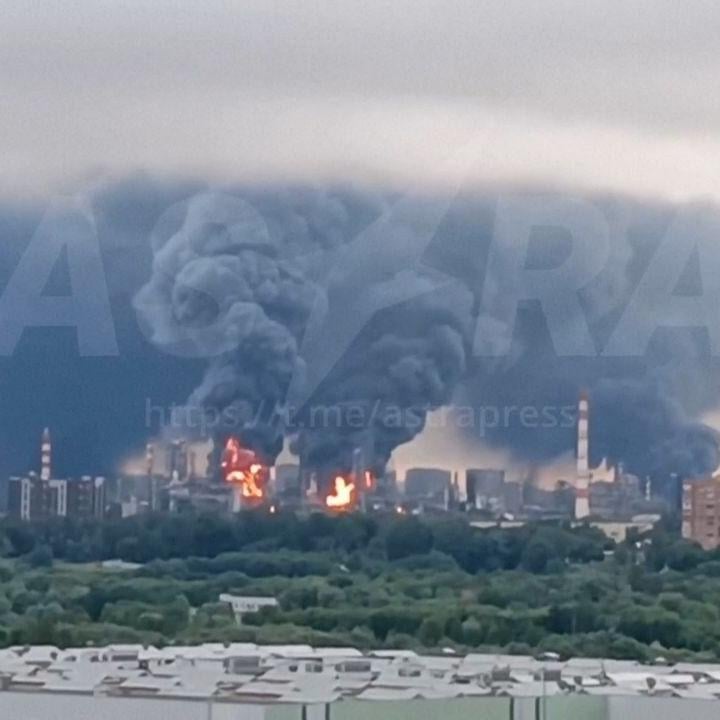
A major Russian attack kills 17 in Kyiv as Ukraine keeps striking Moscow's oil sector
KYIV, Ukraine (AP) — Russia hammered Kyiv in a major drone and missile attack overnight into Thursday morning, killing at least 17 civilians and injuring scores more in what Moscow described as retaliation for Ukrainian strikes on oil facilities that have caused fuel shortages and put pressure on President Vladimir Putin.
Loud explosions shook the Ukrainian capital for hours during the night, with many people sheltering at subway stations after Ukrainian President Volodymyr Zelenskyy and other authorities issued the first warnings of an incoming attack. Emergency crews were still digging through the rubble of collapsed and charred apartment buildings in search of victims as dawn broke.
Russia's Defense Ministry said in a statement that the deadly bombardment was in response to Ukraine's long-range strikes on its civilian infrastructure. Ukraine's increasingly frequent and large-scale attacks — described by Zelenskyy as a 40-day blitz — have especially targeted oil refineries, causing a fuel crisis that has frustrated Russians, more than four years after Moscow's full-scale invasion of its neighbor.
The attack killed 17 people in Kyiv and injured more than 90 others, according to Kyiv Mayor Vitali Klitschko.
Foreign Minister Andrii Sybiha said it was a “night of horror” in the capital.
Vatican declares Society of St. Pius X in schism, excommunicates bishops and invalidates sacraments
VATICAN CITY (AP) — The Vatican responded aggressively Thursday to a traditionalist society that consecrated bishops without the pope’s consent, declaring the Society of St. Pius X in schism, excommunicating its bishops and priests and warning its faithful they too face the harshest sanctions in the Catholic Church.
The Vatican’s doctrine office went above and beyond the minimal sanctions foreseen by the church’s canon law to respond to the consecrations Wednesday of four new bishops at the society’s Econe, Switzerland, seminary.
The society, known by its acronym SSPX, celebrates the ancient Latin Mass and opposes the modernizing reforms of the Catholic Church, which it considers to be rife with heresies and errors and has accused of straying from the Catholic faith.
During a ritual-filled, five-hour Mass on Wednesday, attended by some 15,500 people and their children, the SSPX consecrated four new bishops in direct defiance of Pope Leo XIV, who had urged the SSPX to hold off for the sake of the church's unity.
In a decree, the Vatican excommunicated the four new bishops and the two bishops who participated in the ceremony. It declared the consecrations a “schismatic act” and declared the society itself had created a schism, or intentional rupture with the Catholic Church.
Facing barbs and pressure from Trump, Europe's leaders close ranks
ROME (AP) — U.S. President Donald Trump’s attacks on Italy’s premier have had an unintended consequence.
After Trump questioned Italy’s reliability as a wartime ally and claimed Giorgia Meloni had groveled for his attention, European leaders rallied to Meloni's side, thawing what had been a frosty relationship over her hard-right political roots.
It is the latest example of how the often divisive American president is helping to draw Europe closer together.
European leaders are finding more reasons to coordinate on defense, tariffs and foreign policy as they confront wars in Ukraine and Iran, a ballooning trade deficit with China, and threats from Russia. That leaves Trump, who has often preferred to negotiate with European countries individually, with less ability to do so, analysts say.
“Most of the mainstream leaders realize that Europe is getting squeezed between China and America, and so, if not now, then when?” said Sudha David-Wilp, vice president at the German Marshall Fund. “They need to act as a bloc in order to maintain Europe’s place in the world.”
Recommended for you
An AP journalist describes a month in the epicenter of Congo's Ebola outbreak
BUNIA, Congo (AP) — Mourners stood at a distance as a small coffin was lowered into the grave. Health workers wearing masks and gloves joined a priest who prayed.
A 6-month-old girl was the latest victim of the Ebola outbreak sweeping through eastern Congo. She was the third child in her orphanage to die.
After a month reporting from the outbreak's epicenter with AP photographer Moses Sawasawa, this quiet scene has stayed with me the most.
From afar, the epidemic is often measured in numbers: over 1,300 confirmed cases, hundreds of deaths, tens of thousands of people who may have had contact with them.
The funeral is when we truly realized the gravity of the outbreak. Ebola does not distinguish between young and old, educated and uneducated, rich and the poor, civilians and health professionals.
Analysis: Trump embraces 'Great Equivocator' role sending mixed signals that vex markets and allies
WASHINGTON (AP) — When the U.S. and Iran reached a tentative agreement to end the war, President Donald Trump managed to both trumpet the deal and raise questions about its viability, all in the same answer.
“It’s a very strong deal,” he said. “Nobody knows what it is. But it’s very strong.”
It was the kind of mixed signal the president frequently sends: He’ll seem to commit to one side of a major issue, then the opposite — only to subsequently suggest he’s not actually decided and may not be wed one way or the other.
Just as Ronald Reagan was the “Great Communicator” and George W. Bush declared himself “The Decider,” Trump increasingly seems comfortable as the “Great Equivocator," oscillating between contradictions in what he says on one subject or multiple times in a single online post.
Taking so many positions means the president can’t be fully wrong while letting the public fix on different, albeit often conflicting, statements that can reinforce their own beliefs. It differs from Trump's propensity for falsehoods, which can be part of a concentrated effort to cloud the facts for his own political benefit.
Russia waged a drone campaign in Europe and likely launched drones from shadow ships, report says
Russia likely used shadow ships to launch drones over Europe that repeatedly disrupted civilian aviation, as it monitored military sites and tested the air defenses of NATO nations, according to a report published Thursday by the International Institute of Strategic Studies think tank.
The report, which was shared before publication with The Associated Press, plotted 144 suspected drone sightings across Europe, including in NATO members Germany, France, Belgium, the Netherlands, the U.K., and Denmark, between 2024 and 2026.
Those sightings peaked in late 2025, forcing the temporary closure of several European airports, including in Germany, Spain and Denmark.
Danish Prime Minister Mette Frederiksen described the incidents in her country as the “ most serious attack on Danish critical infrastructure to date.”
The IISS said the Russian campaign was designed to fall below the threshold of triggering discussions for a collective NATO response and was a “strategic failure” for Europe that exposed how the continent’s air defenses are not fit to deal with the current threat.
As the Pentagon stays quiet, AP reconstructs a US strike that killed over 100 Iranian children
JERUSALEM (AP) — It was the deadliest reported strike in the U.S.-Israeli war against Iran. Most of the victims were children.
In almost any other conflict, these haunting truths would be seared into national memory. Yet more than 120 days since at least one U.S. missile struck an Iranian primary school, there remains no final accounting of what happened.
The Trump administration has yet to directly accept the blame or formally release findings of a Pentagon investigation into the bombing, even though the military possessed evidence almost immediately that the site of the school had been struck, a U.S. official with knowledge of the situation, who spoke on condition of anonymity in order to discuss an ongoing investigation, told The Associated Press.
The AP has reconstructed the story of the attack, beginning in the schoolyard on the morning of Feb. 28, drawing from open-source information, video footage, human rights reports and interviews with researchers and civilians inside and outside Iran to reveal previously unreported details about the bombing in Minab, including the diversity of children killed.
Still, many details about the blast remain elusive, as a lack of information from the Pentagon and politicization of the attack by Iran’s theocracy have complicated independent reporting efforts. That has created an accountability vacuum, leaving the families of the victims without resolution. Among the mysteries remaining are the number of munitions that hit the school and a complete list of the dead.
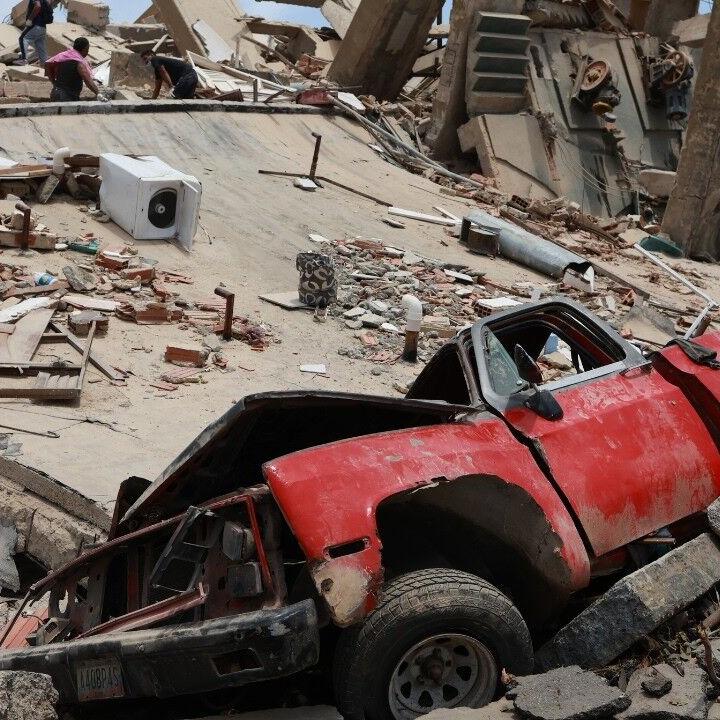
Venezuelan medics fear earthquake aftermath will trigger widening medical crisis
CARACAS, Venezuela (AP) — Doctors said Wednesday they feared the aftermath of Venezuela’s devastating twin earthquakes could trigger a widening medical crisis marked by untreated injuries, infectious diseases and a healthcare system already on the brink.
Thousands of displaced Venezuelans are sleeping in crowded shelters or outside without access to clean water amid dismal sanitary conditions following the June 24 earthquakes which officials say killed at least 2,295 and left more than 11,000 injured.
Aid workers said the aftermath of the quakes has become a major medical crisis that, unless quickly controlled, would take more lives in the days and weeks ahead. The emergency has laid bare Venezuela's chronic shortage of doctors, the result of years of economic crisis, underfunding and emigration.
“The issue we foresee just around the corner is the infections that patients who have been exposed to the disaster for the longest time might bring,” said Eugenio Cova, the head of the trauma unit at Hospital del Oeste Dr. José Gregorio Hernández in Caracas, the capital. “We’ve already gone through a period of complex trauma — which will continue to occur — but now it’s complicated by infections."
Aid workers also warn that the extensive damage to infrastructure could fuel outbreaks of diseases in the hardest-hit communities.







(0) comments
Welcome to the discussion.
Log In
Keep the discussion civilized. Absolutely NO personal attacks or insults directed toward writers, nor others who make comments.
Keep it clean. Please avoid obscene, vulgar, lewd, racist or sexually-oriented language.
Don't threaten. Threats of harming another person will not be tolerated.
Be truthful. Don't knowingly lie about anyone or anything.
Be proactive. Use the 'Report' link on each comment to let us know of abusive posts.
PLEASE TURN OFF YOUR CAPS LOCK.
Anyone violating these rules will be issued a warning. After the warning, comment privileges can be revoked.