

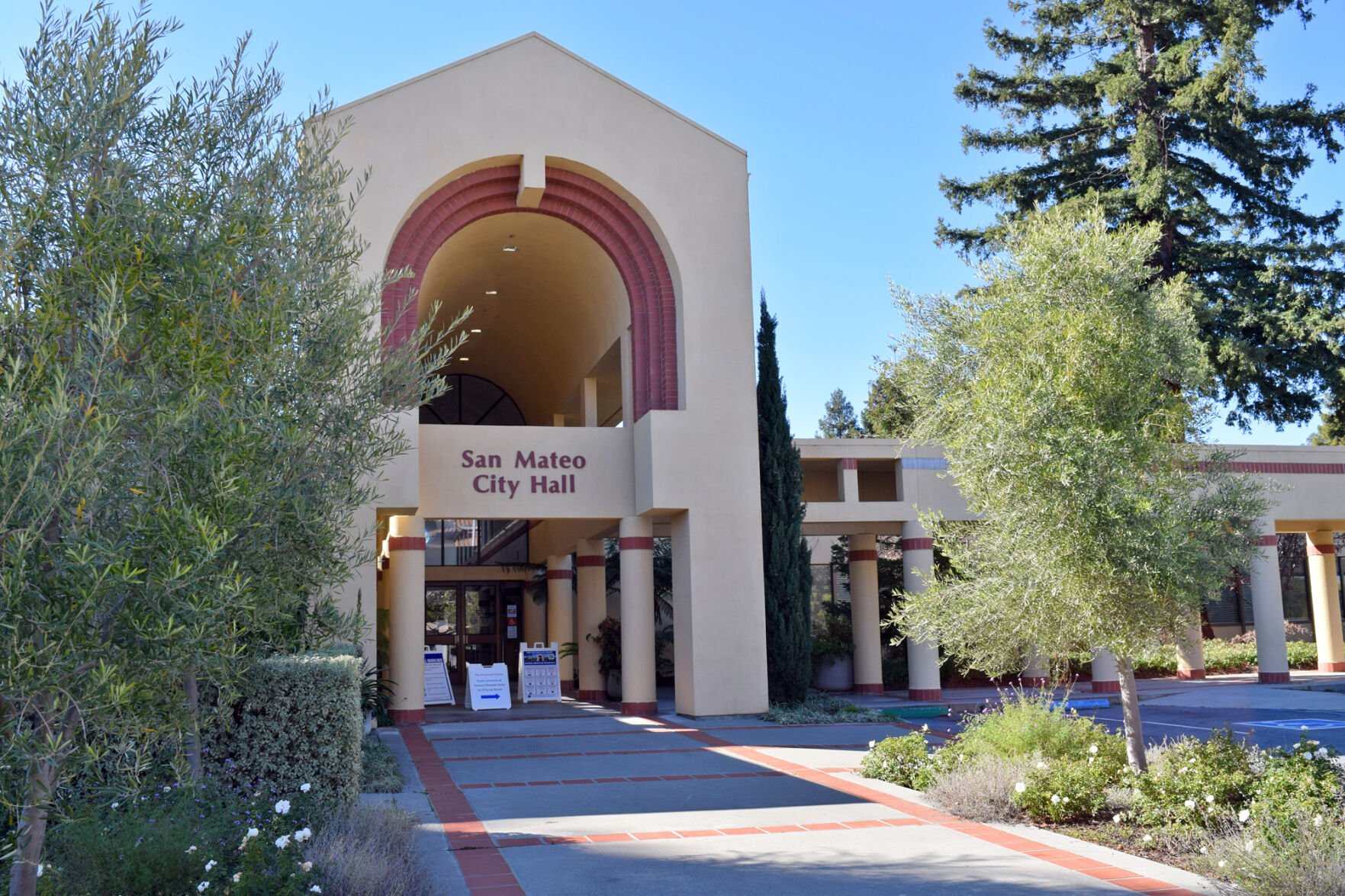
San Mateo’s City Council declared its support for its draft housing element that articulates future goals and policies to allow for nearly 11,000 new units, with minor changes expected to density policy, fair housing language and senior housing.
“I think it gets us the greatest opportunity for the greatest number of housing units that we needed yesterday,” Deputy Mayor Diane Papan said. “So I’m very pleased to see what we’ve seen tonight.”
The City Council used its May 23 special meeting to ultimately accept its 2023-2031 draft housing element, a state-mandated document detailing housing policies and goals to further development opportunities. Under the housing element, San Mateo must provide the zoning conditions for more than 7,000 housing units as part of its Regional Housing Needs Allocation, a significant increase compared to the last cycle. Allocating the numbers is the Association of Bay Area Governments, a regional planning agency responsible for helping local cities absorb changes around land use, housing and the environment. The city itself does not have to build the units. However, it is responsible for identifying land suitable for housing, including vacant sites and sites for potential redevelopment to meet its RHNA number. The city has identified 10,922 units for development, a conservative estimate to ensure a higher likelihood of housing. Around 1,845 units are in the Bridgepointe area, 2,400 near the Hillsdale Station South, 2,000 near the Highway 101 and State Route 92 interchange, 1,000 downtown, 867 near Highway 92 and El Camino Real, 3,000 near other sites, and 480 ADUs. Around 2,000 would be very low income, 1,500 low, 1,600 moderate and 5,700 above average.
Councilmember Joe Goethals acknowledged the tensions that come with updating housing policy. He thanked the staff for its work and was encouraged the housing element is on track for state approval.
“We’ve seen quite a bit of rhetoric going back and forth about whether we should burn it down and start from scratch with high rises everywhere or whether we should build a wall around San Mateo,” Goethals said. “I don’t think either one of those things is going to happen.”
The housing element calls for producing new housing at all income levels, preserving existing affordable housing, protecting residents from displacement, promoting public education and community outreach about housing, and affirmatively furthering fair housing to address issues of equity and access.
The council has made more housing and affordable housing a key priority amid its housing shortage. Significant portions of residents want more done to address the housing and affordable housing shortages that lead to increasingly unaffordable prices and residents forced to move elsewhere. However, other residents want to limit and manage growth and density amid concerns about overcrowding and traffic. Measure Y, a 2020 voter ballot initiative limiting building height and residential density by those concerned about continued growth, will also play a role in the housing element and determine how much housing the city can build and in what area. If the state does not accept the housing element, the city could face a loss of local control.
Councilmember Eric Rodriguez was confident the city was on the right track. He noted San Mateo needed to acknowledge Measure Y and strike a balance and compromise between different groups in San Mateo. He thanked staff for its work amid challenging circumstances, citing recent critiques of the housing element from the Planning Commission.
Recommended for you
“You’ve been encouraged to go against council direction, and you’ve stuck to your guns and stayed on that route, and I know that’s not easy to do, especially in public meetings and Planning Commission sessions, so I appreciate that,” Rodriguez said.
Councilmember Amourence Lee noted the North Central neighborhood had seen a considerable decrease of Black people since 1990, with more action needed to stop displacement. Lee advocated for housing element tweaks to include more housing density requirements in mixed-use zones, higher density mixed-use options near Caltrain stations, affordable housing at willing nonprofits sites that own land, and more senior housing. Lee also suggested allowing more micro-units, typically small studio apartments between 200 to 400 square feet, to which the council agreed.
“This is the time for us to prioritize senior housing production,” Lee said. “I want to elevate senior housing as a specific production area to meet what we know will be the silver tsunami.”
Mayor Rick Bonilla wanted affordable housing to be a larger priority in the current RHNA cycle but acknowledged the challenges of financing it. City staff estimate it will take $2.8 billion to build all the affordable housing in the current RHNA cycle. Bonilla encouraged city staff to look at historical segregation and disinvestment in San Mateo and aim high in its housing goals. He called out the worker and affordable housing shortage, saying everyone needs to do more to help people struggling to survive in an area with a rising cost of living.
“I know that it’s probably going to be submitted pretty much as is, but I hope we’re going to make some changes based on comments you heard from council here tonight,” Bonilla said.
(650) 344-5200 ext. 102





(0) comments
Welcome to the discussion.
Log In
Keep the discussion civilized. Absolutely NO personal attacks or insults directed toward writers, nor others who make comments.
Keep it clean. Please avoid obscene, vulgar, lewd, racist or sexually-oriented language.
Don't threaten. Threats of harming another person will not be tolerated.
Be truthful. Don't knowingly lie about anyone or anything.
Be proactive. Use the 'Report' link on each comment to let us know of abusive posts.
PLEASE TURN OFF YOUR CAPS LOCK.
Anyone violating these rules will be issued a warning. After the warning, comment privileges can be revoked.