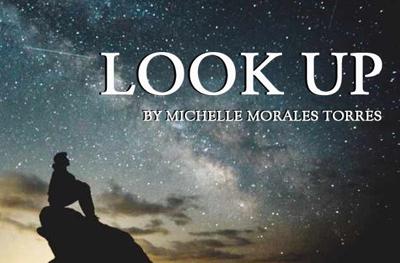
It’s my favorite time of the year – it’s meteor shower time. We’re in the midst of the three meteor showers! Two of which peaked Friday. Some are referring to it as twin meteor showers. According to In-The-Sky.org, the Alpha Capricornid meteor shower started July 3 and goes until Aug. 15. It is also one of “twin” meteor showers that peaked Friday but there’s still a good chance of seeing some. The other meteor shower that peaked Friday is the Southern Delta Aquariid meteor shower. Then the biggest meteor shower of the summer.
Meteor showers occur when our planet passes through streams of debris left behind from comets and asteroids. During its orbit, the Earth passes through particularly dense streams, associated with comets or asteroids on certain days of the year and this gives rise to an annual meteor shower. Shooting stars are seen whenever one of these pieces of debris enters the Earth’s atmosphere and starts to burn up According to In-The-Sky.org, the meteors that are associated with a particular constellation can be distinguished from others because their paths appear to radiate outwards from a common point on the sky. They strike the Earth from almost exactly the same direction and at the same speed. To try to see the most meteors, the best place to look is not directly at its radiant, but at any dark patch of sky that surrounds it.
According to Almanac.com, to see the maximum number of meteors, it’s best to get away from light pollution and avoid city lights. Any hill out in the countryside works. Mountaintops are also great viewing locations because they are usually high enough to reduce haze from air and light pollution. Consider planning a drive or even a camping trip. It usually takes about 20 minutes for your eyes to adapt to the dark. To avoid a stiff neck, bring a reclining lawn chair or a sleeping bag for the ground or find a slight incline so that your head will be higher than your feet. The windshield of a car works perfectly but is not warm. Having extra blankets is helpful, as well as an extra layer of clothes – it’s hard to stay warm when you’re not moving around.
The Alpha Capricornid meteor shower is the smallest one of them all. It is expected to produce a nominal rate of just about 5 meteors per hour, assuming there is a perfectly dark sky, which there will be. The moon (in Pisces) will be around the last quarter phase and rises at 6:10 a.m., leaving plenty of time for meteor watching.
Recommended for you
Although meteors can come from anywhere in the sky, you usually have a better chance of seeing them when the shower’s radiant point is above the horizon. The radiant point for the Alpha Capricornid meteor shower is the constellation Capricornus. This isn’t one we have explored yet but we can still find. If you recall on how to find Cassiopeia, right below it is the square of Pegasus then to the right of it, at like a 45-degree angle, is Capricornus. It will be above the horizon all night, which means you can start looking for meteors as soon as it gets dark. Capricornus will be at its highest point at 1 a.m., so that’s the best time to look for meteors from the Alpha Capricornid. Comet 169P/NEAT is responsible for creating this shower.
The Southern Delta Aquariid meteor shower started July 12 and goes until Aug. 30. Again, this is the other shower that peaked Friday. This shower is expected to produce a nominal rate of around 25 meteors per hour. The radiant for this shower is in the constellation Aquarius. Again, we haven’t explored this one but can find it from the square of Pegasus. Below Pegasus is the circle of Pisces and below Pisces is Aquarius. Aquarius doesn’t rise until after 11 p.m. and will remain visible until dawn breaks. It will be at its highest point at 3 a.m. so that’s the best time to look for meteors from this shower. Again, the moon won’t rise until 6:10 a.m. Comet P/2008 Y12 (SOHO) is responsible for creating the Southern Delta Aquariid shower.
Lastly, one of the biggest meteor showers of the year started July 17. It’s the Perseid meteor shower. It ends August 24 but will peak August 11. If you’re able, that’s the night to make plans to go someplace dark since it’s expected to produce a nominal rate of around 150 meteors per hour. The conditions for viewing will be ideal since there will be a new moon or in other words – no moon. The radiation point of this shower is Perseus. It can be found to the left of Cassiopeia. This is another constellation that is circumpolar, meaning it’s above the horizon all night. However Perseus reaches its highest point at 7 a.m. so the best time to see meteors would be right before dawn or after dusk. Comet 109P/Swift-Tuttle is responsible for creating the Perseid shower.
Look Up appears in the weekend edition. If you have any astronomical questions or facts you’d like to share email news@smdailyjournal.com with the subject line “Look Up.”
Keep the discussion civilized. Absolutely NO
personal attacks or insults directed toward writers, nor others who
make comments. Keep it clean. Please avoid obscene, vulgar, lewd,
racist or sexually-oriented language. Don't threaten. Threats of harming another
person will not be tolerated. Be truthful. Don't knowingly lie about anyone
or anything. Be proactive. Use the 'Report' link on
each comment to let us know of abusive posts. PLEASE TURN OFF YOUR CAPS LOCK. Anyone violating these rules will be issued a
warning. After the warning, comment privileges can be
revoked.
Please purchase a Premium Subscription to continue reading.
To continue, please log in, or sign up for a new account.
We offer one free story view per month. If you register for an account, you will get two additional story views. After those three total views, we ask that you support us with a subscription.
A subscription to our digital content is so much more than just access to our valuable content. It means you’re helping to support a local community institution that has, from its very start, supported the betterment of our society. Thank you very much!










(0) comments
Welcome to the discussion.
Log In
Keep the discussion civilized. Absolutely NO personal attacks or insults directed toward writers, nor others who make comments.
Keep it clean. Please avoid obscene, vulgar, lewd, racist or sexually-oriented language.
Don't threaten. Threats of harming another person will not be tolerated.
Be truthful. Don't knowingly lie about anyone or anything.
Be proactive. Use the 'Report' link on each comment to let us know of abusive posts.
PLEASE TURN OFF YOUR CAPS LOCK.
Anyone violating these rules will be issued a warning. After the warning, comment privileges can be revoked.