
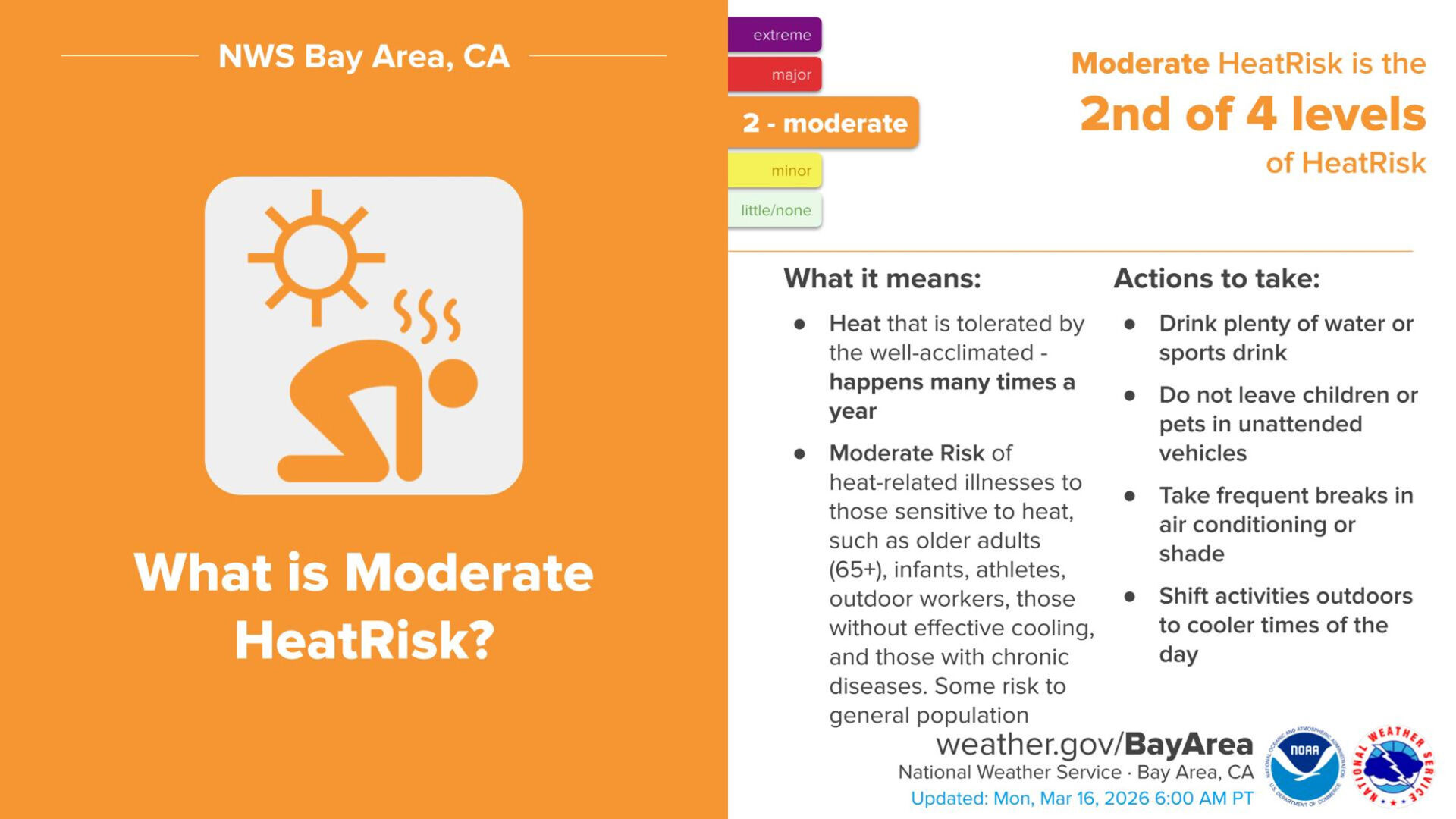
More record-setting temperatures were recorded around the Bay Area on Friday at the end of a heat wave that has lasted several days, according…
More record-setting temperatures were recorded around the Bay Area on Friday at the end of a heat wave that has lasted several days, according…
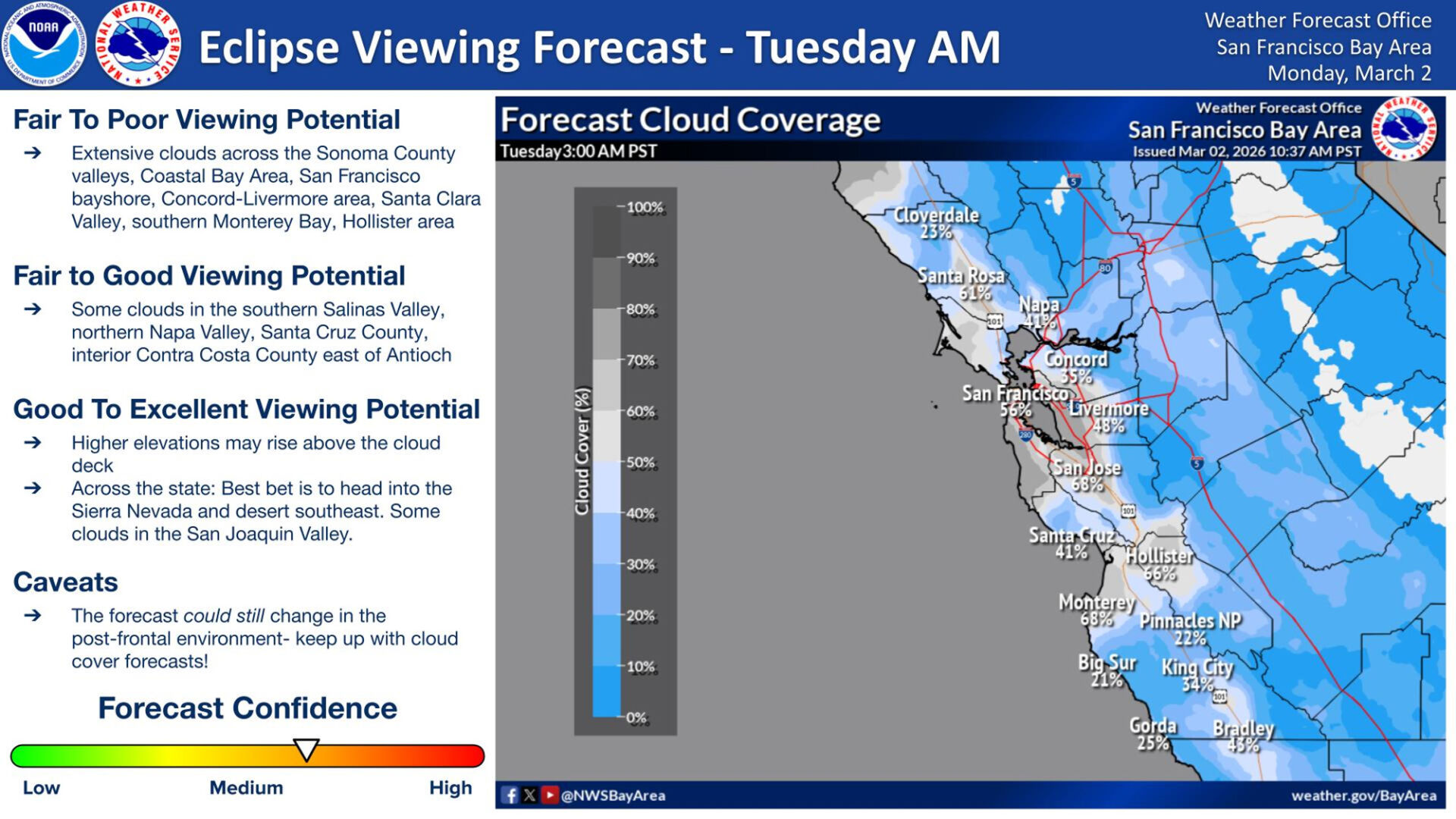
Cloud cover early Tuesday around much of the Bay Area may disappoint those hoping for views of the total lunar eclipse, or Blood Moon, accordi…

San Mateo County residents should expect 2.5 to 3 inches of rain and wind gusts of up to 45 mph this week, according to the National Weather S…

Atmospheric rivers are long and relatively narrow bands of water vapor that form over an ocean and flow through the sky. They carry moisture from the tropics to northern and southern latitudes, and can dump heavy rains or snow over land. According to the National Oceanic and Atmospheric Administration, they occur globally but are especially significant on the West Coast of the United States, where they create 30% to 50% of annual precipitation and are vital to water supplies but also can cause storms that produce flooding and mudslides.

A telescope in Chile has captured a stunning new picture of the Butterfly Nebula, a grand and graceful cosmic wonder. The National Science Foundation's NoirLab released the picture Wednesday. Snapped last month by the Gemini South telescope, the aptly named Butterfly Nebula is 2,500 to 3,800 light-years away. At the heart of this bipolar nebula is a white dwarf star that cast aside its outer layers of gas long ago. The discarded gas forms the butterflylike wings billowing from the aging star. Schoolchildren in Chile chose this astronomical target to celebrate 25 years of operation by the International Gemini Observatory.

It's almost time to catch summer's double meteor showers. The Southern Delta Aquariid and Alpha Capricornid meteor showers peak in the early morning of July 30. With minimal interference from moonlight, the meteors should appear bright and clear if viewed away from city lights. Each shower is expected to produce up to a dozen visible meteors per hour. The Alpha Capricornids may have tails that linger longer in the night sky. Viewing of each shower lasts through August 12. The next major meteor shower, the Perseids, will peak in mid-August.

Air quality officials have issued the first Spare the Air alert of the year for ozone in the Bay Area for Friday, when triple-digit inland tem…

Astronomers have discovered a strange new object in our Milky Way galaxy. The celestial object is emitting X-rays around the same time it's shooting out radio waves. Located 15,000 light-years away, scientists say this object could be a star, pair of stars or something else entirely. Findings were published Wednesday in the journal Nature. NASA's Chandra X-ray Observatory spotted the X-ray emissions by chance last year while focusing on a supernova remnant, or the remains of an exploded star. The hyperactive phase of this object appeared to last about a month.

Top weather agencies warn that the world should get ready for several years of even more record-breaking heat that pushes the globe to more deadly, fiery and uncomfortable extremes. Wednesday's five-year forecast from the World Meteorological Organization and the U.K. Meteorological Office says there's an 80% chance the world will break another annual temperature record in the next five years and it's even more probable that the world will again exceed the international temperature threshold set 10 years ago. Scientists say that means more heat deaths, wildfires, nastier hurricanes, downpours and droughts.
Twice a month, the San Mateo County Astronomical Society gathers in San Carlos’ Crestview Park to share a glimpse of the luminaries of the night sky.


