San Carlos officials shared support for furthering the city’s efforts to reduce its greenhouse gas emissions but said any push should be done with community members, particularly the most vulnerable, in mind.
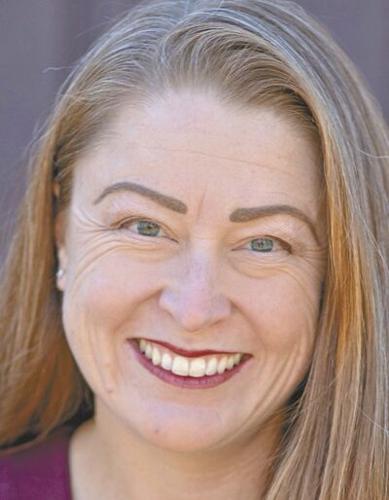
Sara McDowell
“When we look at the details of the real people these codes would impact there are too many exceptions we would have to think about including cost, equity, space and time,” said Councilmember Sara McDowell during a City Council meeting Monday. “I have no doubt we will see more and more people adopt electrification when it works economically for them and when they were at a point in their lives to make this change but at a time when our economy is facing a recession I’m not comfortable putting this added burden onto our middle class through mandates.”
City officials held a study session Monday to discuss potential additions to the city’s reach codes, a series of building policies that go further than state building codes aimed at reducing carbon emissions.
A set of reach codes were already adopted about two years ago, requiring all future development to be fully electric with exceptions in place for residential cooking and fireplace appliances, non-residential cooking, space heating in scientific laboratories, in cases where it’s deemed technically infeasible or in other extraordinary circumstances.
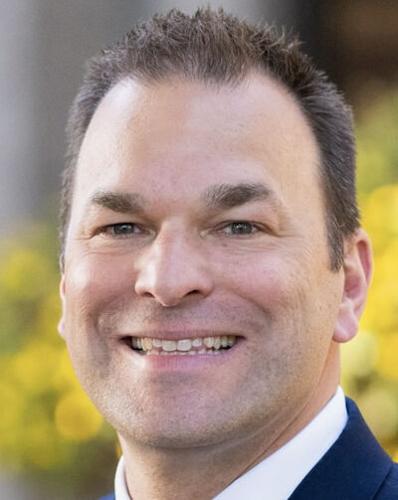
Adam Rak
Councilmembers said they supported keeping all of those exceptions in place while also supporting an argument by Mayor Adam Rak to hold large commercial developers more accountable for offsetting their emissions when granted an exemption.
“We can change our rules over time. We need to build in the flexibility. This is the long haul,” Councilmember Ron Collins said. “I get the whole argument about needing to solve our impact or footprint, but I think we need to be reasoned about it and proceed with some caution.”
And they were also in support of a staff recommendation to implement more stringent electric vehicle charging standards for office buildings.
Some councilmembers shared an interest in pursuing other staff recommendations for electrifying existing buildings. Others shared concerns the move will come too quickly for local grids to handle or for residents to afford.
Recommended for you
“I recognize climate change and do recognize there’s an equity issue here and I feel like we need to go at a slower pace and get our community up to speed,” Councilmember Pranita Venkatesh said.
Staff brought forward six potential policy updates for the council’s consideration drafted by the Bay Area Reach Code Team as a “menu list” from which jurisdictions could select. The team is made up by representatives from Peninsula Clean Energy, Silicon Valley Clean Energy, East Bay Community Energy, Alameda County, Santa Clara County and the San Mateo County Office of Sustainability.
The policies include requiring property owners to install a heat pump instead of an air conditioner unit, requiring the installation on an electric water heater when replacing an existing gas water heater or, as an alternative, requiring a property owner to do so as part of a larger renovation, requiring new pools to use solar or electric water heating systems, requiring that electric outlets be installed for cooking and laundry during a renovation and that some panel capacity or breaker space be reserved for future electrification.
No final decision was made during Monday’s meeting but councilmembers expressed varying support for each idea. McDowell and Councilmember John Dugan said they could support the policies around installing electrical outlets for kitchen and laundry appliances and ensuring capacity for future electrification.
“There are just very very real unintended consequences which frankly we’re not well equipped to understand, to research, to have the time to dig in, to really adequately get on top to make informed decisions,” Dugan said.
Meanwhile, Collins said he could support all options only if the second policy on electric water heater replacements only took effect during larger renovations. Rak and Venkatesh shared similar support.
Next, staff will work with the Bay Area Reach Code Team on formalizing a policy recommendation based on council feedback that will come back for approval at a later date.
Keep the discussion civilized. Absolutely NO
personal attacks or insults directed toward writers, nor others who
make comments. Keep it clean. Please avoid obscene, vulgar, lewd,
racist or sexually-oriented language. Don't threaten. Threats of harming another
person will not be tolerated. Be truthful. Don't knowingly lie about anyone
or anything. Be proactive. Use the 'Report' link on
each comment to let us know of abusive posts. PLEASE TURN OFF YOUR CAPS LOCK. Anyone violating these rules will be issued a
warning. After the warning, comment privileges can be
revoked.
Please purchase a Premium Subscription to continue reading.
To continue, please log in, or sign up for a new account.
We offer one free story view per month. If you register for an account, you will get two additional story views. After those three total views, we ask that you support us with a subscription.
A subscription to our digital content is so much more than just access to our valuable content. It means you’re helping to support a local community institution that has, from its very start, supported the betterment of our society. Thank you very much!







(0) comments
Welcome to the discussion.
Log In
Keep the discussion civilized. Absolutely NO personal attacks or insults directed toward writers, nor others who make comments.
Keep it clean. Please avoid obscene, vulgar, lewd, racist or sexually-oriented language.
Don't threaten. Threats of harming another person will not be tolerated.
Be truthful. Don't knowingly lie about anyone or anything.
Be proactive. Use the 'Report' link on each comment to let us know of abusive posts.
PLEASE TURN OFF YOUR CAPS LOCK.
Anyone violating these rules will be issued a warning. After the warning, comment privileges can be revoked.