Gavin Newsom and his family have had a long and complicated relationship with the oil industry. The latest chapter in the saga, a legal and political dispute over state aid to the California’s refineries, could affect Newsom’s presidential ambitions.
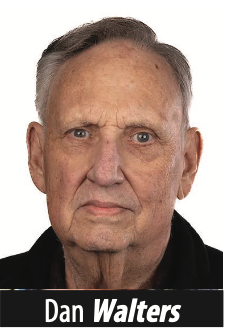
Dan Walters
The roots of this situation date back to the 1940s, when Gordon Getty, a son of oil magnate J. Paul Getty, lived with the Newsom family while attending school in San Francisco.
Newsom’s father, William, later became an attorney for the Getty oil empire and in 1973 delivered a $2.2 million ransom to a gang that had kidnapped J. Paul Getty’s grandson in Italy, later describing it as “an interesting sort of job.”
After his parents divorced, Gavin Newsom was unofficially adopted by Gordon Getty, essentially returning the favor that the Newsom family had given him three decades earlier. In his recent memoir, Newsom describes being divided between his life as the son of an impoverished single mother and the surrogate son of a family with billions in oil industry money.
In 1975, then-Gov. Jerry Brown, another family friend, appointed William Newsom to a Placer County judgeship, later elevating him to the state appellate court. While on the bench in the 1980s, the elder Newsom helped Gordon Getty gain legislation changing California trust law, thus allowing Getty to break the J. Paul Getty trust and obtain billions of petrodollars.
In 1995, William Newsom retired from the court and became administrator of the Gordon Getty Trust, telling an interviewer, “I make my living working for Gordon Getty.”
A few years earlier, the trust provided seed capital for a wine shop venture that Gavin Newsom and Gordon Getty’s son, Billy, were launching, called “PlumpJack,” after an opera Gordon Getty had composed.
Essentially, Newsom owes his start in business to the huge oil fortune that J. Paul Getty, once described as the world’s richest man, had amassed. Without that connection, Newsom would have been hard-pressed to begin what became a lucrative business career.
Recommended for you
Nevertheless, Newsom metaphorically bit the hand that fed him in 2022, when he began vilifying California’s oil refiners, accusing them of gouging motorists on gas prices. Months later the legislature passed a mild measure to have the state Energy Commission monitor refinery operations.
“There’s a new sheriff in town in California, where we brought Big Oil to their knees. And I’m proud of this state,” Newsom said. It was hyperbole, but within months refiners began announcing plans to shutter operations or threatening to do so, raising the possibility of gasoline shortages and higher prices.
Very soon thereafter, Newsom did a political about-face. He urged refiners to remain and signed legislation making it easier to drill new oil wells.
This year the California Air Resources Board overhauled its cap-and-trade auctions, where refiners and other businesses purchase rights to emit greenhouse gases. The program was renamed cap-and-invest and refiners were given free emission rights as an inducement to remain in the state.
Newsom hailed the changes, but environmental groups are incensed at the turnabout. This month the nonprofit Communities for Better Environment filed suit in Los Angeles, alleging the changes violated the California Environmental Quality Act.
“The amendments lock in decades of subsidies for polluting industries, without CARB having performed the required analysis of their wide-ranging environmental harms that would empower decision-makers to make a fully informed determination about the wisdom of these significant changes,” the suit says.
The Democratic Party’s left wing has been on a roll in recent elections, and it includes environmental activists who view the oil industry as a villain.
Newsom’s newly minted pro-oil stance, plus his family’s history with the industry, could backfire in a presidential campaign.
Dan Walters is one of most decorated and widely syndicated columnists in California history, authoring a column four times a week that offers his view and analysis of the state’s political, economic, social and demographic trends. He began covering California politics in 1975, just as Jerry Brown began his first stint as governor, and began writing his column in 1981, first for the Sacramento Union for three years, then for The Sacramento Bee for 33 years and now for CalMatters since 2017.
Keep the discussion civilized. Absolutely NO
personal attacks or insults directed toward writers, nor others who
make comments. Keep it clean. Please avoid obscene, vulgar, lewd,
racist or sexually-oriented language. Don't threaten. Threats of harming another
person will not be tolerated. Be truthful. Don't knowingly lie about anyone
or anything. Be proactive. Use the 'Report' link on
each comment to let us know of abusive posts. PLEASE TURN OFF YOUR CAPS LOCK. Anyone violating these rules will be issued a
warning. After the warning, comment privileges can be
revoked.
Please purchase a Premium Subscription to continue reading.
To continue, please log in, or sign up for a new account.
We offer one free story view per month. If you register for an account, you will get two additional story views. After those three total views, we ask that you support us with a subscription.
A subscription to our digital content is so much more than just access to our valuable content. It means you’re helping to support a local community institution that has, from its very start, supported the betterment of our society. Thank you very much!



(0) comments
Welcome to the discussion.
Log In
Keep the discussion civilized. Absolutely NO personal attacks or insults directed toward writers, nor others who make comments.
Keep it clean. Please avoid obscene, vulgar, lewd, racist or sexually-oriented language.
Don't threaten. Threats of harming another person will not be tolerated.
Be truthful. Don't knowingly lie about anyone or anything.
Be proactive. Use the 'Report' link on each comment to let us know of abusive posts.
PLEASE TURN OFF YOUR CAPS LOCK.
Anyone violating these rules will be issued a warning. After the warning, comment privileges can be revoked.