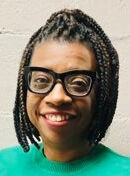
In her new memoir, “Smart Girl: A First-Gen Origin Story,” San Mateo resident and Santa Clara University professor La’Tonya Rease Miles is delving into her experience with the higher education landscape in a profound way.
A first-generation graduate who attended three colleges for her undergraduate education, eventually graduating from the University of Maryland before obtaining a Ph.D. in English from the University of California, Los Angeles, Miles has become a national expert on the first-generation college experience.
“Smart Girl” — which will be officially released Feb. 25 — is her way of sharing that story with the world, she said.
“These are the things that I wish would have happened for me, making my way through college at a time where people weren’t really saying first gen,” Miles said. “[I’m] really answering the question of, ‘How did I get to college?’ Me being Black, working-class and first gen? How did I do it?”
She’s now a faculty member at Santa Clara University’s Department of Education leadership, helping other teaching professionals obtain doctorate’s and master’s degrees. Miles also advises national institutions on first-generation initiatives. Much of her academic work aligns with feedback she’s received on the book, she said, which is to meet students where they are in community and interest.
“Number one, create space for students to tell their own story and to embrace those parts of their background,” she said. “Really finding out from the students what’s important to them and not judging them for that … but find a way to connect those things with the values of the institution.”
For Miles, media, sports, pop culture and music always played a role in her upbringing, something she intertwines throughout the memoir and carries throughout her life, she said. Those reading the book can also listen to a companion podcast that chronicles Miles’ ‘90s coming of age.
As dean of students at Menlo College, for example, she was sure to bring her love of superheroes to the profession as a reminder to all students that they can integrate their own identities and backgrounds into a higher-education environment.
Recommended for you
“For me, those things have been like a source of strength, reminders of my background,” she said. When I was a dean at Menlo College, I had all my posters and my Flash figurines all around to make students feel comfortable.”
The memoir will also delve into Miles’ personal background, she said, sharing a story of her mother bringing her to a Prince concert at age 12.
“She did the best that she could,” she said. “Sometimes it ended up in really funny circumstances, situations like going to a Prince concert, but also meant very real consequences for me, because the fact of the matter is, I did go into college with a lot of confidence.”
As the “front-facing person” in her family — often answering the phone and opening the bills — Miles was confident going into college, she said, bolstered by her family and mother’s belief in her. But as a working-class, first-gen student, the college experience brought unique challenges.
As a student at Howard University — where Miles transferred, seeking the historically Black college and university experience after attending University of North Carolina, Chapel Hill — she was evicted. Miles said she chose to share this story in her memoir both for those who can connect to it and as a “tug on the sleeve” to academic institutions.
“I was an honor student. I was three semesters away from graduating, and was literally told I had 24 hours to pack my things out of my residence hall and move with two weeks left in the semester,” she said. “I think we have to tell those stories too, so that institutions can do better.”
Programs for first-generation students allow young adults going through similar circumstances to create community and garner the unique support of others who share their lived experiences, Miles said.
“I think that’s why first-gen programs are so important, because it lets people know, it’s not just you and your individual problem. There’s a community of people who get it, who understand it,” she said.
Keep the discussion civilized. Absolutely NO
personal attacks or insults directed toward writers, nor others who
make comments. Keep it clean. Please avoid obscene, vulgar, lewd,
racist or sexually-oriented language. Don't threaten. Threats of harming another
person will not be tolerated. Be truthful. Don't knowingly lie about anyone
or anything. Be proactive. Use the 'Report' link on
each comment to let us know of abusive posts. PLEASE TURN OFF YOUR CAPS LOCK. Anyone violating these rules will be issued a
warning. After the warning, comment privileges can be
revoked.
Please purchase a Premium Subscription to continue reading.
To continue, please log in, or sign up for a new account.
We offer one free story view per month. If you register for an account, you will get two additional story views. After those three total views, we ask that you support us with a subscription.
A subscription to our digital content is so much more than just access to our valuable content. It means you’re helping to support a local community institution that has, from its very start, supported the betterment of our society. Thank you very much!



(0) comments
Welcome to the discussion.
Log In
Keep the discussion civilized. Absolutely NO personal attacks or insults directed toward writers, nor others who make comments.
Keep it clean. Please avoid obscene, vulgar, lewd, racist or sexually-oriented language.
Don't threaten. Threats of harming another person will not be tolerated.
Be truthful. Don't knowingly lie about anyone or anything.
Be proactive. Use the 'Report' link on each comment to let us know of abusive posts.
PLEASE TURN OFF YOUR CAPS LOCK.
Anyone violating these rules will be issued a warning. After the warning, comment privileges can be revoked.