A first-of-its-kind orientation inside the San Quentin Rehabilitation Center last month helped illuminate what California can do to keep its prison population decreasing if lawmakers approve a budget cut that would close dozens of housing blocks statewide.
The recent event, hosted by the People in Blue, a special incarcerated committee working to change the culture of California’s prison system, comes at a time when Gov. Gavin Newsom wants to close 46 housing blocks in 13 different prisons to save an estimated $80 million a year.
Almost 3,000 people waited in line to enter a gymnasium and other locations where they were able to meet with dozens of incarcerated facilitators and self-help group volunteers from outside communities. The goal was to take a more active role in pursuing rehabilitation and healing.
“This needs to happen more often for youngsters coming here,” L.L. Romero, a correctional officer who works with The Last Mile coding program, said. “It would help if everyone participated to help build a bond of communication, recognition, respect and relationships. We need to make a change.”
This event promoted TPIB’s so-called Linear Rehabilitation Model proposal, which was first presented to the California Department of Corrections and Rehabilitation last fall.
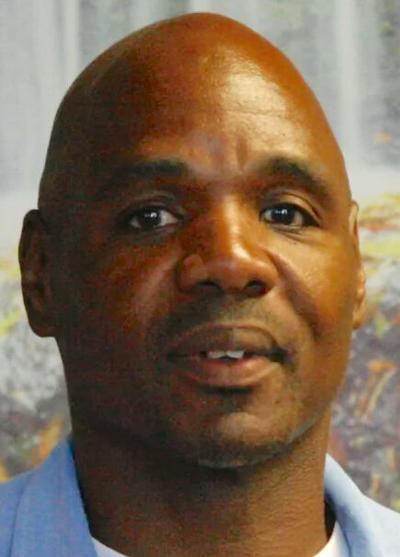
“What many people don’t realize is participating in rehabilitation while in prison is not mandatory,” TPIB president Arthur Jackson said. “Incarcerated people don’t have to participate in any particular rehabilitation programs, and don’t have a right to any particular programs.”
Under the group’s rehabilitation plan, incarcerated individuals would enter the prison system and meet with a team of mentors, such as a custody officer, mental health worker and peer mentor, for example. This team will meet newcomers where they are, and help them develop goals for dealing with their trauma, substance use, gang affiliation and other types of issues before they’re released.
“People in prison should participate in rehabilitation,” Jackson said. “We should have a human right to rehabilitation and healing. A visual road map to rehabilitative success should be created for each individual entering into the system.”
Recommended for you
Under California’s penal code, “the purpose of incarceration is rehabilitation and safe and successful reentry back into the community.”
CDCRs core values, expressed in its strategic plan, include empowering incarcerated individuals to transform their lives and providing unique programming opportunities so that they have a solid foundation when they return to the community. This requires creating safe spaces for incarcerated individuals to learn and thrive.
Today’s political climate contrasts the 1990s when Gov. Pete Wilson enacted tough-on-crime laws that essentially converted California prisons to human warehouses. The prison population peaked in 2006, causing essential services for prisoners to almost collapse. Officers suffered PTSD from dangerous, overcrowded conditions.
The population is currently 93,000 and still to large for the state to meet the rehabilitative needs of all prisoners. California’s prison footprint must decrease to accomplish the mission.
Most California prisons don’t have the rehabilitative infrastructure that San Quentin does. But if CDCR utilizes officers as sponsors and allows incarcerated people to act as facilitators, it can give other prisons a taste of San Quentin at no additional cost to taxpayers.
While closing 46 housing blocks may not save much money in the short term, enhancing rehabilitation programming can help population numbers continue to fall and eventually lead to five more prison closures, as the Legislative Analyst’s Office recommends.
It currently costs $132,860 per year to house each incarcerated individual. This cost will continue to rise with people leaving prisons in the same condition they entered it — unless access to rehabilitative programs is improved.
Steve Brooks is an award-winning incarcerated journalist who resides at San Quentin and works at San Quentin News. He is the first incarcerated participant in the California Local News Fellowship. He wrote this for CalMatters.org, a nonprofit, nonpartisan media venture explaining California policies and politics.
Keep the discussion civilized. Absolutely NO
personal attacks or insults directed toward writers, nor others who
make comments. Keep it clean. Please avoid obscene, vulgar, lewd,
racist or sexually-oriented language. Don't threaten. Threats of harming another
person will not be tolerated. Be truthful. Don't knowingly lie about anyone
or anything. Be proactive. Use the 'Report' link on
each comment to let us know of abusive posts. PLEASE TURN OFF YOUR CAPS LOCK. Anyone violating these rules will be issued a
warning. After the warning, comment privileges can be
revoked.
Please purchase a Premium Subscription to continue reading.
To continue, please log in, or sign up for a new account.
We offer one free story view per month. If you register for an account, you will get two additional story views. After those three total views, we ask that you support us with a subscription.
A subscription to our digital content is so much more than just access to our valuable content. It means you’re helping to support a local community institution that has, from its very start, supported the betterment of our society. Thank you very much!



(0) comments
Welcome to the discussion.
Log In
Keep the discussion civilized. Absolutely NO personal attacks or insults directed toward writers, nor others who make comments.
Keep it clean. Please avoid obscene, vulgar, lewd, racist or sexually-oriented language.
Don't threaten. Threats of harming another person will not be tolerated.
Be truthful. Don't knowingly lie about anyone or anything.
Be proactive. Use the 'Report' link on each comment to let us know of abusive posts.
PLEASE TURN OFF YOUR CAPS LOCK.
Anyone violating these rules will be issued a warning. After the warning, comment privileges can be revoked.