In the mid-1850s, it was discovered that man’s eyes possessed a phenomenal ability to see single frames of pictures, called “persistence of vision,” as if they were moving if they were displayed a certain speeds. This insight by scientists was to become an important discovery that would eventually change our outlook on the world. At first, numerous photos were attached together and run in a device that one person could view. Businesses were started showing these sometime risqué photos and these “peep shows” or nickelodeons prospered due to the curiosity of the public. It didn’t take much to go into business, only a photo machine and a vacant building.
The movies didn’t project sound, but the public was interested. Movie houses began to spring up using all types of buildings and the cost of a startup was still relatively little. The 1920s produced many innovations in the film industry and organs and pianos were used to make the silent, captioned film more enjoyable. Slowly, however, the process of producing sound on the film became achieved and another revolution of movie houses hit the United States. More ornate buildings that looked like shrines now were built to capture the public’s appetite for movies.
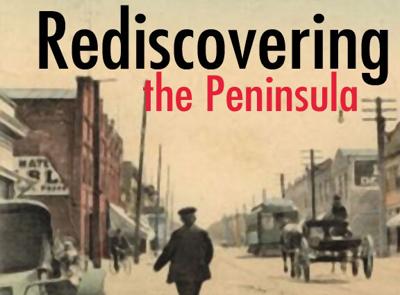
The early 1900s were entirely different than the present age. Towns were separated from one another by plenty of vacant fields because the population was small and sparse. Each city had it own identity and the citizens could find an identity to their lives because of this. Having a movie house became a sought-after goal by each city.
Redwood City can boast having had the first theater in San Mateo County. The Alhambra opened in 1896 on Main Street and the building still stands although it is no longer a viable theater. Other theaters in Redwood City that were actually nickelodeons: The Princess on Main Street near the Masonic Hall, the Lyric on Broadway and the Bell on Broadway. The Sequoia Theater opened on Broadway at Jefferson Street in 1916 and operated until 1939. The New Sequoia opened on Broadway across from the county courthouse at the end of the 1920s. On June 21, 1950, its roof fell in and 27 people were injured. Three months later it opened remodeled and was renamed the Fox Theater.
Hart’s Theater at 248 B St. in San Mateo is recorded as being the earliest documented film venue when it opened in 1912. In the next few years, Roy’s Theater at 219 California Drive (1913), the Regent Theater on San Mateo Drive at Baldwin Avenue (1915-27) and the Garden Theater at 1200 Burlingame Avenue were built, but later burned down. On July 25, 1925, the magnificent San Mateo Theater opened at 66 Third Ave. It was the first theater in the United States that one could truly call Art Deco. It was somewhat Spanish in style with a Leathurby-Smith organ in an auditorium that seated 1,215 people.
The first documented motion picture venue in Daly City (a nickelodeon) is recorded as opening at 6356 Mission St. at the “Top of the Hill” (across from the present Daly City/Colma history museum). It was at a great spot where the trolleys from San Francisco terminated their routes and returned to San Francisco.
On Nov. 27, 1928, the Daly City Theater opened at 6212 Mission St. (closer to San Francisco). It had 1,250 seats and a two-manual six-rank Robert Morton pipe organ. However, on Dec. 22, 1955, it closed its doors due to a newer innovation in movies — the television
On May 18, 1950, the Serra opened at 2710 Junipero Serra Blvd. It was one of the first postwar theaters to be built in the area and it succeeded for a long period, however, after television competition grew too great, it was torn down in 1998.
Recommended for you
Down the hill in the 1920s, the Colma Theater opened at 7379 Mission St. It was short-lived due to the depression and the competition from Daly City.
Brisbane opened a small theater (330 seats) in 1941 and was able to compete due to the highway nearby.
South City’s first theater, the Royal Theater, opened on Grand Avenue and was open from 1912 to 1918. It moved down the street to 211 Linden St. in 1918 and remained here until 1931 and it was superseded by the state-of-the-art State Theater at 201 Linden Ave. It prospered until March 13, 1973, when it closed its doors as a theater.
Pacific Manor opened in Pacifica in May 1951. Again, our communities changed with the appeal of automobile ownership and the larger nearby theaters took a lot of the Pacific Manor’s clientele. It closed in 2002 and was torn down in 2008.
San Bruno citizens first saw its movies in the second floor of the well-known Green’s Hall on San Mateo Avenue. People used the chairs stored in closets for use at meetings. A piano in the corner supplied music. This hall closed down when a building specifically built for film display (but without sound) opened. This was torn down in the late 1920s when a new modern venue was built for the newest invention — talkies. In these few years at the end of the 1920s until the early 1930s, the silent film became obsolete. The El Camino Theater closed Aug. 16, 1973, and it was converted to a number of different businesses. It was torn down in 2015 and had built 83 apartments over retail space.
On July 14, 1949, the Millbrae Theater opened with 1,052 comfortable seats. It closed in 1995.
The second of the three movie palaces on the Peninsula opened in Burlingame in Oct. 12, 1926, at 1415 Burlingame Ave. The first palace movie house was considered to be the San Mateo Theater at 66 Third Ave. and the Sequoia in Redwood City the third one.
Rediscovering the Peninsula runs every weekend. It is compiled through our archives created by Jim Clifford and the late Darold Fredricks.
thank you. amazing how quickly things can change. I have read that there was a time when one could walk through a neighborhood and hear music coming from homes, music played by people who lived there.
Keep the discussion civilized. Absolutely NO
personal attacks or insults directed toward writers, nor others who
make comments. Keep it clean. Please avoid obscene, vulgar, lewd,
racist or sexually-oriented language. Don't threaten. Threats of harming another
person will not be tolerated. Be truthful. Don't knowingly lie about anyone
or anything. Be proactive. Use the 'Report' link on
each comment to let us know of abusive posts. PLEASE TURN OFF YOUR CAPS LOCK. Anyone violating these rules will be issued a
warning. After the warning, comment privileges can be
revoked.
Please purchase a Premium Subscription to continue reading.
To continue, please log in, or sign up for a new account.
We offer one free story view per month. If you register for an account, you will get two additional story views. After those three total views, we ask that you support us with a subscription.
A subscription to our digital content is so much more than just access to our valuable content. It means you’re helping to support a local community institution that has, from its very start, supported the betterment of our society. Thank you very much!



(1) comment
thank you. amazing how quickly things can change. I have read that there was a time when one could walk through a neighborhood and hear music coming from homes, music played by people who lived there.
Welcome to the discussion.
Log In
Keep the discussion civilized. Absolutely NO personal attacks or insults directed toward writers, nor others who make comments.
Keep it clean. Please avoid obscene, vulgar, lewd, racist or sexually-oriented language.
Don't threaten. Threats of harming another person will not be tolerated.
Be truthful. Don't knowingly lie about anyone or anything.
Be proactive. Use the 'Report' link on each comment to let us know of abusive posts.
PLEASE TURN OFF YOUR CAPS LOCK.
Anyone violating these rules will be issued a warning. After the warning, comment privileges can be revoked.