For the last several months, as I’ve walked around Redwood City, I’ve become increasingly aware of homeless encampments.
There are a couple of places where I always assume I’ll encounter one, such as beneath Highway 101 alongside Redwood Creek. Some time ago, however, someone erected their makeshift home right out front at an empty automobile dealership on El Camino Real. I discovered another over on Inner Bair Island, on the north side of the Highway 101 overpass at Whipple Avenue. That setup was especially impressive, not only sporting a good-sized structure made from multiple brightly colored tarps, but also a gas barbecue complete with propane tank. Finally, while photographing the under-construction townhouse project at the corner of Hopkins Avenue and El Camino Real, I stumbled across a makeshift shelter at the end of Hopkins Avenue where it meets the Caltrain tracks. This shelter was less visible, having been built using a dark green tarp that blended into the surrounding vegetation, and having been positioned behind a pair of clothing donation bins.
Whether encampments like these exist because the Peninsula is attracting more homeless, or because people are simply becoming more brazen and are relocating to more visible sites, or because I’ve simply started noticing them more, I cannot say. But notice them I have, and it has me thinking about what we can do for the homeless among us, and, equally importantly, for those who have more conventional housing but are otherwise just managing to hang on.
Although some of those living in makeshift shelters may be doing so by choice, clearly there are a large number who are victims of circumstance. Fortunately, we have some terrific organizations in our area who help those who will accept it. LifeMoves, for instance, is a nonprofit that feeds, clothes and houses about 750 clients per night — about half of whom are children. LifeMoves works to transition their clients into stable housing, and helps them to achieve long-term self-sufficiency. As it happens, I walked by their Redwood City facility — a former motel — the other day, and was pleased to note that it seemed clean and well cared for.
LifeMoves does great work, but it doesn’t just happen by magic. Although they do have a number of paid staffers, they rely upon the help of some 10,000 volunteers and a multi-million-dollar annual budget. Organizations such as LifeMoves cannot operate without substantial donations and volunteer time.
Recommended for you
I am someone who is fortunate in not having to worry about where my next meal is coming from. My wife and I don’t take that for granted, however, and thus we try to do our part. For instance, we give both time and money to our local chapter of Meals on Wheels. Managed by Peninsula Volunteers, Inc., a Menlo Park-based organization that provides a variety of services that support aging adults in our area, our Meals on Wheels chapter delivers meals to clients from Menlo Park to Daly City.
For the last five years, my wife and I have delivered meals throughout Redwood City, Redwood Shores and San Carlos. Thanks to Meals on Wheels, we’ve had the privilege of meeting a number of people who might otherwise have gone hungry were it not for the healthy meals we brought. For the most part, they are delightful, regular people who are just experiencing difficult times due to age-related infirmity, illness or financial setbacks. Simply by giving a couple of hours each week, we gain the satisfaction of knowing that we are making a small, but real, difference.
There are of course any number of organizations out there serving the homeless and the disadvantaged among us, any of which would undoubtedly welcome additional donations and volunteers. In the past, my wife and I (and, on occasion, our children) helped out at Second Harvest Food Bank, sorting donated food. Or, for years we volunteered on work crews with Rebuilding Together Peninsula, a nonprofit that helps people remain in their homes by doing badly needed home repairs and cleanup projects. For various reasons, we aren’t currently hands-on with either organization, but we haven’t stopped believing in — and financially supporting — both of them.
I hear a lot of people talking about the problems that the Bay Area is facing, but very few talking about how they are helping out. In a healthy community, people help one another. Given all of the problems facing humanity right now, it’s time to pitch in. Don’t let the number of issues overwhelm you. Instead, find an organization or two whose missions resonate with you, then do what you can to help out. Individually our efforts may be small, but collectively we can make a real and lasting difference. Let us make the Bay Area a wonderful place for everyone, not just for we lucky few.
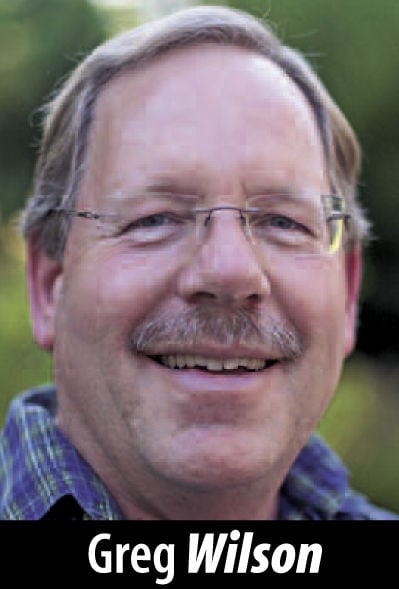
Greg Wilson is the creator of Walking Redwood City, a blog inspired by his walks throughout Redwood City and adjacent communities. He can be reached at greg@walkingRedwoodCity.com. Follow Greg on Twitter @walkingRWC.
Around 60-70% of SMC homeless were previously living in homes in San Mateo county before moving to the street. People are not moving here to be homeless, they are getting evicted or not coming up with the rent and then buying tents.
This is a pretty straightforward consequence of not building enough housing for decades while a ton of new people move here. There aren’t enough homes for everyone so someone is going to end up moving out or being on the street.
If you want to make a difference help change zoning and approval laws so it’s as easier to build housing here as it is in Texas. With inclusionary rules we would get a lot more below market rate housing as well.
Keep the discussion civilized. Absolutely NO
personal attacks or insults directed toward writers, nor others who
make comments. Keep it clean. Please avoid obscene, vulgar, lewd,
racist or sexually-oriented language. Don't threaten. Threats of harming another
person will not be tolerated. Be truthful. Don't knowingly lie about anyone
or anything. Be proactive. Use the 'Report' link on
each comment to let us know of abusive posts. PLEASE TURN OFF YOUR CAPS LOCK. Anyone violating these rules will be issued a
warning. After the warning, comment privileges can be
revoked.
Please purchase a Premium Subscription to continue reading.
To continue, please log in, or sign up for a new account.
We offer one free story view per month. If you register for an account, you will get two additional story views. After those three total views, we ask that you support us with a subscription.
A subscription to our digital content is so much more than just access to our valuable content. It means you’re helping to support a local community institution that has, from its very start, supported the betterment of our society. Thank you very much!






(1) comment
Around 60-70% of SMC homeless were previously living in homes in San Mateo county before moving to the street. People are not moving here to be homeless, they are getting evicted or not coming up with the rent and then buying tents.
This is a pretty straightforward consequence of not building enough housing for decades while a ton of new people move here. There aren’t enough homes for everyone so someone is going to end up moving out or being on the street.
If you want to make a difference help change zoning and approval laws so it’s as easier to build housing here as it is in Texas. With inclusionary rules we would get a lot more below market rate housing as well.
Welcome to the discussion.
Log In
Keep the discussion civilized. Absolutely NO personal attacks or insults directed toward writers, nor others who make comments.
Keep it clean. Please avoid obscene, vulgar, lewd, racist or sexually-oriented language.
Don't threaten. Threats of harming another person will not be tolerated.
Be truthful. Don't knowingly lie about anyone or anything.
Be proactive. Use the 'Report' link on each comment to let us know of abusive posts.
PLEASE TURN OFF YOUR CAPS LOCK.
Anyone violating these rules will be issued a warning. After the warning, comment privileges can be revoked.