San Mateo County is 741 square miles, 448 of which is land and 293 of which is water. By the best estimates that can be derived from searches by me and by much smarter people, about 65% of the land is unbuilt — parklands, open space, forest, wetlands, grasslands and so forth.
A significant percentage of that land is in preserves or restricted public ownership (San Francisco Public Utilities Commission) and will never be developed.
But for the sake of discussion, let us consider a proposal I heard once from one of the county’s most influential builders: Why not take just 10% of that available open space and build housing? It is almost impossible to know how much space that will provide for housing, but implicit in the question is the notion that we would hardly miss 10% of our open space and the trade-off in solving the housing crisis would be more than adequate compensation.
The question, of course, is the answer. We will never do that. There are major swaths of the county — Foster City and Redwood Shores chief among them — that were built by filling in the Bay. That will not happen again.
Our open space is our escape hatch, our therapy and, for many of us, both the reason why we want to live here and why it costs so much. As Nancy Pelosi once said in a related context, preserving our environment is not an issue, it is a value. We can assume there will be no desire to take away even 10% of the space we treasure so highly.
The open spaces are available for everyone, which is more than you can say about the developed spaces. This is one of the themes being emphasized during Affordable Housing Month in San Mateo County and throughout the Bay Area.
Over the last few days, I attended a couple of Affordable Housing Month activities, including a tour of model developments. Counting a ribbon-cutting at the Firehouse Square project in Belmont, we were presented with seven recent projects that added 811 units to the overall housing stock. San Mateo County has about 280,000 total housing units.
By the way, these affordable housing advocates are uniformly earnest, creative and admirable, but they have to start using more meaningful terminology. Housing is such a cold term, as is unit. These are homes. As state County Chief Executive Mike Callagy said at one of the events, these projects give people “a roof over their head, a key to their own door.”
Housing sounds like warehousing and units sounds like a production line.
As for affordable, what does it really mean? In the context of the affordable housing advocates, it means people who face no housing at all. The majority of homes being shown at the recent activities are for people whose income ranges from 30% to 80% of the county median — roughly $40,000 to $150,000 a year. It is no longer a surprise how many school teachers qualify as low-income residents.
Recommended for you
Someone who pays $2 million for a suburban tract home (that in any normal place should cost $750,000) does not have an affordable housing problem. Until their children have to move away because even with a professional career and two incomes, they cannot pay the prevailing prices.
Housing Leadership Council Executive Director Evelyn Stivers said at the Firehouse Square event that it takes three things to make affordable housing possible — leadership from local officials, great sites and money.
Great sites can include the final product. On the housing tour, we saw spiffy new apartment communities. A drop in the bucket.
Most of these developments were three or four stories. One or two, in Redwood City, of course, were five or six.
Great sites, by definition, have to include places where a project can be built without a war of attrition by neighbors who want to preserve the character of their community, another way of saying no to change of any kind.
Open space might be sacrosanct; maybe not neighborhoods.
MidPen Housing President Matt Franklin asserted there is more than enough in-fill space in the county to build meaningful amounts of new residences without invading the open space.
But, he acknowledged, those now-underutilized spaces — most prominently on El Camino Real — would best be served with building heights that are unacceptable to most elected officials. This is where the change will have to come, and is likely to be forced on local cities by legislation that takes these decisions out of their hands.
Resolving the wider crisis of soaring and disrupting housing costs may require a new mindset: Go up, or go nowhere.
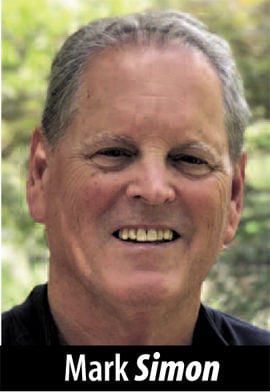
Mark Simon is a veteran journalist, whose career included 15 years as an executive at SamTrans and Caltrain. He can be reached at marksimon@smdailyjournal.com.
The reason I personally call for more, taller buildings with homes in already built areas is that I do NOT want to take that extra 10% (which WOULD be missed) of open space and I believe fills like Foster City and Redwood Shores were huge mistakes. Same with on the side of San Bruno Mountain, like Terra Bay in SSF. That developer Simon mentions in this piece is the kind we all should dislike.
Until we have city planners who must link new commercial developments with corresponding housing needs, we will always have a housing crisis. Developers must include housing provisions in their plans or would not be given permits to keep on blanketing our better spaces with these horrific, impersonal structures. Clearly, our city leaderships are complicit and only look out for short term gains and political grandstanding. I take it that inclusiveness and equity do not extend to demanding responsible housing policies.
Thanks for your letter, Mr. Simon. It sounds like you’d prefer the County saying Not In My Back Yard but are you also saying it’s not okay for County residents to say NIMBY? Let’s put an open space development measure to the voters and see if voters feel the same way about not using this 10%, especially once it’s advertised that folks can avoiding destroying their neighborhoods by allowing development on this 10%. Another option, Emily Hoeven penned an article (https://www.sfchronicle.com/opinion/article/california-nimby-state-housing-17915441.php) about available land for housing. Based on the article, I’d say more power to NIMBY folks who don’t want to destroy the look and feel of their neighborhoods when there is plenty of land available. As for going up, will there be financial compensation for folks with installed roof solar panels whose sun will be blocked due to high rise developments? Let’s skip the discussion of whether many “affordable” housing units can be built after accounting for developer fees and mandatory reach codes are factored in.
Building on free land would reduce the overall cost of close in housing but the cost would still be out of sight with the cost of construction, legal fees, planning approvals and additional infrastructure costs. Even if built it would hardly make a dent in the housing problem and as pointed out make the area less attractive due to less open space. The same amount of money would produce far more housing in outlying areas. It is less expensive to invest in faster transit via highways and trains to those areas.
Keep the discussion civilized. Absolutely NO
personal attacks or insults directed toward writers, nor others who
make comments. Keep it clean. Please avoid obscene, vulgar, lewd,
racist or sexually-oriented language. Don't threaten. Threats of harming another
person will not be tolerated. Be truthful. Don't knowingly lie about anyone
or anything. Be proactive. Use the 'Report' link on
each comment to let us know of abusive posts. PLEASE TURN OFF YOUR CAPS LOCK. Anyone violating these rules will be issued a
warning. After the warning, comment privileges can be
revoked.
Please purchase a Premium Subscription to continue reading.
To continue, please log in, or sign up for a new account.
We offer one free story view per month. If you register for an account, you will get two additional story views. After those three total views, we ask that you support us with a subscription.
A subscription to our digital content is so much more than just access to our valuable content. It means you’re helping to support a local community institution that has, from its very start, supported the betterment of our society. Thank you very much!







(5) comments
What is the backstory for all these targeted ab1228 Dianne Papan ads and mailers? Getting 1228 advertised in this story also.
The reason I personally call for more, taller buildings with homes in already built areas is that I do NOT want to take that extra 10% (which WOULD be missed) of open space and I believe fills like Foster City and Redwood Shores were huge mistakes. Same with on the side of San Bruno Mountain, like Terra Bay in SSF. That developer Simon mentions in this piece is the kind we all should dislike.
Until we have city planners who must link new commercial developments with corresponding housing needs, we will always have a housing crisis. Developers must include housing provisions in their plans or would not be given permits to keep on blanketing our better spaces with these horrific, impersonal structures. Clearly, our city leaderships are complicit and only look out for short term gains and political grandstanding. I take it that inclusiveness and equity do not extend to demanding responsible housing policies.
Thanks for your letter, Mr. Simon. It sounds like you’d prefer the County saying Not In My Back Yard but are you also saying it’s not okay for County residents to say NIMBY? Let’s put an open space development measure to the voters and see if voters feel the same way about not using this 10%, especially once it’s advertised that folks can avoiding destroying their neighborhoods by allowing development on this 10%. Another option, Emily Hoeven penned an article (https://www.sfchronicle.com/opinion/article/california-nimby-state-housing-17915441.php) about available land for housing. Based on the article, I’d say more power to NIMBY folks who don’t want to destroy the look and feel of their neighborhoods when there is plenty of land available. As for going up, will there be financial compensation for folks with installed roof solar panels whose sun will be blocked due to high rise developments? Let’s skip the discussion of whether many “affordable” housing units can be built after accounting for developer fees and mandatory reach codes are factored in.
Building on free land would reduce the overall cost of close in housing but the cost would still be out of sight with the cost of construction, legal fees, planning approvals and additional infrastructure costs. Even if built it would hardly make a dent in the housing problem and as pointed out make the area less attractive due to less open space. The same amount of money would produce far more housing in outlying areas. It is less expensive to invest in faster transit via highways and trains to those areas.
Welcome to the discussion.
Log In
Keep the discussion civilized. Absolutely NO personal attacks or insults directed toward writers, nor others who make comments.
Keep it clean. Please avoid obscene, vulgar, lewd, racist or sexually-oriented language.
Don't threaten. Threats of harming another person will not be tolerated.
Be truthful. Don't knowingly lie about anyone or anything.
Be proactive. Use the 'Report' link on each comment to let us know of abusive posts.
PLEASE TURN OFF YOUR CAPS LOCK.
Anyone violating these rules will be issued a warning. After the warning, comment privileges can be revoked.