Initial usage data about the San Mateo County Express Lanes show the program is meeting expectations, according to transit officials pleased with the initial progress.
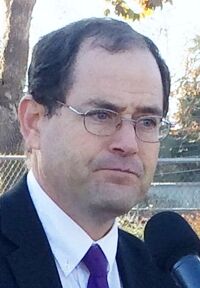
Sean Charpentier
Sean Charpentier, the executive director of the City/County Association of Governments of San Mateo County, or C/CAG, said the express lanes covering 22 miles on Highway 101 running from South San Francisco to the southern county border are working as planned. Data shows the express lanes offer a trip that is 12 mph faster than the general purpose lanes during peak commute hours. Based on declared occupancy data, about 40% of drivers were HOV, 23% were single occupancy vehicles and 35% did not have a FasTrak transponder in the car. In May, the average toll paid for a vehicle during peak commute hours in an express lane was about $4.35.
The San Mateo County Express Lanes Joint Powers Authority manages the express lanes and consists of three board members from C/CAG and three from the San Mateo County Transportation Authority. Charpentier said express lanes help encourage carpooling and public transit use on the roadway instead of single occupancy vehicles to make more efficient use of roads. Charpentier said the lanes are designed to create long-term behavior changes over time, like increasing bus use, forming more carpools and corporations running more shuttles. Charpentier said data is currently limited and only available through May. Still, he is encouraged by what he sees from express lanes data and the equity program designed to help low-income people use the express lanes, also noting the San Mateo County Express Lanes Joint Powers Authority is currently achieving financial self-sufficiency.
“I think the express lanes are a long-term investment, and we are very pleased with how they are performing now, and we really look forward to making sure our equity program is as robust as possible and reaching as many eligible residents as possible,” Charpentier said.
Recommended for you
The express lanes began full operations in March following several years of construction. People need FasTrak tags to use the lanes, with a vehicle with three people or more receiving free use, two in a vehicle receiving a 50% discount, and solo drivers paying full tolls. Pricing rises or decreases depending on how crowded the lane is at the time, known as dynamic pricing. The operating hours for the lanes are Monday through Friday from 5 a.m. to 8 p.m., with anyone able to use them outside those times. People who enter without a FasTrak transponder are sent a violation notice that includes the toll value and a $10 penalty.
Charpentier said the express lanes are also meeting expectations due to the success of its equity program aimed at helping cover transportation costs for residents in San Mateo County who meet financial qualifications of making below $78,000. People who qualify can have a $100 credit on a Clipper Card or a $100 credit on a FasTrak transponder. The program started in early 2022 and, by May, had distributed 2,164 transponders or Clipper Cards to people, with 1,768 of people choosing Clipper Cards, according to Charpentier. C/CAG is also looking at ways to increase the equity program use in the coming months. Initial data shows 31% of users come from South San Francisco, 25% from Daly City, 11% from San Mateo, 7% from San Bruno and 5% from Half Moon Bay and East Palo Alto.
“The equity and express lanes really go hand in hand in San Mateo County because that was the decision made by the policymakers that if we are going to have express lanes, we need to have equity,” he said.
So the standard being used to determine express lanes “are working as planned” is a faster speed during “peak commute hours”? What are the peak commute hours? All hours between 5 a.m. to 8 p.m. are definitely not peak hours and during many of those times, folks don’t bother using express lanes because free lanes run above posted speed limits. There definitely is not a 12 mph difference.
Perhaps a better indication of “working as planned” is to compare the cost of building and maintaining these lanes along with the various freebies given out in the name of “equity” against the revenue earned from these lanes. What is the rate of return? Ten years, twenty, never? BTW, it is reported that 35% didn’t have a FasTrak transponder. What is the rate of collections on these 35% of travelers? 100%, 50%, less? Perhaps data can be released so folks for/against these express lanes can analyze the data. Methinks the picture is not as rosy as Mr. Charpentier makes it sound.
Does anyone remember the Journal survey where over 60% of the responders said they refused to use and pay for the fast lane. The article does not line up with that survey.
Regarding writers' comment "People who enter without a FasTrak transponder are sent a violation notice that includes the toll value and a $10 penalty."
I offer the following:
"Express Lanes
First Notice Issued: Toll + $25 penalty
Second Notice Issued: Toll + $70 penalty. If the toll is paid within 15 days, the penalty will be reduced to $25.
Failure to respond to the second notice will result in additional penalties and fees, as well as referral to a collections agency and/or withholding of your vehicle registration.
Paying to drive one's car in a FasTrak lane is 12 MPH faster is because 98% of the cars are crammed into 75% of the available lanes. Congestion started the moment the Redwood City FasTrak lane was turned on. FaTrak is nothing more than a beaurocratic money grab and for Sean Charpentier to state the "new express lanes meet expectations in San Mateo County" is intellectually dishonest unless of course their expectation was that FasTrak would do nothing more than cause traffic congestion which of course causes more carbon emissions.
Keep the discussion civilized. Absolutely NO
personal attacks or insults directed toward writers, nor others who
make comments. Keep it clean. Please avoid obscene, vulgar, lewd,
racist or sexually-oriented language. Don't threaten. Threats of harming another
person will not be tolerated. Be truthful. Don't knowingly lie about anyone
or anything. Be proactive. Use the 'Report' link on
each comment to let us know of abusive posts. PLEASE TURN OFF YOUR CAPS LOCK. Anyone violating these rules will be issued a
warning. After the warning, comment privileges can be
revoked.
Please purchase a Premium Subscription to continue reading.
To continue, please log in, or sign up for a new account.
We offer one free story view per month. If you register for an account, you will get two additional story views. After those three total views, we ask that you support us with a subscription.
A subscription to our digital content is so much more than just access to our valuable content. It means you’re helping to support a local community institution that has, from its very start, supported the betterment of our society. Thank you very much!












(9) comments
So the standard being used to determine express lanes “are working as planned” is a faster speed during “peak commute hours”? What are the peak commute hours? All hours between 5 a.m. to 8 p.m. are definitely not peak hours and during many of those times, folks don’t bother using express lanes because free lanes run above posted speed limits. There definitely is not a 12 mph difference.
Perhaps a better indication of “working as planned” is to compare the cost of building and maintaining these lanes along with the various freebies given out in the name of “equity” against the revenue earned from these lanes. What is the rate of return? Ten years, twenty, never? BTW, it is reported that 35% didn’t have a FasTrak transponder. What is the rate of collections on these 35% of travelers? 100%, 50%, less? Perhaps data can be released so folks for/against these express lanes can analyze the data. Methinks the picture is not as rosy as Mr. Charpentier makes it sound.
Does anyone remember the Journal survey where over 60% of the responders said they refused to use and pay for the fast lane. The article does not line up with that survey.
Perhaps the other 40% did not participate or they are fugitive scofflaws.
Regarding writers' comment "People who enter without a FasTrak transponder are sent a violation notice that includes the toll value and a $10 penalty."
I offer the following:
"Express Lanes
First Notice Issued: Toll + $25 penalty
Second Notice Issued: Toll + $70 penalty. If the toll is paid within 15 days, the penalty will be reduced to $25.
Failure to respond to the second notice will result in additional penalties and fees, as well as referral to a collections agency and/or withholding of your vehicle registration.
by the DMV."
Expecting California to hold criminals responsible is highly unlikely
Paying to drive one's car in a FasTrak lane is 12 MPH faster is because 98% of the cars are crammed into 75% of the available lanes. Congestion started the moment the Redwood City FasTrak lane was turned on. FaTrak is nothing more than a beaurocratic money grab and for Sean Charpentier to state the "new express lanes meet expectations in San Mateo County" is intellectually dishonest unless of course their expectation was that FasTrak would do nothing more than cause traffic congestion which of course causes more carbon emissions.
They are meeting revenue expectations. The rest is just hype.
Cost: $581m
Benefit: 12% faster for some
End result: Victory? When can the taxpayers fund another project like this?
Source: Caltrans fact sheet https://dot.ca.gov/-/media/dot-media/district-4/documents/101-express-lanes-project-documents/factsheets-2023-03-01/factsheet-project-info-march2023-a11y.pdf
$581 million. That's a lot of equity.
Welcome to the discussion.
Log In
Keep the discussion civilized. Absolutely NO personal attacks or insults directed toward writers, nor others who make comments.
Keep it clean. Please avoid obscene, vulgar, lewd, racist or sexually-oriented language.
Don't threaten. Threats of harming another person will not be tolerated.
Be truthful. Don't knowingly lie about anyone or anything.
Be proactive. Use the 'Report' link on each comment to let us know of abusive posts.
PLEASE TURN OFF YOUR CAPS LOCK.
Anyone violating these rules will be issued a warning. After the warning, comment privileges can be revoked.