Rain likely. Morning high of 70F with temps falling to near 60. Winds SSW at 10 to 20 mph. Chance of rain 100%. Rainfall near a quarter of an inch..
Tonight
A steady rain this evening. Showers continuing overnight. Potential for heavy rainfall. Low 54F. Winds SSW at 10 to 15 mph. Chance of rain 90%. Rainfall near a quarter of an inch.
California has always been a state that thinks big and dreams big, especially when it comes to the environment. We value our parks, our beaches, we covet our environmental quality of life and we’re proud to historically lead the nation in adopting measures to eliminate pollution, reduce waste and respond to the climate crisis.
The state’s latest landmark environmental law, Senate Bill 1383, may not sound sexy at first blush, but the goal is just as lofty — and it’s incredibly important. California has set its sights on reducing the amount of organic waste we dump in our landfills by 75% by 2025.
Why? Because when we bury the food scraps and yard clippings generated in our homes and businesses under mountains of trash, they produce large quantities of methane gas as they decompose. This gas is 80 times more harmful to the environment than carbon dioxide, and it’s widely understood to be a significant cause of climate change. With organic waste making up nearly half of what Californians send to the landfill, reducing it might be the easiest and most meaningful thing each person can do to pump the brakes on global warming over the next 20 years.
RethinkWaste, a regional public agency consisting of 11 jurisdictions in San Mateo County, has helped lead the Bay Area in this effort by making it easier for 430,000 residents and 11,000 businesses in our service area to recycle unused and unwanted food and green waste into compost, which we then gladly provide for free to residents, schools and community groups.
Turning kitchen scraps into compost greatly benefits the Earth in a number of ways. First, diverting the organic waste from landfills reduces the amount of greenhouse gas in the atmosphere and extends the precious lifecycle capacity of our landfills. Second, using the compost has powerful benefits of its own, reducing the need for chemical fertilizers, helping with erosion control, aiding reforestation, and improving water quality by absorbing contaminants and capturing sediment. In short, this nutrient-rich, versatile material enhances our soils as mother nature intended while dramatically reducing the toxic effects of greenhouse gases in our communities. Seriously, what’s not to love about this effort?
Recommended for you
While most of our community began separating their kitchen scraps long before this requirement was signed into law and became effective last year, some homes and business still lacked access to the infrastructure they needed to participate. That includes residents of apartment and condominium complexes as well as restaurants, supermarkets and others who sell food but often have items that either go bad or go unsold even as they remain edible.
That’s why RethinkWaste has proudly partnered with Recology San Mateo County — that collects our garbage, compost and recyclables — to offer tips, techniques and trainings that are making organic waste recycling available to every single resident, multifamily resident and local business. We also have a robust public outreach and environmental education program that engages the community and schools so the public and students can learn how to recycle food waste, and what becomes of these recovered resources when they do.
Our program converts organic waste into compost by using controlled biological decomposition. Food scraps and clippings are sorted, ground, aerated and cured. Material is screened to specified sizes and then allowed to mature. In 12 weeks, the process converts organic materials that would have otherwise ended up in a landfill to a wonderfully nutrient-rich and highly valuable earthy soil amendment.
To ensure that this compost material will be usable and desirable on our local farms and open space, RethinkWaste provided $40,000 in grant funds to launch an innovative compost field trial along with the San Mateo Resource Conservation District and San Mateo County’s Office of Sustainability. This trial compares compost commonly used by agricultural producers with compost produced by the industrial compost facilities we use in our program.
California still has a ways to go to meet the ambitious goals set by this new organic waste recycling law But the people who live and work in RethinkWaste’s 100-square-mile service area, along with our program partners at Recology, can be extremely proud that, together, we’re setting a stellar standard for the rest of the state to follow.
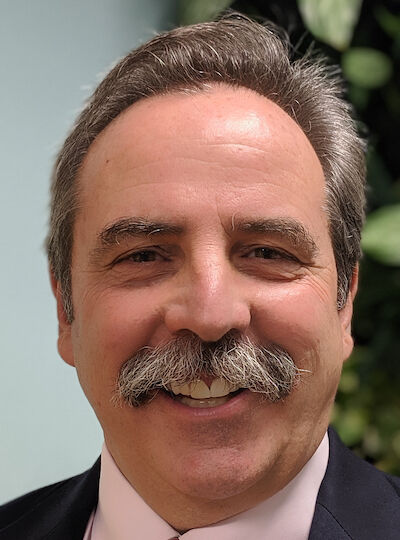
Joe La Mariana is the executive director of RethinkWaste, a public agency representing 11 jurisdictions from Burlingame to East Palo Alto in San Mateo County.
Thanks, Joe, for an informative op-ed piece re: an important topic.
Can you clarify something concerning participation? It looks like about half of the jurisdictions in our county are part of the program. We hope there will be more. Does that mean some jurisdictions may be subject to fines for not providing access to services?
Mr. La Mariana, thanks for the educational letter. I’d be interested in knowing the percentage of food waste that comes from residents from homes, apartments, condominium complexes, restaurants, supermarkets, and others. Where will you get the most bang for your buck regarding outreach and education? As for unsold food, is it because these foods are past a sell by date established by “someone”? Can we extend these dates and slow down the production of excess food?
Correction Joe - unburned methane is perhaps 28, not 80, times more "polluting" than CO2. Most of it does not escape from the landfills as it is encapsulated. Some landfills in the US are now mining this methane using piping and membranes, clean it up and inject it in the natural gas pipeline system. It is called biogas. The University of California system is already purchasing these biogas sources to offset its carbon footprint. We had a biogas system like that in the past in Ox Mountain which powered an electric generator.
Keep the discussion civilized. Absolutely NO
personal attacks or insults directed toward writers, nor others who
make comments. Keep it clean. Please avoid obscene, vulgar, lewd,
racist or sexually-oriented language. Don't threaten. Threats of harming another
person will not be tolerated. Be truthful. Don't knowingly lie about anyone
or anything. Be proactive. Use the 'Report' link on
each comment to let us know of abusive posts. PLEASE TURN OFF YOUR CAPS LOCK. Anyone violating these rules will be issued a
warning. After the warning, comment privileges can be
revoked.
Please purchase a Premium Subscription to continue reading.
To continue, please log in, or sign up for a new account.
We offer one free story view per month. If you register for an account, you will get two additional story views. After those three total views, we ask that you support us with a subscription.
A subscription to our digital content is so much more than just access to our valuable content. It means you’re helping to support a local community institution that has, from its very start, supported the betterment of our society. Thank you very much!



(3) comments
Thanks, Joe, for an informative op-ed piece re: an important topic.
Can you clarify something concerning participation? It looks like about half of the jurisdictions in our county are part of the program. We hope there will be more. Does that mean some jurisdictions may be subject to fines for not providing access to services?
Mr. La Mariana, thanks for the educational letter. I’d be interested in knowing the percentage of food waste that comes from residents from homes, apartments, condominium complexes, restaurants, supermarkets, and others. Where will you get the most bang for your buck regarding outreach and education? As for unsold food, is it because these foods are past a sell by date established by “someone”? Can we extend these dates and slow down the production of excess food?
Correction Joe - unburned methane is perhaps 28, not 80, times more "polluting" than CO2. Most of it does not escape from the landfills as it is encapsulated. Some landfills in the US are now mining this methane using piping and membranes, clean it up and inject it in the natural gas pipeline system. It is called biogas. The University of California system is already purchasing these biogas sources to offset its carbon footprint. We had a biogas system like that in the past in Ox Mountain which powered an electric generator.
Welcome to the discussion.
Log In
Keep the discussion civilized. Absolutely NO personal attacks or insults directed toward writers, nor others who make comments.
Keep it clean. Please avoid obscene, vulgar, lewd, racist or sexually-oriented language.
Don't threaten. Threats of harming another person will not be tolerated.
Be truthful. Don't knowingly lie about anyone or anything.
Be proactive. Use the 'Report' link on each comment to let us know of abusive posts.
PLEASE TURN OFF YOUR CAPS LOCK.
Anyone violating these rules will be issued a warning. After the warning, comment privileges can be revoked.