These days it seems as if you cannot pick up the paper or turn on the news without coming across yet another story about the high housing prices here in California. If you are a homeowner, you likely get mail almost daily from one Realtor or another, either trumpeting their latest sale (Multiple offers! Over asking price!) or asking if you would consider selling your home. And renters are not immune: rents have been skyrocketing all around the region.
Normally the laws of supply and demand would dictate that, with such high demand for housing, a lot of new homes would be built. For various reasons, though, not nearly enough housing has been built over the last decade or so to meet demand, resulting in high prices. And what housing has been built has largely been aimed at the high end: for those toward the lower end of the earnings scale, finding housing is proving especially difficult.
Much of the talk about our housing issues has been focused on those lower-income earners, and rightly so. As I walk around Redwood City and neighboring communities I see “help wanted” signs all over. Those jobs don’t pay nearly enough to, on their own, enable a worker to live in the area, and thus the difficulty in filling positions. With positions unfilled, service is suffering at many businesses. This isn’t just a problem for businesses such as McDonald’s or Safeway or Home Depot, though; it is happening at our medical providers as well. As my wife and I, along with some of our friends, have recently learned, even some doctors and nurses are having trouble affording housing here in the Bay Area.
Many years ago my longtime primary care physician moved to a smaller community in the Sierra foothills, citing an inability to make money while giving his patients the level of care he felt they deserved. I was saddened by this, but didn’t think of it as the leading edge of a wave — which in retrospect it probably was. I switched to a new provider without give it too much thought. Over the next several years I went through a series of doctors, mainly due to them leaving their practices for varying reasons. Resolving to break the seemingly endless cycle, I switched to a membership practice where you pay a small yearly fee to guarantee timely access to a medical professional. For a while, that went well. But last summer my assigned provider announced that she was leaving Redwood City and, apparently, moving to an office elsewhere in the Bay Area.
Recommended for you
My logical next step was to get reassigned to one of the other care providers in the Redwood City office of the membership practice. As I quickly discovered, though, most weren’t taking new patients — and the two that were specialize in women’s issues. Thus, I decided to switch to Palo Alto Medical Foundation, or PAMF, with its large, relatively new medical center in San Carlos. Surely, I thought, I would have no problem finding a doctor there. I was wrong. Multiple searches of their provider database for an internist accepting new patients came up empty. Convinced that I was doing something wrong, I called PAMF and had them search. No dice. They literally had none. Even widening my search to include their Palo Alto office proved fruitless.
After a couple of months, Palo Alto Medical Foundation managed to hire a handful of new care providers, and I finally got myself assigned to one. But from talking to people both at PAMF and at one of Stanford’s medical clinics, I learned that even large well-respected firms such as these are having trouble hiring enough doctors — not to mention nurses and other medical professionals — in part because of our high housing costs. I’m sure that the doctors are well-paid, but even they appear to be having difficulty with the economics of both living and working in the Bay Area.
Our red-hot real-estate prices are not only resulting in longer lines at Baskin-Robbins, they are resulting in longer waits — significantly longer, if my experience is any judge — just to get an appointment to see a doctor. I finally connected up with my new internist, but it took nearly two months before I could see him for the first time. Homeowners may be loving the increase in home values, but that increase is having negative effects on all of our lives — whether or not we are homeowners — making things just a little harder whenever we go to the store, go out to eat, or, now, when we go to the doctor. It makes one wonder: is the tradeoff really worth it?
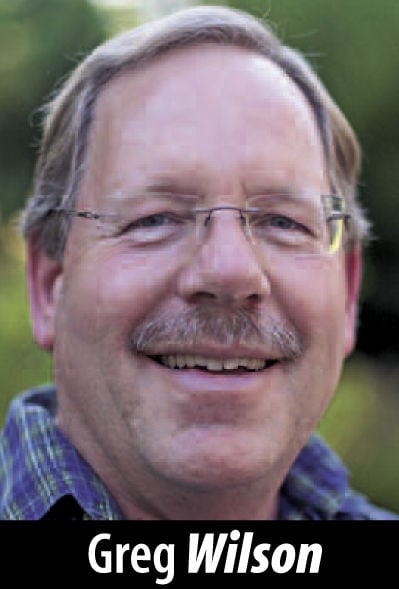
Greg Wilson is the creator of Walking Redwood City, a blog inspired by his walks throughout Redwood City and adjacent communities. He can be reached at greg@walkingRedwoodCity.com. Follow Greg on Twitter @walkingRWC.
bandit - What an appropriate name you chose. I was a renter for my first 25 years of adulthood. I lived modestly, had no car while I lived in S.F., and didn't understand the real estate market. One thing I learned while living under rent control in S.F., was that no matter what I did, I could never catch up to the income of others, and the rising costs of housing. After getting married, I thought it would be a bit easier with two incomes, but then the income taxes hit us, and we had no deductions. We began looking, and it was pretty depressing. We were not prepared to join the two to four hour commute crowd. Then Grandma died, and we inherited some cash. We borrowed some more from everywhere, and scraped it together to buy our now 18 year old home which was then new and we felt way over priced at $685K + HOA. Now it's value is over $1M, which some see as a benefit, but since we'd prefer not to move, we just see taxes that have gone from @ $8K to @ $12K. Now your math doesn't need to be great to see that 2% x 18 years is only +36% which is huge, but +$4K is more like 50%, so go figure. And unlike some wealthier neighbors, in the down years, we demanded reductions from the county Assessor and got them. Now , it just up, up, and away. Gov. Jerry Brown and friend love it. You want more money for our schools - stop wasting so much of it elsewhere, and subsidizing things right and left.
Too many hi-tech jobs welcomed to an area lacking housing, transportation and other infrastructure to support them. The damage has been done, and there's no easy way out.
Ray - Agreed. The greedy communities who had no problem inviting and accepting the tech revolution failed to plan for the explosive growth it would eventually bring. Those greatly successful new and older companies with many thousands of hardworking employees, have forced their employees into a form of what I call commuter slavery. The majority of them could easily work from home like I do, but excuses are made that demands they work in cube world. Add to this that cities continued to refuse to look for ways to grow slow, steady and smart. And developers prefer to built big and greedy. And what you get is an imbalance of homes to jobs, and no small entry level housing to rent or buy.
Prop 13 was a great idea for limiting taxes, unfortunately, Jarvis and Gann chose to use a percentage that sounded really low 1% with 2% maximum increases. We'd have all been better off if they chose a dollar tax per square foot of land, and a separate dollar amount per square foot of improvements (buildings). Then if you have a large lot, you pay a bit more, than a standard sized lot, but not too much, and it has nothing to do with the market value of your land. Ditto the house. If you are wealthy, or a large family, with a 4X bigger house, you'd pay more, but again it wouldn't be based on your purchase price or the resale value, so all would pay less. Under any system we've used, the State and Counties take more, because they have an ever growing pie as more and more formerly farm and ranch lands go under asphalt and concrete.
I'd advocate for the big cities like San Francisco, and San Jose going up instead of out, but hey - just because it works so well in other countries, no reason why it should work here right?
Keep the discussion civilized. Absolutely NO
personal attacks or insults directed toward writers, nor others who
make comments. Keep it clean. Please avoid obscene, vulgar, lewd,
racist or sexually-oriented language. Don't threaten. Threats of harming another
person will not be tolerated. Be truthful. Don't knowingly lie about anyone
or anything. Be proactive. Use the 'Report' link on
each comment to let us know of abusive posts. PLEASE TURN OFF YOUR CAPS LOCK. Anyone violating these rules will be issued a
warning. After the warning, comment privileges can be
revoked.
Please purchase a Premium Subscription to continue reading.
To continue, please log in, or sign up for a new account.
We offer one free story view per month. If you register for an account, you will get two additional story views. After those three total views, we ask that you support us with a subscription.
A subscription to our digital content is so much more than just access to our valuable content. It means you’re helping to support a local community institution that has, from its very start, supported the betterment of our society. Thank you very much!



(4) comments
why do you think the landlords & the real
estate inbdustry are spending millions to
defeat proposition 10? simple, GREED
bandit - What an appropriate name you chose. I was a renter for my first 25 years of adulthood. I lived modestly, had no car while I lived in S.F., and didn't understand the real estate market. One thing I learned while living under rent control in S.F., was that no matter what I did, I could never catch up to the income of others, and the rising costs of housing. After getting married, I thought it would be a bit easier with two incomes, but then the income taxes hit us, and we had no deductions. We began looking, and it was pretty depressing. We were not prepared to join the two to four hour commute crowd. Then Grandma died, and we inherited some cash. We borrowed some more from everywhere, and scraped it together to buy our now 18 year old home which was then new and we felt way over priced at $685K + HOA. Now it's value is over $1M, which some see as a benefit, but since we'd prefer not to move, we just see taxes that have gone from @ $8K to @ $12K. Now your math doesn't need to be great to see that 2% x 18 years is only +36% which is huge, but +$4K is more like 50%, so go figure. And unlike some wealthier neighbors, in the down years, we demanded reductions from the county Assessor and got them. Now , it just up, up, and away. Gov. Jerry Brown and friend love it. You want more money for our schools - stop wasting so much of it elsewhere, and subsidizing things right and left.
Too many hi-tech jobs welcomed to an area lacking housing, transportation and other infrastructure to support them. The damage has been done, and there's no easy way out.
Ray - Agreed. The greedy communities who had no problem inviting and accepting the tech revolution failed to plan for the explosive growth it would eventually bring. Those greatly successful new and older companies with many thousands of hardworking employees, have forced their employees into a form of what I call commuter slavery. The majority of them could easily work from home like I do, but excuses are made that demands they work in cube world. Add to this that cities continued to refuse to look for ways to grow slow, steady and smart. And developers prefer to built big and greedy. And what you get is an imbalance of homes to jobs, and no small entry level housing to rent or buy.
Prop 13 was a great idea for limiting taxes, unfortunately, Jarvis and Gann chose to use a percentage that sounded really low 1% with 2% maximum increases. We'd have all been better off if they chose a dollar tax per square foot of land, and a separate dollar amount per square foot of improvements (buildings). Then if you have a large lot, you pay a bit more, than a standard sized lot, but not too much, and it has nothing to do with the market value of your land. Ditto the house. If you are wealthy, or a large family, with a 4X bigger house, you'd pay more, but again it wouldn't be based on your purchase price or the resale value, so all would pay less. Under any system we've used, the State and Counties take more, because they have an ever growing pie as more and more formerly farm and ranch lands go under asphalt and concrete.
I'd advocate for the big cities like San Francisco, and San Jose going up instead of out, but hey - just because it works so well in other countries, no reason why it should work here right?
Welcome to the discussion.
Log In
Keep the discussion civilized. Absolutely NO personal attacks or insults directed toward writers, nor others who make comments.
Keep it clean. Please avoid obscene, vulgar, lewd, racist or sexually-oriented language.
Don't threaten. Threats of harming another person will not be tolerated.
Be truthful. Don't knowingly lie about anyone or anything.
Be proactive. Use the 'Report' link on each comment to let us know of abusive posts.
PLEASE TURN OFF YOUR CAPS LOCK.
Anyone violating these rules will be issued a warning. After the warning, comment privileges can be revoked.