For the past week, I’ve been living on a tiny island off the coast of British Columbia with my cousins and family friends, a sort of last hurrah to spend time with loved ones before I move to college. On the island — a small rock four hours north of Victoria — we teens are free to do whatever we please, with just one rule: absolutely zero cellphones.
As pathetic as it sounds, I fretted when alerted of this stipulation. What if someone needed me urgently? What if I got one of those don’t-ignore emails that requires an immediate response? So used to being readily available in the virtual home of the Internet, I felt thrown into deep waters at the prospect of being locked out. Going off the grid sacrifices a lot of what I consider “comfortable” about my life. A large portion of our lives and means of social connection exist digitally: photo galleries, music libraries, conversations. So although I do adore the Pacific Northwest, and have spent many summers swimming in lakes and hiking mountain trails, this completely immersive trip loomed over my head from the day I booked my flight right up until the water taxi docked at our final destination.
Looking back, I would give anything to go back to that arrival date, when I still had the entire week’s worth of glory ahead of me. Upon setting my bags down, my phone died immediately, and in accordance with the island’s rules, I never recharged it. What followed was a series of unforgettable adventures. I paddleboarded in open ocean alongside egg yolk jellyfish, fashioned flower crowns out of wild daisies alongside dirt roads, and steered my uncle’s Boston Whaler around the rocky islets that pepper Canada’s coast. Throughout it all, I did not take a single iPhone picture or send one text. My lack of phone to capture these memories actually resulted in them being stored clearer than ever before in my mind. Beyond the picturesque setting, I can recall each particular feeling of my trip: the warmth of sun shining through huge panel windows onto my skin as I flew through crossword puzzles, the delightfully salty aroma of sea wind whipping at my face as we sped out of the mainland harbor, even the uncomfortable, sleepy fullness after eating too much of a good meal.
My off-grid week was an important lesson in something that we should all be reminded of once in a while — to put down the screen, give your neck a good stretch, and go outside. But it also provided a wonderful allegory for the act of writing to seek truths.
In my career as a high school journalist, I’ve repeatedly encountered the process of finding meaning in a world of noise, whether it be combing through websites in pursuit of just the right information for an article or filtering through transcripts for the bits of speech that cut perfectly to the chase.
Through it all, I’ve come to understand the vitality of awareness in a landscape of digital media. With so much being neatly packaged and bombarded at you all the time, it’s easy to get swept up in what everyone deems to be the “right way” to do things, whether this be subjective opinions presented as fact, or a pattern of consumption projected through targeted advertising. Everyone’s got their own version of the truth, and having a strong internal compass and a work ethic to sort through stories to find the elements that connect it all in one big thread of honesty is what the journalist must be ready to do.
Even non-journalists who wish to have some level of awareness of their surroundings must go through such processes every day. Sorting through different sources of news to find one with as little bias as possible proves to be difficult. In fact, just finding a story that outlines an event in accuracy can be akin to finding a needle in a haystack. We have flooded ourselves with media, which is simultaneously incredible and detrimental; as we innovate deeper into the tech world we inch further away from our own.
Recommended for you
This concept was spelled out for me in no-phone land. Without the distractions of social media, responding to texts and that constant nagging thought of “where the hell is my phone?” I was only aware of what was absolutely, certainly in front of my eyes. Ocean, land, trees, rock, occasional seal popping its head out of the waves to say hello. And somehow, that was just fulfilling enough for me. I didn’t need the bright lights and stimulation that my digital world offered; simply experiencing life for what it truly was shaped what I’d consider one of the best weeks of my year.
On the penultimate night of the trip, after we had donned our headlamps and headed down the wooden stairs to our sleeping platform clustered with tents, I found two of my friends clinging to each other in fear. A rustling in the bushes and snapping of a twig had startled them, and they were convinced an old tale of my uncle’s had resurfaced: A wolf had swum from a nearby island to ours and was about to eat us for dinner. We spent an hour huddled together, shushing everyone when we heard crunches of branches and irregular splashes in the water. Eventually, we drifted off into sleep, and awoke the next day alive and well in our sleeping bags despite our panic. In fact, when recounting the ordeal to everyone at breakfast the next day, my aunt squashed our fears with one sentence.
“Oh yes,” she said. “Otters and seals like to come out at night and hang out on the beach.”
Otters and seals! Two of the most harmless animals to ever inhabit the ocean. The narrative we had built up in our heads fell short of the truth in front of us, simply because we were too scared to go see for ourselves. Yet another beautiful way to portray the duty of journalism. We get so worked up about what the truth might be, and create our own in our heads. As a result, we fail to muster the courage to investigate, to prod, to witness. Journalists are the ones who have to take a deep breath and muster it anyway, to come face-to-face with the truth, whether it be a wolf or a sea otter.
So long that technology continues to work its way into our every move, my generation will spend the rest of our lives straddling reality and unreality, to create a balancing act of the real and digital world so one doesn’t engulf the other. Too much real world, and we’d grow disconnected from our peers and fall behind in social and career spaces. Too much digital world, and we’d become so consumed by false pretenses that we would operate like robots through life. As a journalist, storyteller and young person, I feel a calling to bring reality into unreality through writing. And I hope that more and more people feel this call, in ways big, medium or small, and little by little, we gain more awareness than we started with.
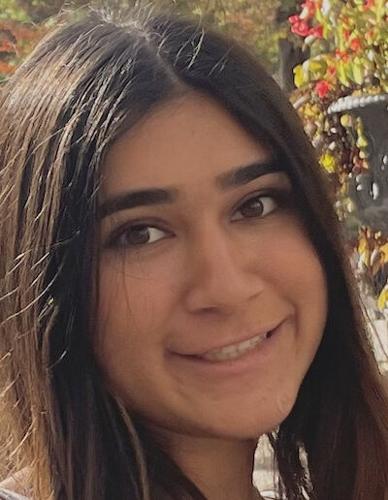
Ayana Ganjoo is a senior at Carlmont High School in Belmont. Student News appears in the weekend edition. You can email Student News at news@smdailyjournal.com.
Keep the discussion civilized. Absolutely NO
personal attacks or insults directed toward writers, nor others who
make comments. Keep it clean. Please avoid obscene, vulgar, lewd,
racist or sexually-oriented language. Don't threaten. Threats of harming another
person will not be tolerated. Be truthful. Don't knowingly lie about anyone
or anything. Be proactive. Use the 'Report' link on
each comment to let us know of abusive posts. PLEASE TURN OFF YOUR CAPS LOCK. Anyone violating these rules will be issued a
warning. After the warning, comment privileges can be
revoked.
Please purchase a Premium Subscription to continue reading.
To continue, please log in, or sign up for a new account.
We offer one free story view per month. If you register for an account, you will get two additional story views. After those three total views, we ask that you support us with a subscription.
A subscription to our digital content is so much more than just access to our valuable content. It means you’re helping to support a local community institution that has, from its very start, supported the betterment of our society. Thank you very much!




(0) comments
Welcome to the discussion.
Log In
Keep the discussion civilized. Absolutely NO personal attacks or insults directed toward writers, nor others who make comments.
Keep it clean. Please avoid obscene, vulgar, lewd, racist or sexually-oriented language.
Don't threaten. Threats of harming another person will not be tolerated.
Be truthful. Don't knowingly lie about anyone or anything.
Be proactive. Use the 'Report' link on each comment to let us know of abusive posts.
PLEASE TURN OFF YOUR CAPS LOCK.
Anyone violating these rules will be issued a warning. After the warning, comment privileges can be revoked.