As if California needed another crisis, the state’s seemingly perpetual wildfires are forcing millions of homeowners in fire-prone areas to pay skyrocketing premiums for insurance coverage — if, indeed, they can buy it at all.
As the number and severity of wildfires increase, insurers are increasingly reluctant to renew policies and even if they do, premiums often double or triple.
Insurance is required for most homeowners since their mortgage lenders demand it. And if they cannot obtain regular coverage, they are forced into the insurer of last resort, FAIR, that has very high premiums and limits on coverage.
Insurance Commissioner Ricardo Lara has repeatedly invoked a law he authored three years ago as a state legislator, imposing one-year moratoriums on policy cancellations for property in or immediately adjacent to the sites of major fires.
In 2020, Lara’s moratoriums covered 2.4 million policyholders after fires scorched more than 4 million acres and consumed hundreds of homes and other buildings. When this year’s fires are finally extinguished, including the immense Dixie fire and the Caldor fire that nearly wiped out South Lake Tahoe, Lara will extend the moratoriums to their burn zones.
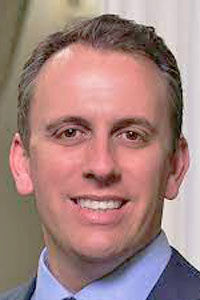
Marc Levine
At best, however, such moratoriums are merely stopgaps. So what, one might ask, are politicians doing about the crisis?
There is some scapegoating. This month, Assemblyman Marc Levine, D-Marin County, fired off a letter to insurance trade groups, telling them, “I do not believe that the costs of utility mismanagement, or the impacts of climate change should be arbitrarily and capriciously passed through to my constituents in the form of homeowners’ insurance being declined, non-renewed, or their insurance premiums being raised exorbitantly. Particularly when there has been no change of conditions or circumstances.”
Circumstances are also beyond insurers’ control as they assess potential losses and calculate whether to offer coverage and if so, what to charge. They cannot, as Levine seems to suggest, ignore the perils regardless of their causes.
Levine later introduced legislation that would have the state become an insurer for those unable to buy coverage elsewhere.
Recommended for you
John Norwood, a veteran insurance industry lobbyist, set forth the dilemma in a recent article for an industry publication:
“The availability and affordability of property insurance in California are not likely to change until the worldwide reinsurance market believes California is serious about addressing its wildfire risks and there are demonstrable results in reducing the number and severity of wildfires in the state.
“Without the reinsurance market backing California property/casualty insurance companies, there will continue to be an availability crisis in the state for property insurance and prices for such coverage will continue to increase substantially to the detriment of California’s homeowners and businesses.”
The initial state budget signed by Gov. Gavin Newsom appropriated $2 billion for making the state more fire-resilient, but was criticized for spending many billions more on problems of lesser import. Last week, with big fires still burning, the wildfire budget was sharply increased before the Legislature adjourned for the year.
Reducing the likelihood of destructive fires is a good step in the right direction, but the insurance crisis demands more — perhaps, even, an entirely new approach.
The state could, for instance, purchase basic disaster insurance for every California property owner — covering earthquakes and floods, as well as fires — and pay for it through some sort of property-based assessment. Property owners could tap the private market for coverage beyond the basic policy’s limits.
Through reinsurance, the risk would be spread worldwide and Californians wouldn’t have to worry about scrounging for coverage. The state’s voluntary earthquake insurance program already embodies that concept.
There may be other workable approaches, but without new thinking, the insurance crisis will, as Norwood warns, continue to worsen.
CalMatters.org is a nonprofit, nonpartisan media venture explaining California policies and politics. Visit CalMatters on Facebook or on Twitter @CalMatters.
Keep the discussion civilized. Absolutely NO
personal attacks or insults directed toward writers, nor others who
make comments. Keep it clean. Please avoid obscene, vulgar, lewd,
racist or sexually-oriented language. Don't threaten. Threats of harming another
person will not be tolerated. Be truthful. Don't knowingly lie about anyone
or anything. Be proactive. Use the 'Report' link on
each comment to let us know of abusive posts. PLEASE TURN OFF YOUR CAPS LOCK. Anyone violating these rules will be issued a
warning. After the warning, comment privileges can be
revoked.
Please purchase a Premium Subscription to continue reading.
To continue, please log in, or sign up for a new account.
We offer one free story view per month. If you register for an account, you will get two additional story views. After those three total views, we ask that you support us with a subscription.
A subscription to our digital content is so much more than just access to our valuable content. It means you’re helping to support a local community institution that has, from its very start, supported the betterment of our society. Thank you very much!



(0) comments
Welcome to the discussion.
Log In
Keep the discussion civilized. Absolutely NO personal attacks or insults directed toward writers, nor others who make comments.
Keep it clean. Please avoid obscene, vulgar, lewd, racist or sexually-oriented language.
Don't threaten. Threats of harming another person will not be tolerated.
Be truthful. Don't knowingly lie about anyone or anything.
Be proactive. Use the 'Report' link on each comment to let us know of abusive posts.
PLEASE TURN OFF YOUR CAPS LOCK.
Anyone violating these rules will be issued a warning. After the warning, comment privileges can be revoked.