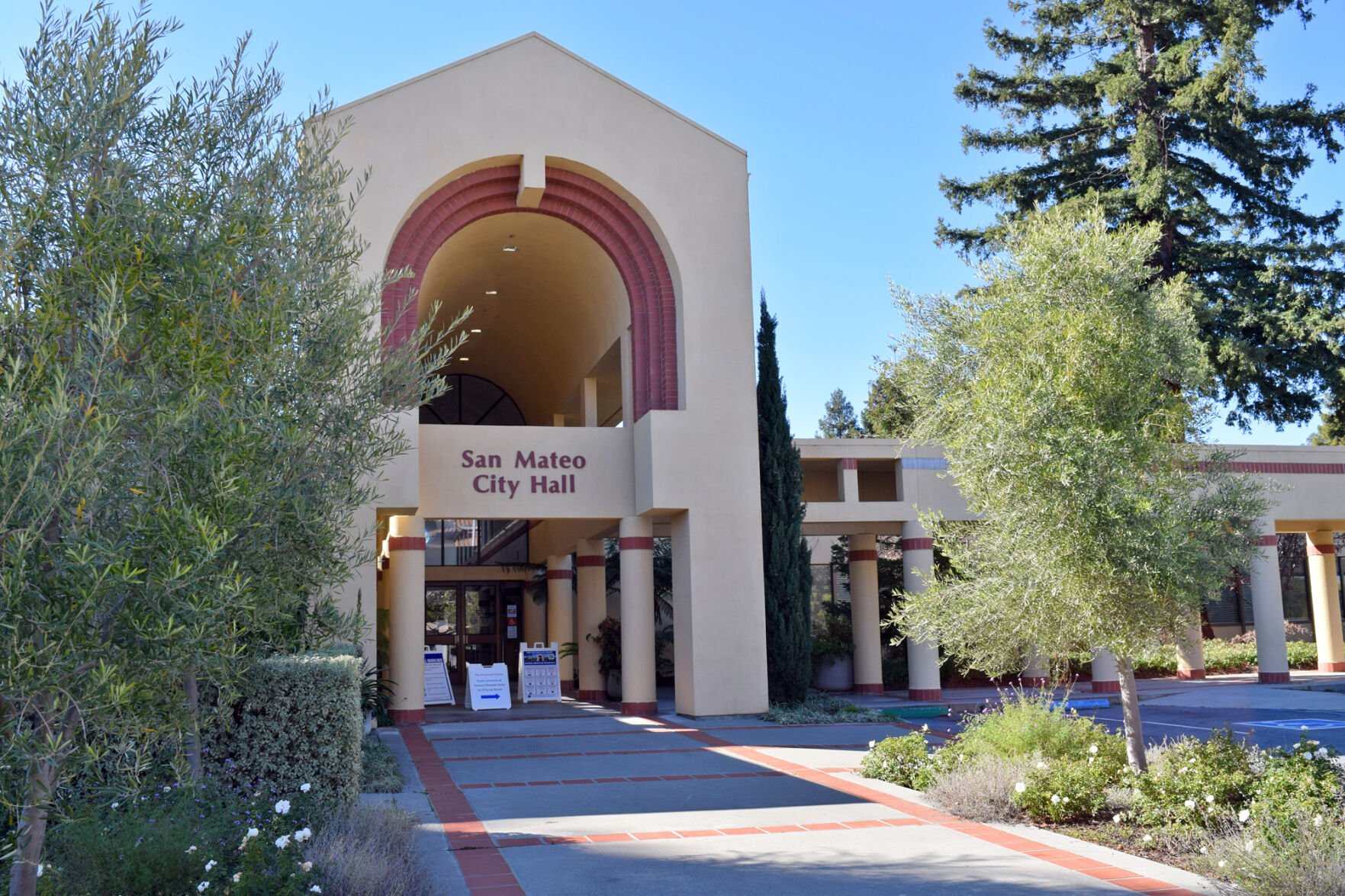
The San Mateo Planning Commission approved updates to the city’s historic preservation policies, which would formalize the local designation process after the last couple years of heated debate.
The contentious discussions over historic preservation policies have been ongoing for several years and escalated into a citywide controversy after a group of residents in the affluent Baywood neighborhood tried to impose a historic designation on more than 400 homes. Historic designations limit the types of external alterations property owners can make to their homes and trigger additional review and approvals if they don’t align with the design of the surrounding houses.
The issue has surfaced an ongoing battle between those who want more protections for what they consider historic structures and those who say the efforts infringe on homeowners’ property rights, as they could be subject to new rules without their consent.
In January, the City Council agreed that for the city to designate a historic district, at least 20% of affected homeowners would have to support it before the application can move forward. Once the application is complete and affected residents are notified, more than 60% of owners would have to consent to the designation.
During a Planning Commission meeting April 14, residents and city leaders gathered to discuss the next step and solidify details.
The new proposed ordinance would establish a Historic Resources Commission to review and approve nominated historic structures or districts after the owner consent thresholds are met.
The city would also create its own local historic resources inventory, which include structures approved through resolution and would not automatically include listings in state and national registries.
Currently, three individual structures — including the Vollers House on North Claremont Street — would qualify to be listed in the inventory, as well as the already-designated downtown area. The City Council previously stated it would also grandfather the Glazenwood district into the current inventory.
Future historic districts would have to be reviewed via the new process.
Some residents, some of whom had supported the Baywood historic districting effort, voiced frustration during the Planning Commission meeting that buildings listed in a 1989 historic survey wouldn’t automatically be designated as historic as part of the new policy — though they could be considered as part of the new commission’s holistic review process — and that owner consent thresholds should be lowered.
Recommended for you
“If we erase that to build generic blocks, we destroy the very thing that makes our property values high and our downtown thrive,” San Mateo resident Connie Weiss said during public comment.
Others, especially those who were opposed to the blanket Baywood designation, said the updated ordinance introduces important constraints against unpopular and onerous restrictions under the guise of historic preservation.
“There is no historic preservation crisis in this city. This is a niche concern that a small number of very wealthy, very engaged residents with a lot of time on their hands have elevated far beyond its actual community standing,” San Mateo resident Jordan Grimes said during public comment.
Homes that are eligible for historic designation, including those at least 50 years old, trigger a historical resource evaluation as part of the California Environmental Quality Act when there is a proposed remodel or exterior alteration. The new ordinance would allow city staff to rely on the current CEQA trigger to assess whether the property is eligible for the HRE, meaning it doesn’t need redundant local requirement, like it currently has. Even though there are more CEQA exemptions at the state level, Community Development Director Zach Dahl said most of those only apply to larger developments, not single-family homes, the latter of which constitutes most historic resources.
The city’s historic preservation initiative also baked in a standardized path for property owners to qualify for the Mills Act, a state law that allows jurisdictions to offer property tax relief for owners of historic structures if they agree to maintain and preserve the house. Even though it’s a state policy, each local jurisdiction must create their own specific criteria and process. The city hasn’t had a formalized Mills Act program, however, the commission agreed with the creation of explicit rules for qualification and capped the Mills Act designation to two contracts annually.
Commissioner Caiti Busch was overall supportive of the ordinance, though, said she was concerned about the owner consent threshold, as she considers the historic structures a public resource.
“I personally think the decision to go with only owner consent is a mistake,” Busch said. “The city itself doesn’t have any opportunity to list or even go through any sort of process to recommend the listing or delisting of what is essentially a public resource.”
The Planning Commission ultimately voted to recommend the ordinance, however, some made additional recommendations about creating stronger incentives, eventually engaging in a new historic survey and pushing back on the idea that a new historic commission should in fact be created.
“Perhaps that money also might be better put towards survey work or some other type of preservation goal,” Vice Chair Adam Klafter said during the meeting.
The ordinance will go before the City Council in May.
Keep the discussion civilized. Absolutely NO
personal attacks or insults directed toward writers, nor others who
make comments. Keep it clean. Please avoid obscene, vulgar, lewd,
racist or sexually-oriented language. Don't threaten. Threats of harming another
person will not be tolerated. Be truthful. Don't knowingly lie about anyone
or anything. Be proactive. Use the 'Report' link on
each comment to let us know of abusive posts. PLEASE TURN OFF YOUR CAPS LOCK. Anyone violating these rules will be issued a
warning. After the warning, comment privileges can be
revoked.
Please purchase a Premium Subscription to continue reading.
To continue, please log in, or sign up for a new account.
We offer one free story view per month. If you register for an account, you will get two additional story views. After those three total views, we ask that you support us with a subscription.
A subscription to our digital content is so much more than just access to our valuable content. It means you’re helping to support a local community institution that has, from its very start, supported the betterment of our society. Thank you very much!







(0) comments
Welcome to the discussion.
Log In
Keep the discussion civilized. Absolutely NO personal attacks or insults directed toward writers, nor others who make comments.
Keep it clean. Please avoid obscene, vulgar, lewd, racist or sexually-oriented language.
Don't threaten. Threats of harming another person will not be tolerated.
Be truthful. Don't knowingly lie about anyone or anything.
Be proactive. Use the 'Report' link on each comment to let us know of abusive posts.
PLEASE TURN OFF YOUR CAPS LOCK.
Anyone violating these rules will be issued a warning. After the warning, comment privileges can be revoked.