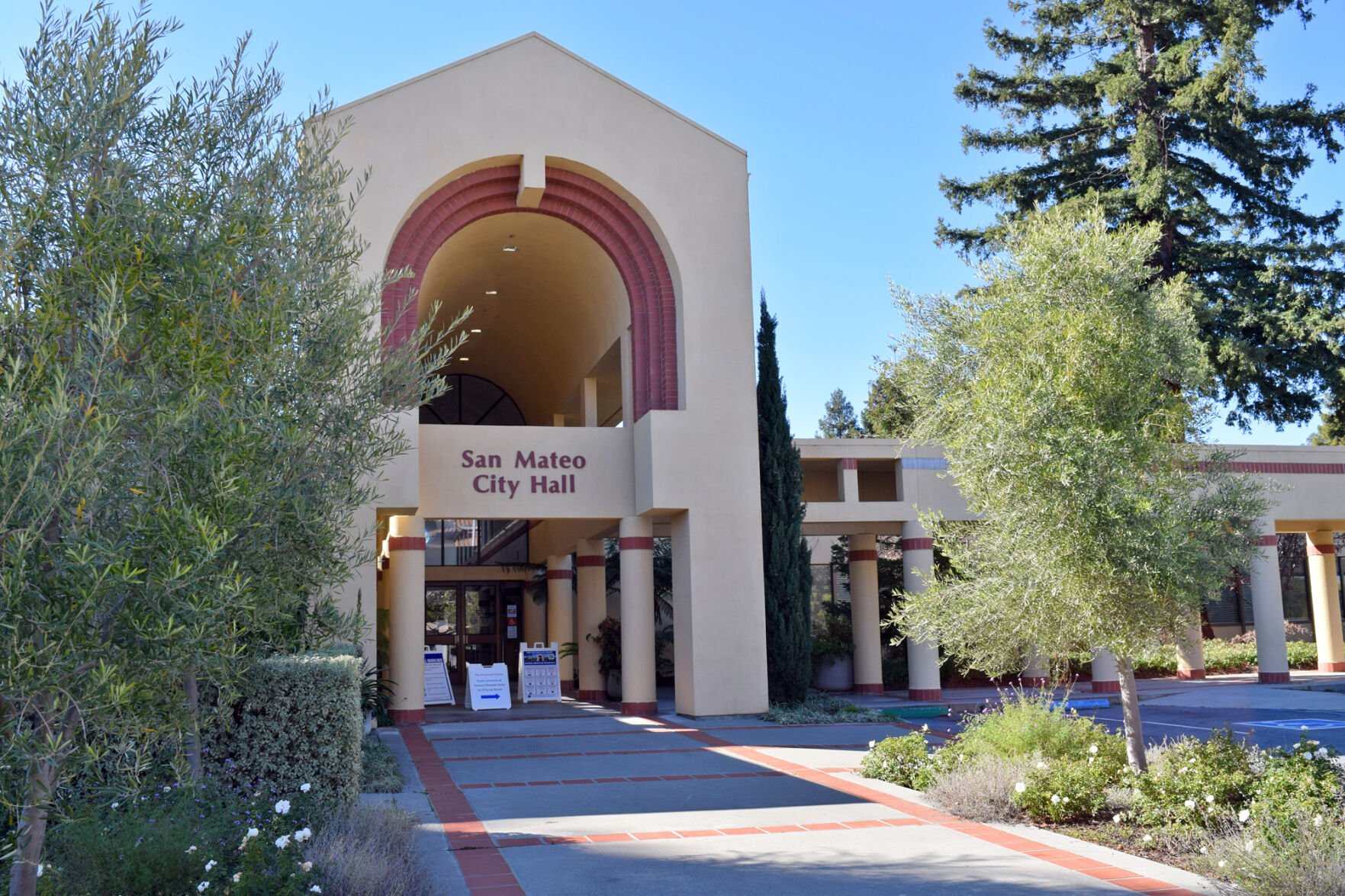
The San Mateo City Council has passed an accessory dwelling unit ordinance allowing larger height and size limits that exceed state laws in many areas, with the council prioritizing increasing housing options.
Under the ordinance passed at a March 7 council meeting, the height limit for attached ADUs is 24 feet to top plateline and 32 feet to roof peak, while for detached ADUs, it’s 16 feet to top plateline and 24 feet to roof peak. The City Council has final approval of an ADU appeal during the alternative discretionary review process, and detached ADUs seeking height limit extensions must apply for discretionary review. The city’s proposed ordinance will require junior accessory units, or those attached to a house, to be a maximum of 650 square feet. The ordinance will let a lot’s remaining floor area allowance determine an ADU’s size rather than establishing a maximum size limit. It will also eliminate the owner-occupancy requirement for ADUs after 2024.
The council added a height incentive provision to encourage more off-street parking. Under the incentive, detached ADUs can exceed the ordinance’s height limit if applicants provide an additional off-street parking spot. Councilmember Joe Goethals asked for the inclusion to address public worries about a lack of parking. Height incentives are available for detached ADUs constructed over an existing detached garage. Incentives also exist if an ADU provides side yard setbacks of at least 5 feet, rear yard setbacks of at least 10 feet and one off-street parking space.
ADUs are typically detached units that provide independent living spaces and are sometimes called second or granny units. They are often used for older family members or young adults fresh out of school, adding additional income or maximizing unused space. The council has worked on updating its ordinance for a year to fall in line with state ADU legislation that went into effect in 2020. The new state laws create minimum standards that supersede local ordinances, requiring cities to adjust. In March 2021, the council approved an interim draft ordinance but did not adopt it because there was not a broad enough public input process. Council debate on what the specific height limits should be has also slowed the process. Instead, it sought community input over several months and tinkered with height limits, setback requirements and balconies.
Some on the council favored using the state guidelines to provide a simple local update without much deviation. Others have wanted to loosen restrictions to add more housing options and create more opportunities to live in San Mateo. The council has tried to balance the need for more housing and following state laws with resident concerns about overcrowded lots and neighborhood changes.
Recommended for you
There were 83 applications for ADUs in 2021 in San Mateo, with 66 permits issued. There were 47 permits issued for 91 applications in 2020 and 44 permits for 56 applications in 2019. Most applications are for one-story structures. Of the 174 total ADU permits submitted since 2020, 17 were for two-story ADUs, with three attached and 14 detached. Of the 17, the city has issued 10 permits, five are pending and two are not active.
The ordinance includes options for ADUs that don’t meet all objective standards through an alternative discretionary review process. The city will schedule a review in a year to determine if further updates are needed to the law. The first reading of the ordinance passed 5-0. A second ordinance reading will occur later in March.
So what happens to a homeowner’s property tax if they opt to add an ADU? Reassessment to current home values – forever losing their initial base value – resulting in thousands of dollars in extra payments – in perpetuity? Why would a homeowner want to do that to themselves, in the hopes of extra income which may never materialize when a renter decides to stop paying rent and the city/state prevents the homeowner from evicting them? Of the applications for ADUs in the past few years, how many are from homeowners and how many are from investor-owned properties (who won’t care about the base value)?
Keep the discussion civilized. Absolutely NO
personal attacks or insults directed toward writers, nor others who
make comments. Keep it clean. Please avoid obscene, vulgar, lewd,
racist or sexually-oriented language. Don't threaten. Threats of harming another
person will not be tolerated. Be truthful. Don't knowingly lie about anyone
or anything. Be proactive. Use the 'Report' link on
each comment to let us know of abusive posts. PLEASE TURN OFF YOUR CAPS LOCK. Anyone violating these rules will be issued a
warning. After the warning, comment privileges can be
revoked.
Please purchase a Premium Subscription to continue reading.
To continue, please log in, or sign up for a new account.
We offer one free story view per month. If you register for an account, you will get two additional story views. After those three total views, we ask that you support us with a subscription.
A subscription to our digital content is so much more than just access to our valuable content. It means you’re helping to support a local community institution that has, from its very start, supported the betterment of our society. Thank you very much!











(1) comment
So what happens to a homeowner’s property tax if they opt to add an ADU? Reassessment to current home values – forever losing their initial base value – resulting in thousands of dollars in extra payments – in perpetuity? Why would a homeowner want to do that to themselves, in the hopes of extra income which may never materialize when a renter decides to stop paying rent and the city/state prevents the homeowner from evicting them? Of the applications for ADUs in the past few years, how many are from homeowners and how many are from investor-owned properties (who won’t care about the base value)?
Welcome to the discussion.
Log In
Keep the discussion civilized. Absolutely NO personal attacks or insults directed toward writers, nor others who make comments.
Keep it clean. Please avoid obscene, vulgar, lewd, racist or sexually-oriented language.
Don't threaten. Threats of harming another person will not be tolerated.
Be truthful. Don't knowingly lie about anyone or anything.
Be proactive. Use the 'Report' link on each comment to let us know of abusive posts.
PLEASE TURN OFF YOUR CAPS LOCK.
Anyone violating these rules will be issued a warning. After the warning, comment privileges can be revoked.